
President’s Cattle Assistance: Medical and Public Welfare Perspective
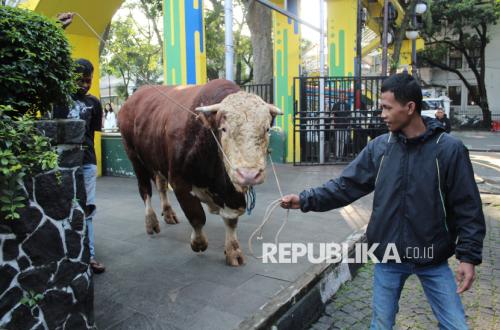
Government, according to Bung Hatta, has a moral duty to protect the people, provide for their basic needs, and create social justice. Therefore, when members of society assist in state duties, the government should facilitate, empower, and support such initiatives to ensure equitable national prosperity. One of the government’s responsibilities is safeguarding public health, ensuring citizens can access necessary protein sources, both plant-based and animal-based. Data shows the national per capita beef consumption averages 2.5 to 2.7 kilograms annually, with a third obtained free during Idul Adha celebrations. However, this figure remains significantly below the global average of 6 kilograms per capita annually. This is where President Prabowo Subianto’s cattle assistance (non-sacrificial) becomes relevant. Funded through the state budget (APBN), the aid is distributed during Idul Adha. Several key implications arise from the President’s cattle assistance. First, it promotes and enhances Idul Adha celebrations, aligning with the spirit of Articles 29(1) and (2) of the 1945 Constitution. Second, as the body responsible for protecting citizens and improving public health, the government should participate in Idul Adha by providing cattle assistance. This allows the slaughtered meat to be shared alongside sacrificial offerings, increasing the quantity available for consumption. Consequently, more people can receive and consume meat, potentially improving public health outcomes. Third, from an economic perspective, the President’s involvement in cattle assistance has boosted demand for cattle, each weighing 700-1,000 kilograms, thereby enhancing local farmers’ profits and welfare. This is precisely what we hope for.