
Presidential Secretariat: 2025 school revitalisation surpasses target, reaches 16,167 units
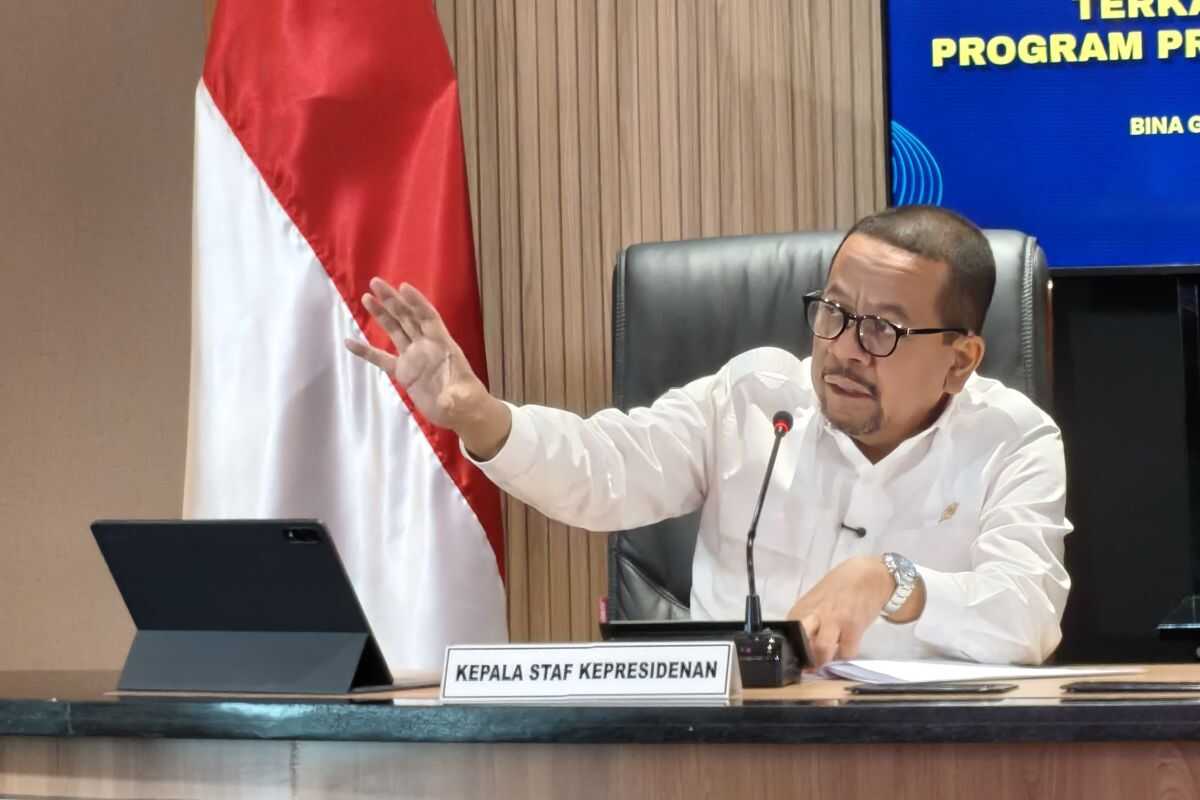
Jakarta – Presidential Chief of Staff M. Qodari said the school revitalisation programme by the Ministry of Education, Primary and Secondary (Kemendikdasmen) in 2025 surpassed its target, with 16,167 educational units revitalised from an initial target of 10,440. In a press conference at the KSP Building, Presidential Palace complex in Jakarta on Wednesday, he noted that for vocational schools, 2,026 educational units have been revitalised, achieving 97 percent. “The programme focuses on improving classrooms, learning facilities and the school environment to support a more decent and quality learning process,” he said. Entering 2026, the government allocated revitalisation for 11,744 educational units with a budget ceiling of Rp14.06 trillion. In addition, Qodari said the government proposed additional funding under the Additional Budget Allocation (ABT) scheme amounting to Rp89.49 trillion to speed up revitalisation to 60,000 additional educational units. According to Qodari, revitalisation is being carried out progressively, measurably, and tailored to the needs of each region. Budget support is prepared according to official mechanisms and enhanced oversight to ensure the programme is targeted. “Under the latest scheme, revitalisation funds will no longer be managed by the Ministry of Public Works, but directly by Kemendikdasmen,” he said. Funds are channelled directly to school accounts and managed through a self-management mechanism with community participation. The technical implementation is carried out by the Education Unit Construction Committee (P2SP), which involves community members, supported by a technical planning and monitoring team of 7–10 people, and 20–30 construction personnel at each educational unit. Qodari said the programme would not only improve learning spaces in a tangible way but also have the potential to stimulate local economies. For the self-managed delivery of 16,167 educational units in 2025, Qodari estimated it could absorb around 646,680 workers, assuming each educational unit involves an average of 40 workers.