
Presidential Sacrificial Cattle and Unnecessary Controversy
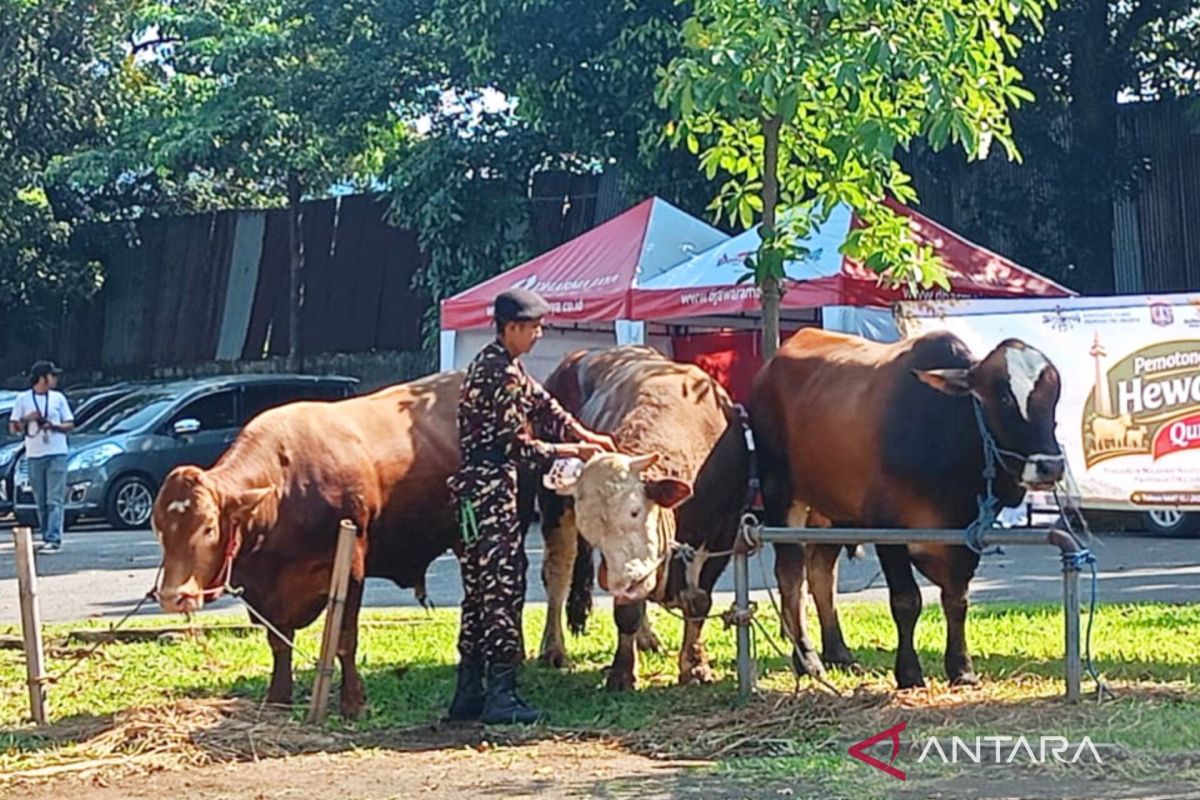
The Banpres cattle initiative during Idul Adha should be viewed as part of President Prabowo’s populist-humanist policy: the state directly addressing citizens’ basic needs and boosting small-scale economies.
Controversy has emerged before and after Idul Adha 1447 H regarding President Prabowo Subianto’s Presidential Social Assistance (Banpres) program, which involves sacrificial cattle, drawing criticism from some netizens and opposition politicians.
A total of 1,098 premium cattle valued at approximately Rp10 billion were allocated through the state budget to 38 provinces and 514 regencies and cities nationwide. Of these, 598 were distributed to local governments, while 500 were given to Islamic organisations, boarding schools, religious figures, and community institutions.
These are not ordinary cattle; all weigh between 800 kilograms and 1.3 tonnes and were sourced from 525 local farmers across the country.
The criticisms mainly focus on three issues: the legitimacy of the sacrifice, which critics argue should come from personal funds; the use of President Prabowo’s name for the sacrifice despite state funding; and the perception of budget waste amid more pressing public needs.
Several points need clarification in public discourse.
First, legality. The presidential cattle assistance is legally and constitutionally sound, not violating budget regulations or ethical standards. The Banpres cattle initiative is appropriate and defensible as a state-led social assistance program, not a personal sacrifice. The key lies in legality, social benefits, economic impact, and transparency.
State Secretariat Deputy Minister Juri Ardiantoro confirmed the funding comes from the Presidential Social Assistance (Banmaspres) line item under the State Secretariat Ministry—not from the President’s personal funds or arbitrary budget allocations.
Second, using state budget is entirely legitimate and not inherently wrong. The state budget can be used for social assistance if allocated through official budget lines, processed via state mechanisms, and subject to audit. Given the transparency of procedures, pricing, targets, and accountability, there is no issue.
Moreover, Banpres is not a new initiative under President Prabowo. During President Sukarno’s era, similar programs existed, though not under the current nomenclature. The practice of presidents providing assistance, donations, socio-political support, or humanitarian aid has been in place since the first president.
Similarly, under Suharto, Habibie, Gus Dur, SBY, Megawati, and Jokowi, Banpres has existed in various forms, including cattle and other social aid. Thus, criticism framing and discrediting Prabowo’s Banpres cattle practice is misplaced. Opposition parties should be cautious, as baseless criticism may backfire.
Third, regarding Sharia legitimacy, the Indonesian Ulema Council (MUI) has clarified. MUI Fatwa Commission Chairman Prof Asrorun Niam Sholeh stated there is no issue under Islamic jurisprudence. He cited a hadith from Imam Bukhari encouraging leaders to sacrifice using baitul mal (state treasury). In modern terms, the state budget serves as the equivalent of baitul mal. Since the cattle are not consumed personally by the President but directly distributed to the public, it is a state sacrifice for the public good, with no Sharia violations.