
Presidential Defamation Law Challenged: Deputy Justice Minister Says Criticism Not Prohibited
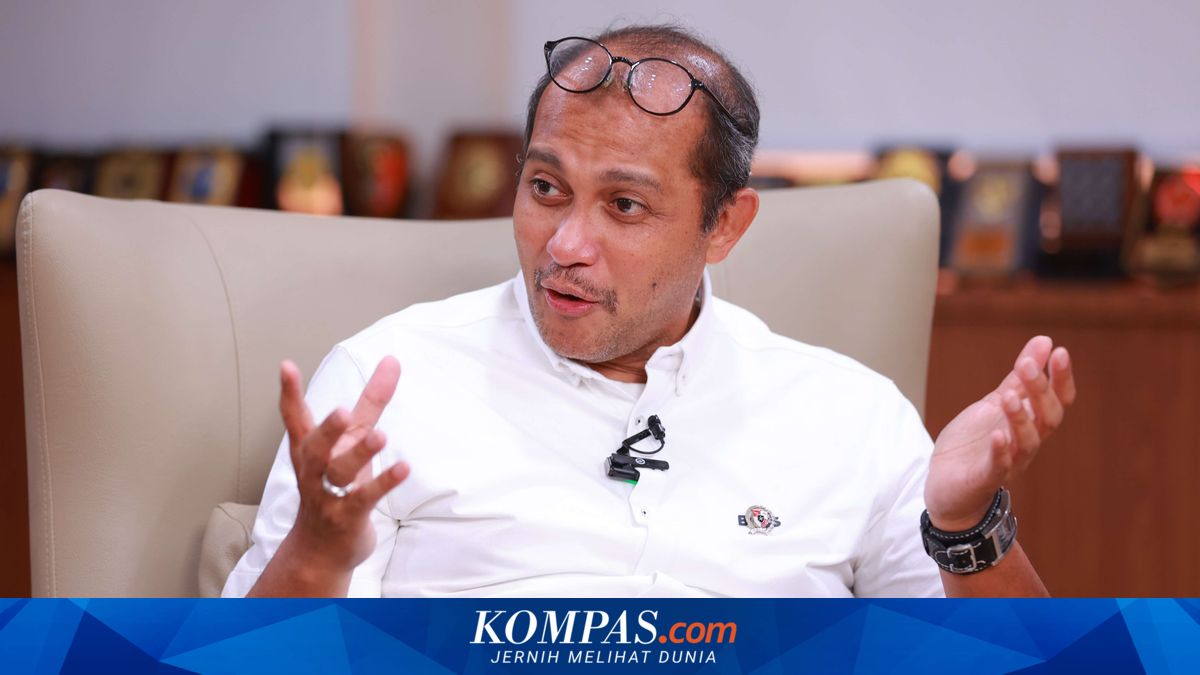
Jakarta — Indonesia’s Deputy Justice Minister (Wamenkum) Edward Omar Sharif Hiariej stated that the provisions criminalising insults to the president, vice president, and government in the new Criminal Code do not prohibit public criticism.
“For the sake of public interest, this is explained in Articles 218 and 240, which make clear that criticism and protest against policy are completely permitted under these articles and fall within public interest,” said Eddy, as Edward is known, during constitutional court proceedings, as reported by ANTARA on Monday (10 March 2026).
Three articles in Law Number 1 of 2023, known as the new Criminal Code, are under scrutiny: Article 218, known as the “presidential defamation article,” and Articles 240 and 241, known as the “government defamation articles.”
Eddy explained that these provisions do not prohibit criticism provided such criticism relates to public interest. Moreover, he noted that the article’s explanatory notes explicitly state that one form of protest or criticism is public demonstration.
“This means Article 218 and its explanatory notes, along with Articles 240 and 241 and their explanatory notes, permit demonstrations and permit criticism of the government and state institutions,” he said.
The substantive basis for these articles rests on five reasons, with the philosophical function of criminal law being protective in nature. Criminal law protects state interests, public interests, and individual interests.
“Regarding Article 218, which concerns state interest, what is protected are matters of sovereignty and the dignity and prestige of the state. The president and vice president, as the personification of the Indonesian state, must have their dignity and prestige protected,” he explained.
The third reason concerns social control doctrine. The president and vice president have the support of at least 50 per cent plus one of those eligible to vote. According to him, this provision acts as a channel; if the president and vice president are insulted or their reputation is attacked whilst their supporters do not accept it, this could cause civil disorder.
“Therefore, this provision serves as a channel and a form of social control to ensure the public does not act anarchically,” he said.
Furthermore, to prevent the provision from being misused, it is an absolute complaint offence, with only the president and vice president entitled to lodge complaints. Additionally, to prevent arbitrariness by authorities, both the provision itself and its explanatory notes clearly limit insult to mean either contempt or slander.
Meanwhile, Articles 240 and 241 also limit insults to government and state institutions to only the president, vice president, People’s Consultative Assembly, House of Representatives, Regional Representative Council, Supreme Court, and Constitutional Court.
“Specifically, for this complaint offence against state institutions, only the heads of those state institutions may lodge complaints, and this is limited to only six state institutions,” said Eddy.