
President Views MBG with Conscience: Beneficial or Not?
This article is a column; its entire content and opinions represent the personal views of the author and do not reflect the editorial stance.
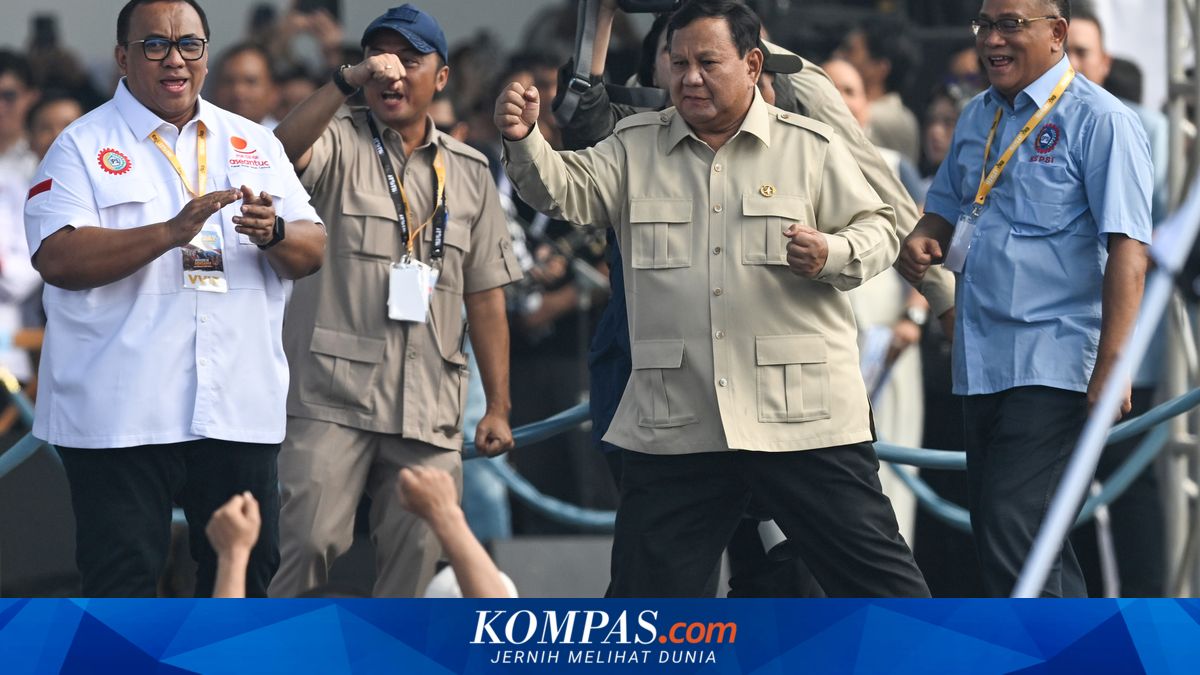
On the occasion of the 2026 May Day commemoration, President Prabowo Subianto asked the workers present at Monas Square in Jakarta (1/5/2026), “I ask you all, is MBG beneficial or not?”
The workers responded with varied answers, but the dominant response heard was “no”. One of the labour leaders standing behind the President was suddenly seen mouthing the word “oh dear”.
If the mobilised labour masses, who have received six promises from the President—from capping online motorcycle taxi (ojek online) deductions at a maximum of 8 percent, forming a layoff task force, and establishing a Labour Welfare Council, subsidised housing for workers specifically in industrial areas, people’s credit at 5 percent interest, building 1,386 fishing villages, and promising to complete the Manpower Law in 2026—answer “no”, what about the people outside of that group if asked the same question?
That response from the workers can be read as an initial indicator in the qualitative evaluation of the Free Nutritious Meals (MBG) programme. The evaluation of MBG is not to undermine or halt the programme, but to restructure the MBG programme to be more economical, efficient, and effective.
Moreover, evaluating MBG is one way to safeguard the President’s prestige so that MBG does not leave a policy record that could be questioned in the future if national leadership changes.
All parties hope the President views MBG with conscience. Criticism and input are offered because they possess a spirit of nationalism and love for President Prabowo Subianto’s leadership.
Critics and citizens providing input love this country, so that the people’s money collected through taxes is used as best as possible.
Furthermore, they are obliged to pay taxes to the state. Tax officials also sweat to collect taxes and enforce citizens’ compliance in fulfilling their tax obligations.
If the taxes received by the state are then used for MBG with governance that leaves questions of accountability, and its efficiency is questioned, it certainly has the potential to create distrust among taxpayers and all the people who toil every day to create added value for the national economy.
Criticism and input are also made so that the President does not make a misstep, by promptly making corrections.
This is done so that MBG does not create a “time bomb” either politically or legally in the future, when the presidency changes to a different political actor.
Critics of MBG are not parties who want to undermine President Prabowo Subianto personally; rather, they are those who love this country.
The criticism conveyed stems from moral concern as citizens who understand that every rupiah of public money collected from the people’s taxes is a trust that must be guarded.
In the tradition of Deliberative Democracy, critical voices are not threats, but the foundation for more mature and just policies.