
President Takes the Fiscal Stage; Markets Begin to Signal Caution
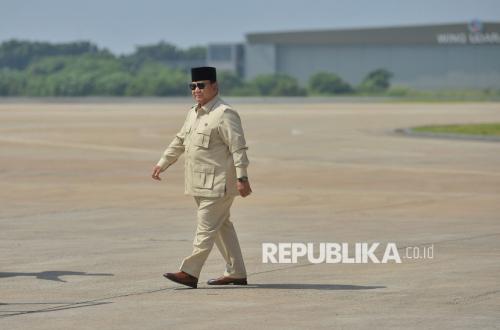
REPUBLIKA.CO.ID, JAKARTA – President Prabowo Subianto will directly read the Macro-Economic Framework and Key Fiscal Policy (KEM-PPKF) for the 2027 RAPBN. This unusual step is seen as sending a strong signal that the government’s fiscal direction is increasingly centralised in the President’s hands. Chief economist of the Centre for Reform on Economics (CORE) Indonesia, Yusuf Rendy Manilet, said that until now the KEM-PPKF document has been traditionally delivered by the Finance Minister as part of the technocratic process of preparing the APBN. However this time, the President has taken the stage because the document contains the government’s priority programmes. ‘In budget politics, such symbols are important because they signal that fiscal priorities are not solely administrative, but also form part of the government’s major political agenda,’ Yusuf said in a brief message on Wednesday, 20 May 2026. He said the issue is not about authority. Indeed, constitutionally the President does have full authority to determine the direction of fiscal policy. But markets are believed to be paying attention to how the decision-making process is carried out. When budget priorities are announced directly by the President in the highest political arena, the room for technocratic corrections is deemed to be narrower. ‘Markets are beginning to ask whether the process of policy formulation remains based on thorough studies or is moving too quickly to follow political momentum,’ he said. Yusuf said market sensitivity has become visible in the past few days. The Jakarta Composite Index (IHSG) has fallen quite sharply and the rupiah has weakened, while most regional stock exchanges have moved relatively more stable. He noted that this condition shows the market seeing domestic factors increasing Indonesia’s perceived risk. He cited rumours of the establishment of a commodities exports agency that had circulated earlier. Although not yet official policy, the issue was seen as triggering investor concerns due to a lack of detailed explanations from the government. ‘The main issue is not simply the substance of the policy, but the uncertainty of the process,’ Yusuf said. He added that the market can basically tolerate policy changes so long as the direction is clear, communications are consistent, and the design is understandable. But when big ideas emerge without open analysis or early communication with business players, investors tend to form negative assumptions.