
President Prabowo's Sacrificial Cattle: UIN Jakarta Professor's Perspective
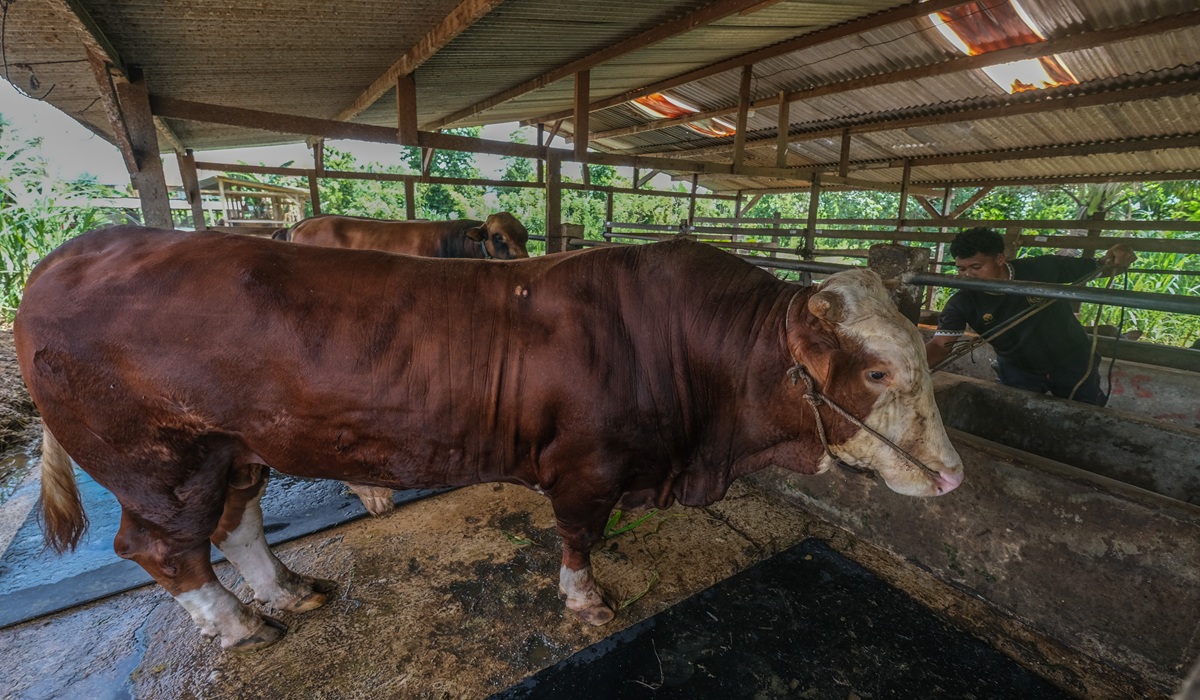
President Prabowo Subianto has provided sacrificial cattle using APBN funds. Professor Ahmad Tholabi Kharlie from UIN Syarif Hidayatullah Jakarta stated the issue must be viewed proportionally.
He explained that the discourse around the president’s use of APBN for sacrificial cattle should not be considered solely from a religious perspective but also in terms of national social welfare and public financial governance. The programme, involving approximately 1,098 cattle at around Rp100 billion, falls under the Presidential Social Assistance Scheme.
Some sectors view the initiative as the state’s concern for citizens and a boost to national food security and livestock economy.
According to the official MUI website, Tholabi noted that in Islamic perspective, the ritual of kurban has strong individual religious dimensions. Most scholars from the Maliki, Shafi’i, and Hanbali schools consider it a confirmed sunnah, while the Hanafi school regards it as an obligation for financially capable Muslims. Therefore, ownership of assets is crucial for the validity of the sacrifice.
He explained that in Islamic jurisprudence, sacrificial animals must be from the rightful ownership of the person performing the ritual (Mudhahhi). Classical scholars like Ibn Qudamah in Al-Mughni, when discussing udhiyah rulings, emphasised that sacrifice involves specific animals, intentions, and sharia requirements, making ownership and lawful disposal essential.
Thus, when funding comes from state or APBN resources, debates arise whether it is a personal religious act or a state social programme. However, he noted that in Islamic tradition, the concept of baitul mal (state treasury) manages public funds for societal benefit. The state has authority to distribute public wealth for the public good.
The principle of al-mashlahah al-’ammah (public interest) legitimises the use of state funds for social programmes and public services. “Distributing sacrificial meat to the poor falls under social protection and food security. In modern states, the government has social responsibilities towards citizens,” he stated, citing MUI Digital on 28 May.
He clarified the core issue is not whether the state can use public funds for Iduladha programmes, but how the policy is framed. If funded by APBN, it should be positioned as a state social distribution programme or shadaqah al-dawlah, not the president’s personal sacrifice.
“In Islamic jurisprudence, personal financial worship should use private funds to meet ownership and personal dimensions. Thus, the appropriate approach is framing it as a state social programme tied to Idul Adha,” Tholabi said.
He added this approach is stronger in jurisprudence and safer in modern governance ethics. Thus, the state can participate in religious occasions as a facilitator for social welfare distribution without conflating public officials’ personal worship with state funds.
From a constitutional law perspective, Tholabi explained APBN use must adhere to legality, accountability, effectiveness, efficiency, and public benefit. The Indonesian Constitution outlines state responsibility for social welfare under Article 34 of the 1945 Constitution, while Article 33 emphasises resource and economic management for maximum public prosperity. Additionally, Law No. 17 of 2003 on State Finance mandates transparent, accountable, and efficient financial management. He stated the Presidential Social Assistance Programme has formal legitimacy if budgeted through APBN mechanisms and implemented by relevant government institutions. Thus, the programme is legally an institutional state policy rather than the president’s personal action.
“It is crucial to ensure all procurement and distribution processes are transparent, accountable, and comply with government procurement regulations,” he said.
Tholabi also warned that social policies with religious symbolic dimensions are prone to being perceived as political image-building if not managed proportionally. Therefore, aid distribution must be based on objective parameters like poverty levels, food needs, and regional equity.
“In a modern rule-of-law state, APBN use must not mix with officials’ personal interests. Policy management and communication must be carefully handled to avoid perceptions of religious symbol politicisation,” he said.
On the positive side, he noted the initiative could benefit local livestock farmers and strengthen the national food sector. Large-scale cattle procurement could stimulate domestic breeders if conducted with principles of equitable distribution and support for community-based farming.
Wakil Menteri Sekretaris Negara Juri Ardiantoro stated this year’s President Prabowo Subianto’s Iduladha sacrificial programme is a routine public assistance initiative.
Chairman of MUI’s Fatwa Board, Prof KH Asrorun Niam Sholeh, said the president’s use of presidential assistance (banpers) for kurban does not violate Islamic law.
President Prabowo Subianto inaugurated 1,061 KDKMP in Ngan