
President Prabowo promotes national circular economy
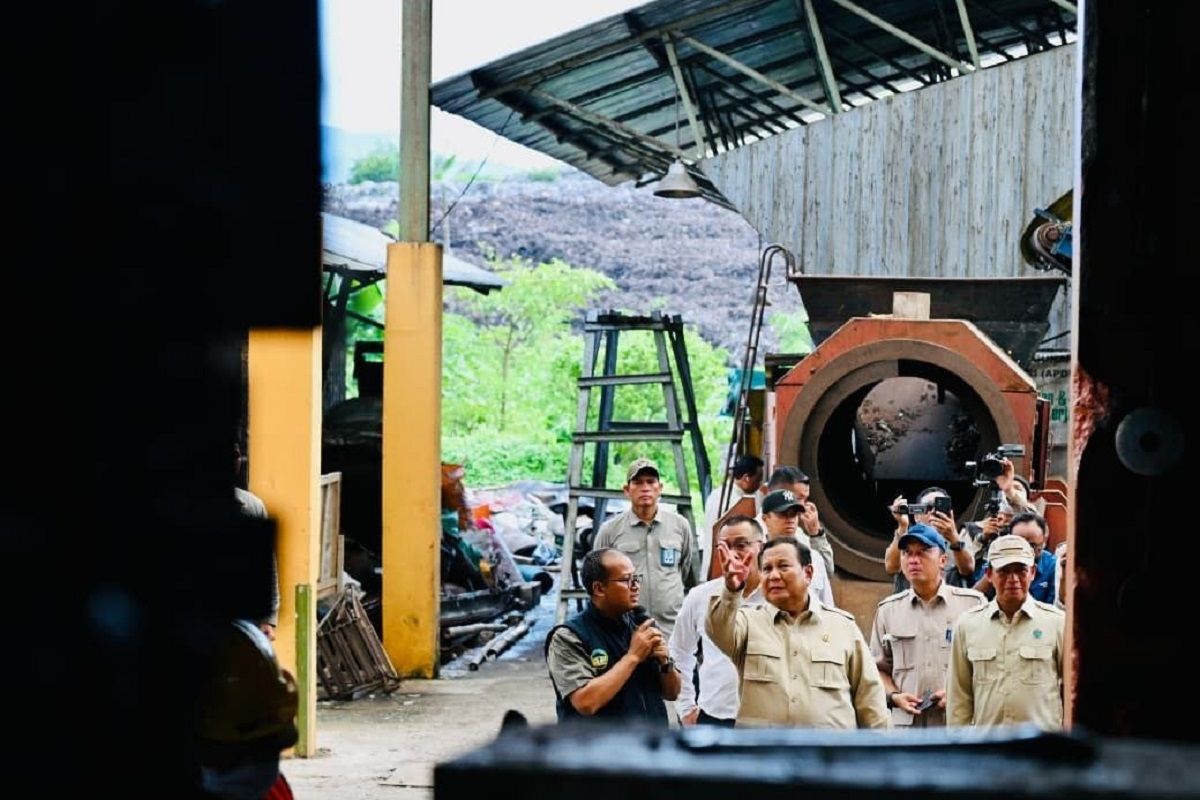
Jakarta (ANTARA) - President of the Republic of Indonesia Prabowo Subianto inspected a waste processing facility in Banyumas Regency to promote a sustainable waste management system that transforms rubbish into economically valuable products through national circular economy principles.
“This is very effective, I think. It serves as an example for many provinces, many regencies, and even other countries have come here,” said President Prabowo in Banyumas, Central Java, on Tuesday.
The President directly observed the waste processing process from upstream to downstream at the Environment and Education-Based Integrated Waste Processing Site (TPST BLE) in Banyumas, including the use of local technology to significantly reduce waste volume.
The President appreciated the effectiveness of the system because it can produce various derivative products that have utility and high market value for the region.
In his statement, President Prabowo said that TPST BLE is a breakthrough and a very good initiative in waste management in Indonesia.
According to Prabowo, the use of technology that is not too sophisticated but effective is the key to the success of the facility located in Central Java.
The system operates regularly, starting from handling waste at the household level to final management at the regency level collectively.
The main facilities available at the site include a pre-shredder machine, trommel screen, organic shredder, waste cleaning machine, and conveyor drive.
The presence of these devices supports the efficient sorting and processing of waste to achieve maximum waste reduction targets at the final processing site.
According to the President, building TPSTs in other regions also aims to create new job opportunities for residents around the location. Waste processing facilities can become one of the drivers of people’s economy based on environmental management.
Various derivative products that can be produced from waste processing include plastic roof tiles, plastic paving, and fresh maggots for animal feed.
In addition, organic fertiliser and alternative fuel in the form of refuse-derived fuel (RDF) with high market value for industry are also produced.
This strategic step is part of the government’s grand vision to strengthen the green economy and regional self-reliance through sustainable resource management.
The government is committed to changing the stigma of waste from an environmental problem into an economic opportunity.