
Preserving the Meugang Tradition in the Aftermath of Disaster
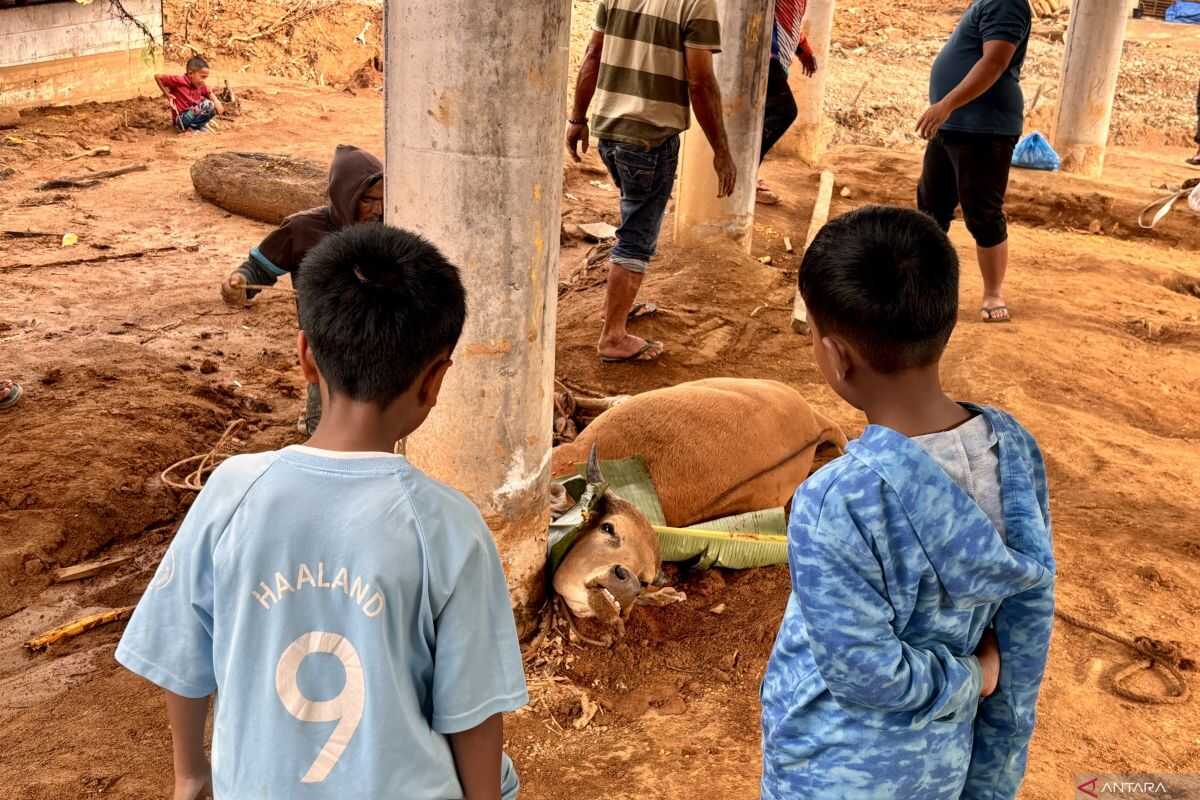
North Aceh, Aceh — “Uroe got buleuen got, beumeutume pajoh leupek Mak peugot.” (“On a good day in a good month, everyone must be able to eat a curry made by mother.”)
This proverb is deeply rooted in Acehnese society through the tradition of meugang, or makmeugang. It is also the proverb recalled by Imam Zamzami, a displaced resident from Lhok Pungki hamlet, who has spent nearly three months living in an evacuation tent.
Lhok Pungki hamlet was completely devastated by flash floods and landslides that struck Gunci Village, Sawang District, North Aceh Regency, Aceh, in November 2025. The riverbank area once lined with wooden houses has been transformed into piles of tree trunks and rocks swept along by the current.
Imam’s home was no exception. His residence was swept away by the floodwaters.
Sheltering from the rain beneath a National Disaster Mitigation Agency (BNPB) evacuation tent, Imam recounted his longing for the meugang tradition, observed the day before Ramadan in previous years.
In the lead-up to Ramadan, Imam would customarily buy beef at the market, which his wife would then transform into masak merah — a signature dish of North Aceh prepared during the meugang tradition.
The hallmark of masak merah is its use of spices, including dried chillies, temurui (curry leaves), pandan leaves, and other ingredients.
For his children, a special portion would sometimes be prepared, with sweet soy sauce added if the dish proved too spicy.
The masak merah would then be enjoyed together with his family in a joyful atmosphere welcoming Ramadan, including with his mother-in-law.
Imam yearns for it — the meugang gathering with family to welcome the warmth of the blessed month.
The Meugang Tradition
The longing that afflicts Imam is born of a meugang tradition he has observed since childhood.
This is unsurprising, as the meugang tradition has been practised across generations by the Acehnese people. Various sources record that the tradition dates back to the era of the Aceh Darussalam Sultanate, during the reign of Sultan Iskandar Muda.
The meugang celebration was an expression of the sultan’s gratitude, whilst also welcoming the arrival of Ramadan. Cattle or buffalo would be slaughtered and the meat distributed among the people.
The tradition endures to this day, although the methods of procuring meat have become more varied.
Marzuki Abubakar, an academic at UIN Ar-Raniry Banda Aceh, in research entitled “The Meugang Tradition in Acehnese Society”, identified at least four models practised by Acehnese communities for procuring meugang meat.
The first is meuripee, whereby community members agree to pool a sum of money to purchase an animal for slaughter. Through this method, the meat is distributed according to the number of people who contributed funds.