
Preserving Labuhan Sarangan as Tradition and Tourism Icon of Magetan
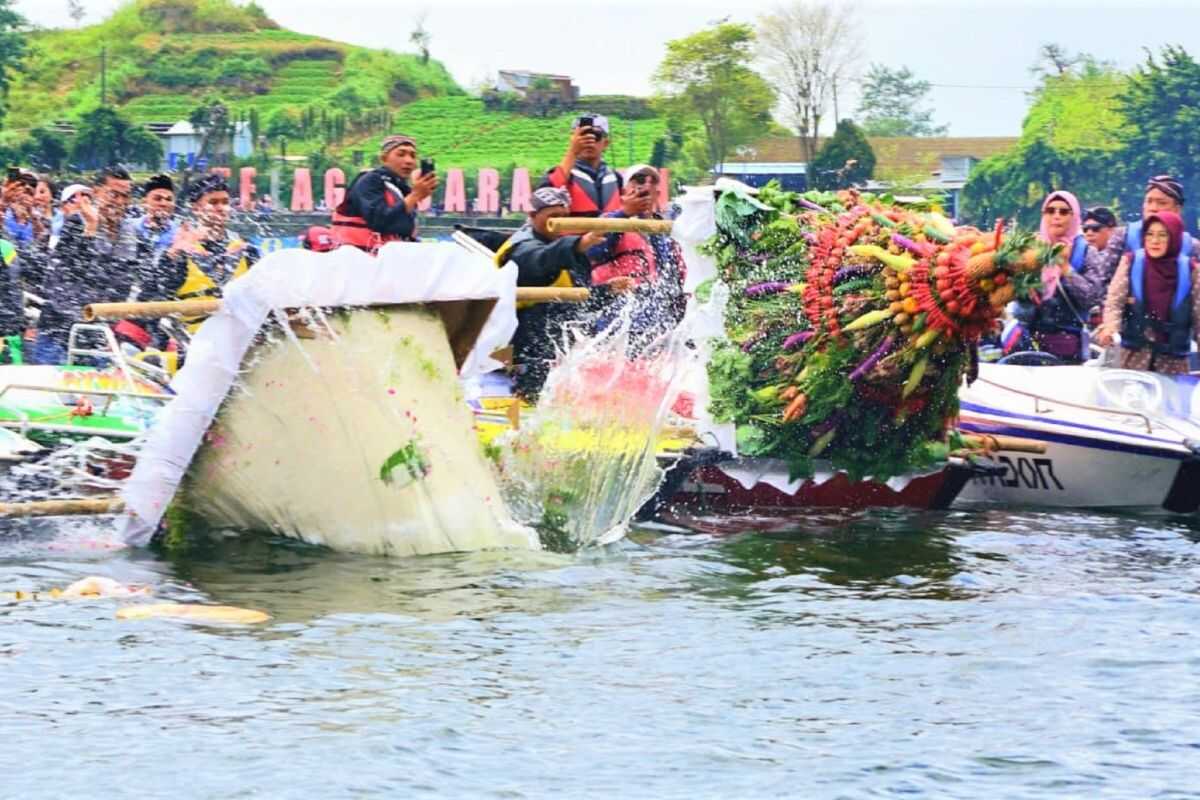
Magetan – Friday morning, 16 January 2026, saw Sarangan Lake tourism site located in Sarangan Village, Plaosan District, Magetan Regency, East Java, considerably busier than usual. Tourists streamed along roads beside the lake to watch the cultural procession and Tumpeng Gono Bahu, a 2.5-metre-high rice pyramid alongside ceremonial mounds of vegetables and local agricultural produce.
The procession constituted part of the Labuhan (ceremonial offering) tradition at Sarangan Lake, the pinnacle of the village purification ceremony held by Sarangan Village residents every Friday Pon in the month of Ruwah according to the Javanese calendar, welcoming Ramadan each year.
The procession commenced with beautifully attired Sarangan Village residents wearing traditional Javanese dress, followed by village officials, the Magetan Regent alongside regional leadership, and their entourages. Several pairs of domas (young male and female carriers of ceremonial fans in Javanese wedding customs) in elegant traditional dress followed, accompanied by Reog dance performers circling the lake. The Gono Bahu rice pyramid, vegetable pyramid, and agricultural produce pyramid then processed, concluded by residents dressed as mounted warriors.
The procession started from Sarangan Village office, proceeded on foot around the lake, and halted at a sacred site for prayer. Following prayers, the three ceremonial pyramids were transported around Sarangan Lake by motorboat. Upon reaching the lake’s centre, the offerings were submerged. This year’s submersion ceremony was led by Magetan Regent Nanik Endang Rusminiarti.
The rice pyramid submerged in Sarangan Lake symbolises a pure and clean heart, expressing residents’ gratitude and requesting divine protection from the Almighty. The vegetable and fruit pyramid symbolises prosperity from farmers’ harvests and residents’ gratitude to the Almighty for bountiful harvests.
Village elders indicated the Labuhan Sarangan tradition has been practised since ancient times in Magetan Regency. The tradition’s history connects to the Sarangan Lake legend known to local residents, though historically only local communities participated in the ceremony.
After 1973, the tradition expanded to a more public celebration and tourism promotion for outsiders visiting Sarangan Village. Consequently, the tradition gained greater recognition, attracting numerous tourists.
The primary ritual sequence of the annual village purification ceremony begins with the ritual slaughter of sacred goats, ancestral tomb visitation, communal feasting, village boundary marking, followed by collective meals and ceremonial pyramid submersion into Sarangan Lake.
The village purification tradition also seeks to ensure Sarangan Lake remains preserved and residents live in prosperity.