
Preparing Policies to Mitigate Risks from the Iran vs Israel War
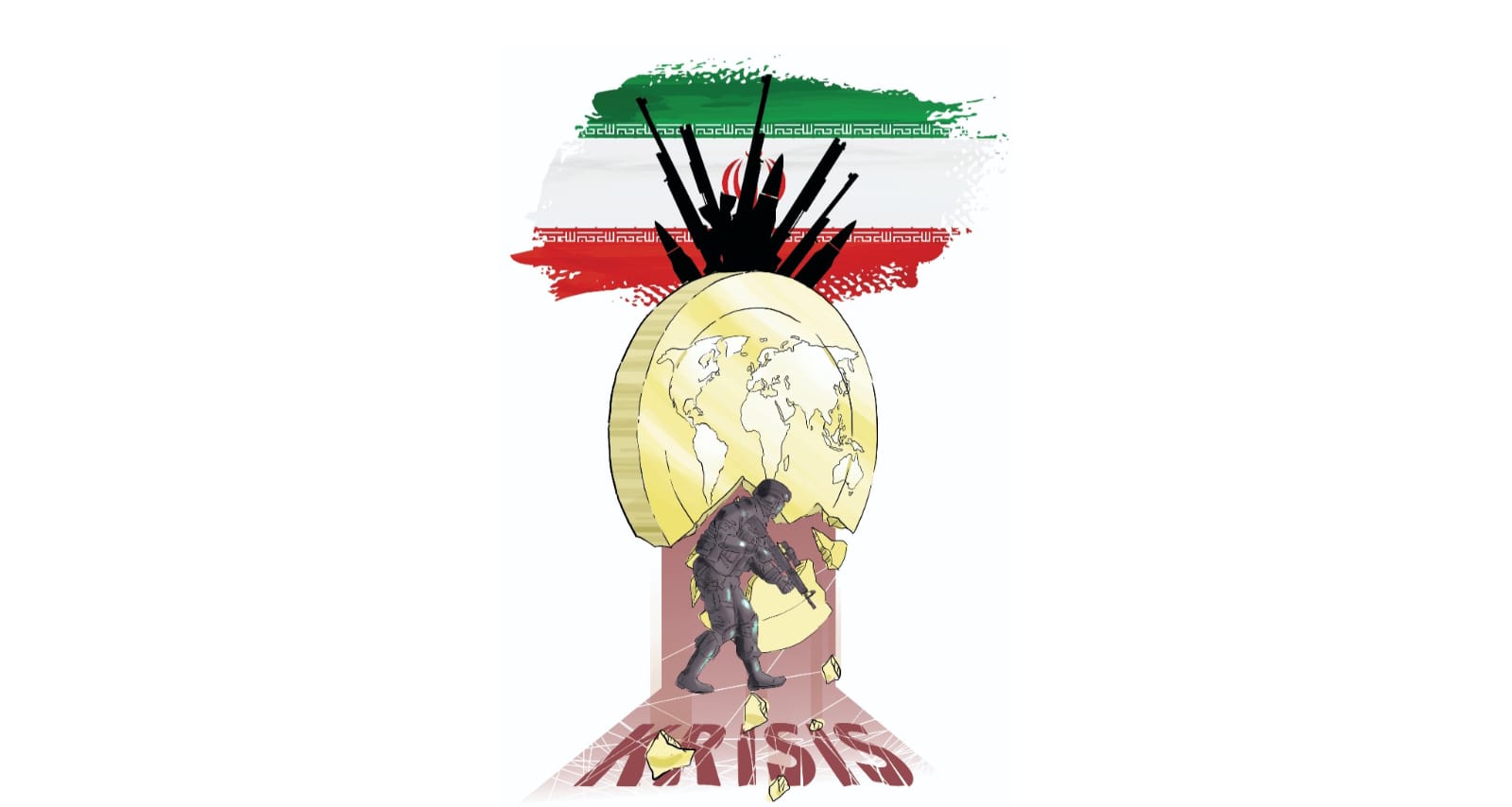
An open military conflict between Israel—with United States (US) support—and Iran at the beginning of 2026 has brought about very significant risk shocks to the global economy.
Unlike geopolitical tensions with limited impacts, such as the ongoing Ukraine versus Russia war since February 2022, this escalation in the Middle East has direct transmission to the world energy market, global inflation, and international financial system stability.
With the US military deployment reaching critical levels and increasingly intense maritime incidents in the Strait of Hormuz, global financial markets are beginning to price in the worst-case scenario. Disruptions to oil supplies from the Strait of Hormuz represent the primary transmission channel for the economic impacts of the US-Iran conflict.
This strategic route carries around 20% of global oil supplies, while Iran itself contributes about 3% of world oil production. Additionally, around 25% of global liquefied petroleum gas (LPG) trade also passes through the strait. Consequently, the Strait of Hormuz is critical for global oil and gas shipping routes, making it highly vulnerable to serious disruptions if Iran unilaterally intervenes to halt shipping activities there.
The combination of potential blockades in the Strait of Hormuz via sea mines, attacks on tanker ships, and direct disruptions to Iranian facilities creates a supply shock risk unprecedented in the past decade.
Crude oil prices have shown upward pressure since January 2026, with Brent crude breaking through US$70 per barrel and West Texas Intermediate (WTI) above US$65. If the conflict erupts and supplies from the Strait of Hormuz are significantly disrupted, projections indicate prices could surge to the range of US$100-US$130 per barrel.
Historical experience provides precedent: the 2019 attack on Aramco facilities triggered a 15%-19% rise in oil prices in a single trading day. In a broader regional conflict scenario, the surge could exceed that figure, given the much larger scale of potential disruptions.
Rising energy prices will not only impact the transportation and logistics sectors but also increase production input costs across nearly all economic sectors. Net energy-importing countries, including Europe and most of Asia, will feel the heaviest pressure on their trade balances and foreign exchange reserves.
European countries once experienced the bitter impacts when they ‘sided’ with Ukraine during Russia’s invasion of its territory in the 2022-2024 period. The Russian government under President Vladimir Putin completely halted gas flows to all of Europe, resulting in energy price spikes and inflation nearly reaching 10% at that time.
BEWARE OF POTENTIAL STAGFLATION
Now, the energy price surge will trigger a new wave of inflation in the global economy, which is still grappling with post-Covid-19 normalisation. The transmission mechanisms are multi-channel. Rising fuel costs drive up food prices due to higher transportation and fertiliser expenses. Meanwhile, the manufacturing sector faces increased production costs that are ultimately passed on to end consumers.
This inflationary pressure will directly erode consumer purchasing power, slowing domestic consumption that has long been the engine of economic growth in many countries. For developing countries reliant on energy imports, the combination of rising oil and gas prices and domestic currency depreciation against the US dollar will create a multiplier effect in the form of imported inflation that is difficult to control.
The risk of stagflation—a combination of slowing economic growth and high inflation—becomes an increasingly realistic scenario if the conflict lasts more than a few weeks. US President Donald Trump once suggested that the war’s duration could exceed four to five weeks or even longer, starting from the initial attack on 28 February.
Global central banks will face a difficult policy dilemma, between options to ease monetary policy (dovish) to support economic growth or maintain high interest rates (hawkish) to curb inflation. Certainly, years of empirical experience have shown that in energy supply shock situations, monetary policy manoeuvre room is very limited. The available choices are only to hold policy interest rates or raise reference rates.
GLOBAL FINANCIAL MARKET SHOCKS
One transmission channel for geopolitical risks—particularly the Iran war—is through the financial sector. Global stock markets experienced corrections in the early phase of the Iran conflict, driven by sharp increases in risk premiums and uncertainty. Stock exchanges in advanced and developing countries collectively weakened by 1% to 3% after news of Israel’s initial aggression against Iran spread across major media channels.
Historical patterns indicate that if the conflict is limited in scope and duration and does not escalate into a regional war, stock markets tend to recover within three to six months. However, recovery may not be even across all sectors.
Defence and energy sectors are likely to outperform the overall market, while technology, discretionary consumer sectors—being highly sensitive to economic cycles, expanding during strong economies with high purchasing power and declining during recessions—and industries will face heavier pressure due to concerns over slowing demand and supply chain disruptions.
However, the Indonesian stock exchange may face double risks from capital outflows (capital