
Prepare Yourselves! Diesel Power Plants in These Regions to Be Shut Down and Replaced with Solar Power
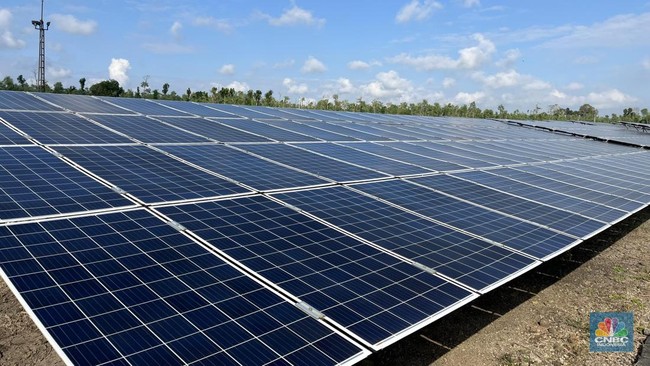
Jakarta – Indonesia’s Ministry of Energy and Mineral Resources (ESDM) will replace electricity from Diesel Power Plants (PLTD) with Solar Power Plants (PLTS) in the nation’s underdeveloped, remote and frontier regions, collectively known as 3T areas.
Deputy Minister of ESDM Yuliot Tanjung stated that these regions currently rely on PLTD for electricity supply and lack connection to other electrical infrastructure networks. “These areas predominantly use diesel generators. In the 3T regions that are not yet connected to the grid, they still use diesel. This is our de-dieselisation programme,” Yuliot said at the ESDM Ministry headquarters in Jakarta on Friday, 13 March 2026.
Specific locations including Simeulue, Nias, Mentawai and Enggano have been prioritised for replacement of PLTD facilities with renewable energy-based power plants (EBT). The ESDM Ministry has already assessed regions in eastern Indonesia for programme implementation. “There are several locations already identified by the Directorate General of Electricity and the Directorate General of New Renewable Energy. We hope to prioritise these in eastern Indonesia,” Tanjung added.
The government has identified more than 30 priority locations for converting fossil fuel-based power plants to renewable energy-based ones. Tanjung noted that this plan represents a continuation of the long-standing de-dieselisation initiative and forms part of the broader 100 Gigawatt Solar Power initiative across Indonesia.
President Prabowo Subianto has directed Energy and Mineral Resources Minister Bahlil Lahadalia to “terminate” diesel power plants and shift to domestically sourced renewable energy such as solar power (PLTS) and geothermal power (PLTP). This shift is necessary to optimise domestic energy resources and reduce dependence on imported fuel, particularly given the uncertain geopolitical climate.
“Given the current geopolitical circumstances, we cannot guarantee long-term energy security,” Bahlil said following a limited meeting with President Prabowo at the State Palace on Thursday, 12 March 2026, regarding the renewable energy task force’s work. “Therefore, we are maximising all our domestic potential by converting fossil energy sources wherever possible.”
According to the 2025-2034 Electricity Supply Business Plan (RUPTL), Indonesia plans to add 69.5 Gigawatts of new power generation capacity by 2034. Of this, 42.6 GW, or 61 per cent, will come from renewable energy sources, and 10.3 GW, or 15 per cent, from energy storage systems.
Among renewable energy types, solar power (PLTS) will constitute the largest share at 17.1 GW, followed by hydroelectric power (PLTA) at 11.7 GW, wind power (PLTB) at 7.2 GW, geothermal power (PLTP) at 5.2 GW, bioenergy at 0.9 GW and nuclear power (PLTN) at 0.5 GW.
Energy storage capacity will include 4.3 GW of pumped-storage hydroelectric facilities and 6.0 GW of battery systems. Fossil fuel-based plants will still add 16.6 GW, comprising 10.3 GW of gas and 6.3 GW of coal.