
Precious Metal Prices Collapse 8% in One Week, What's Behind It?
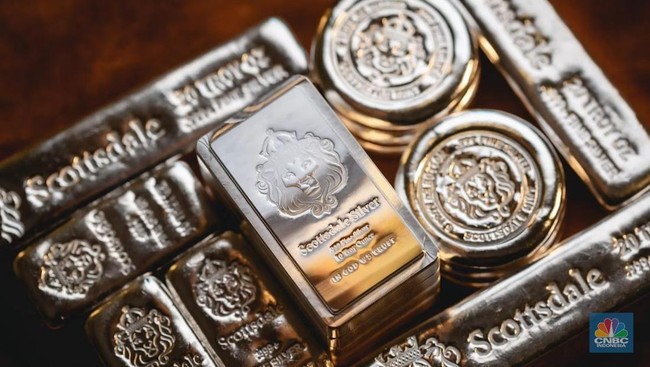
Jakarta – Silver prices closed the trading week under sharp pressure, with the metal declining towards the US$80 per troy ounce level by week’s end. The decline occurred rapidly after a series of macroeconomic pressures reversed investor sentiment in the precious metals market.
According to Refinitiv, the downward trend was consistent throughout the week. On 10 March 2026, silver was priced at US$88.39. Two days later it fell to US$83.91. Trading on Friday 13 March closed at US$80.55. Over five trading days, the decline exceeded 8%.
This movement erased gains that had occurred in early March.
Trading Economics showed that these pressures were also reflected in weekly performance. Silver was quoted at US$80.535 per troy ounce on 13 March. The daily decline reached 3.92%, whilst weekly performance fell 4.50%. The metal still recorded gains of 13.02% since the beginning of the year and jumped 138.47% compared to the same period last year. The highest record was reached in January 2026 at US$121.64 per troy ounce.
Silver’s weakness occurred amid strengthening of the US dollar. Trading Economics reported that investors returned to pursuing the dollar after the US military launched the largest wave of attacks against Iranian targets following the Hormuz Strait blockade. Demand for the dollar increased as markets sought assets considered safer in conditions of global uncertainty.
These conditions changed the position of precious metals in financial markets. Expectations of rate cuts by the US Federal Reserve faded. Rising oil prices above US$100 per barrel increased inflation risk. Energy price pressures have the potential to keep inflation elevated in the coming period.
Changes in monetary policy expectations had a direct impact on precious metals. Assets such as silver generate no interest. When interest rates are expected to remain elevated, investors tend to shift funds to yield-bearing assets such as bonds or dollars.
Pressure on precious metals was also reflected in the gold market. Spot gold prices fell approximately 0.5% on Friday and recorded a weekly decline exceeding 2%. The strengthening of the dollar made precious metal prices more expensive for holders of other currencies.
Reuters noted analysts’ views that tighter monetary policy has become the main factor pressing precious metal prices.
Strong US consumer spending and persistently elevated inflation reinforced the view that the central bank would not cut rates in the near term.
The same pressures rippled through the industrial metals market. Reuters reported that platinum fell around 4% whilst palladium weakened approximately 2.5% in the same trading period. This movement reflected broader risk sentiment in the metals market.
Silver still recorded gains throughout the year. The metal rose more than 18% since the beginning of 2026, though recent pressure has slowed this upward trajectory. This week served as a reminder that precious metals markets are highly sensitive to changes in the direction of the dollar and shifts in global monetary policy expectations.