
Pre-trial Hearing for Lee Kah Hin, Maqdir Ismail: False Oath Does Not Exist
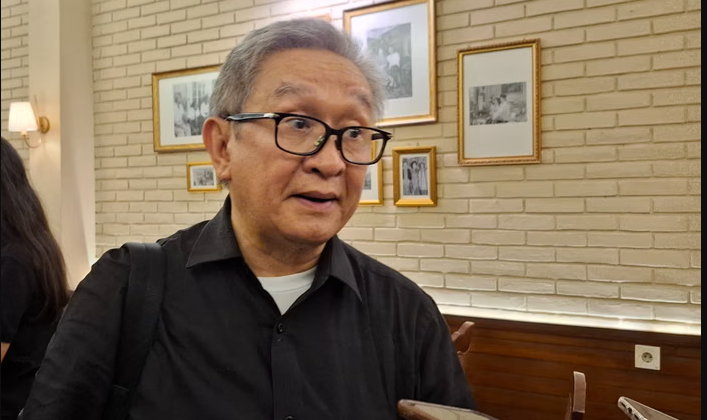
The legal counsel for PT Wana Kencana Mineral (WKM) director Lee Kah Hin, Haris Azhar, argued that the case against his client does not meet human rights or fair trial standards. “This case is procedurally defective under the Criminal Code of Procedure (KUHAP). In other words, it is flawed,” Haris stated following the hearing at South Jakarta District Court on Wednesday, 11 March.
The case fails to comply with human rights-based legal standards, particularly the principle of fair trial. “Article 14 of the ICCPR (International Covenant on Civil and Political Rights) establishes the standard of fair trial to guarantee human rights,” Haris explained. This principle requires balanced treatment for the accused to mount an effective defence. “The suspect’s rights to present the truth, expert testimony and witness evidence have not been accommodated,” he said.
According to Rolas Sitinjak, another defence counsel for Kah Hin, the right to defence was compromised because the witnesses and experts requested by the client were not included in the case files. “Experts were invited, but the files were immediately sent to the Prosecutor’s Office without waiting for the experts to arrive and provide testimony,” Rolas stated. The same problem occurred with witnesses. “Witnesses were invited but were not examined, on the grounds that the files had already been submitted,” he added.
Meanwhile, defence counsel Maqdir Ismail challenged the false oath allegation levelled against Kah Hin. Based on the testimony of witnesses and experts presented by the defence team, the elements constituting perjury against Lee Kah Hin are not satisfied. “They (witnesses and experts) testified that there is no perjury. Yet the main allegation is false oath,” Maqdir stated after the hearing.
Maqdir highlighted remarks by expert witness Retired Commissioner General Oegroseno, Deputy Police Chief 2013–2014, who stated that perjury could only occur if there were a warning or order from the judge, as the judge must be aware of false testimony from a witness or defendant. “Under KUHAP, it is the judge who must remind the witness or anyone in the courtroom suspected of providing false testimony. Because they have already been sworn in,” Oegroseno explained.
In addition to Oegroseno, expert witnesses at the hearing included Chairul Huda, Professor of Criminal Law at Muhammadiyah University Jakarta, and Mahrus Ismail of Islamic University Indonesia. According to their testimony, Maqdir noted, there is no legal concept of an “Information Report” in criminal procedure law. “KUHAP only recognises a Police Report as the basis for initiating an investigation,” he stated. In reality, Lee Kah Hin’s case originated from an Information Report filed by Ardianto of PT Position.
After the hearing, the defence counsel for Metro Jaya Police, who designated Kah Hin as a suspect, declined to comment. “We were given a court appearance assignment. For public information, we defer to the Police Public Relations Office,” the counsel said.
As previously reported, Haris suggested that the case actually constitutes a commercial war between competing nickel companies in Weda Bay. He pointed out that the case originated from a complaint by PT Position, a company whose owner is Kiki Barki, whose son Steven Barki has been mentioned repeatedly in informal discussions outside the legal process between PT WKM and PT Position (a subsidiary of Harum Energy).
Haris expressed concern about the nature of the proceedings. “This prosecution appears designed to suppress a business rival using state instruments. This is a test for the new KUHAP. Whether the new KUHAP is strong enough to counter such practices,” he said during the first hearing on Monday, 9 March.
Kah Hin, together with Chief Executive Officer Eko Wiratmoko, appeared as witnesses for the Prosecutor in October during hearings concerning the installation of boundary markers in the Nickel Mining Permit area in Weda Bay. After PT Position claimed the markers obstructed its operations, the company’s director reported two PT WKM employees, Awab Hafiz and Marsel Bialembang, for allegedly installing the markers. However, the markers were installed within PT WKM’s concession area to protect nickel reserves belonging to the state.
Oegroseno noted that such matters should not occur, as they are not regulated by KUHAP. Maqdir requested that defence counsel’s legal opinions that differ from investigators’ positions not be construed as obstruction of the investigation.