
Pramono Warns of Damaging Economic Impact of US-Israel Attack on Iran on Jakarta
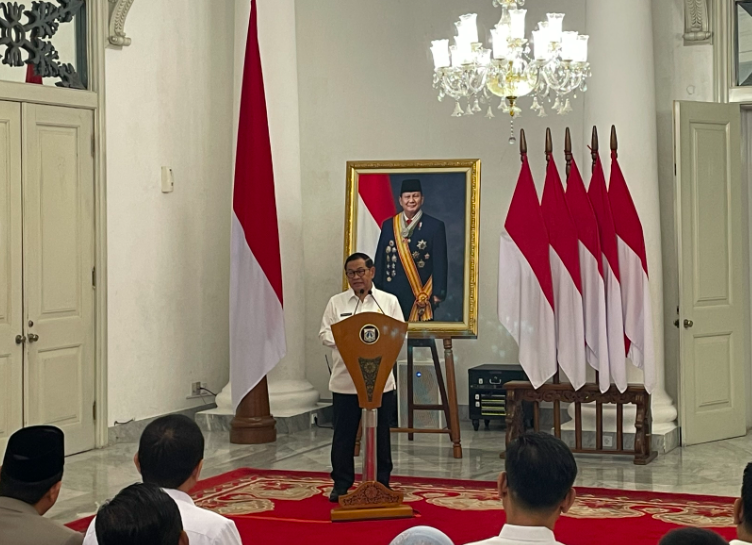
Jakarta Governor Pramono Anung Wibowo has warned that prolonged conflict in the Middle East, particularly between Iran and the United States-Israel alliance, could have significant consequences for Indonesia’s economy, including the capital city.
“If the war is prolonged, its impact will certainly be substantial. Why is the impact so significant? The supply chain will undergo significant changes,” Pramono said during remarks at a joint iftar meal at the West Jakarta Sub-district Head’s office on Monday.
He noted that this would inevitably lead to increases in the prices of goods and services as well as fluctuations in the rupiah’s exchange rate against foreign currencies. “This will place pressure on our national budget,” he said.
Pramono also highlighted that global oil prices are currently experiencing very significant increases. Given the ongoing conflict between Iran and the United States-Israel, Indonesia and particularly Jakarta may face periods requiring national unity and cooperation.
In light of this, Pramono appealed to officials in West Jakarta Sub-district and the Regional Coordination Forum of Regional Leaders (Forkopimda) to work together to protect Jakarta. “Therefore, solidarity, mutual cooperation, and trust are key to how we as a great nation face this situation,” Pramono said.
Previously, Pramono had already instructed his staff to prepare for the possibility of a crisis amid the Iran-Israel-US conflict. He directed Jakarta’s state-owned enterprises (BUMD) to always plan for crisis scenarios. “If there are shortages of certain products, we must prepare accordingly,” he said.
Pramono expressed hope that the conflict would not be prolonged. However, as Jakarta’s leader, he acknowledged that the situation would impact the capital, particularly in the supply of goods and services, and price increases could occur.
“This is because the supply chain passes through the Strait of Hormuz, where nearly 30 per cent of global oil always passes through, along with other goods,” he explained. Should the strait be closed, supply chains would become longer, transportation costs for goods and services would increase, and prices would inevitably be affected.
As a precaution, Pramono has mobilised all state-owned enterprises to jointly address this possibility. For example, Jakarta’s administration recently received imported Australian cattle as a measure to stabilise beef prices in the capital. “This is our strategy to prevent beef prices from rising, and fortunately, prices have not increased to date,” Pramono said.