
Pramono Views Family Development as Long-Term Investment
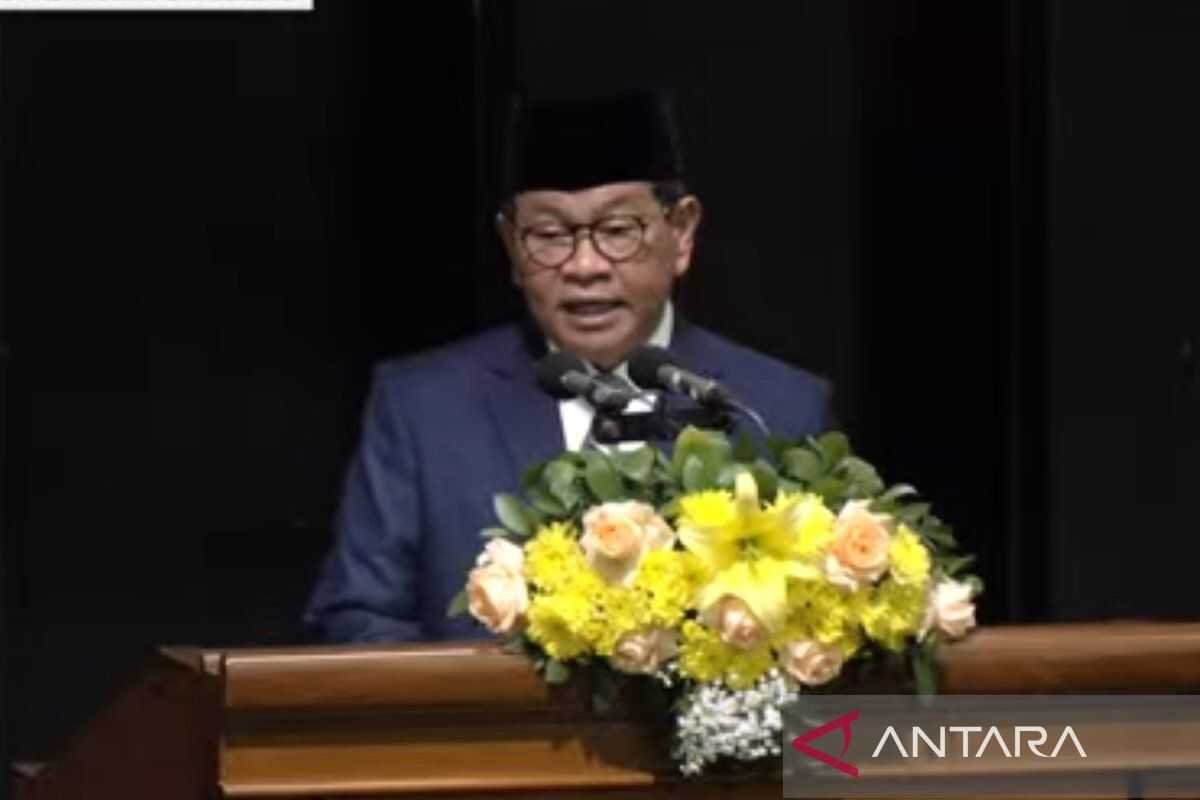
Jakarta (ANTARA) – Jakarta Governor Pramono Anung has stated that family development plays a strategic role as a long-term investment and foundational capital, particularly for Jakarta, which is currently undergoing transformation as a global city.
“The family is the primary foundation in social development, not merely the smallest unit in social structure, but rather the principal actor in building social resilience and development sustainability,” said Pramono in Jakarta on Monday.
According to him, the values of affection, education, and character development must be instilled within the family environment from an early age, such that family development plays a strategic role as a long-term investment and foundational capital for development.
Moreover, he stated, Jakarta is currently undergoing transformation as a global city with characteristics of dynamic urban life. To this end, the DKI Jakarta Provincial Government (Pemprov) has submitted a Draft Regional Regulation (Raperda) on Family Development.
“Starting from the importance of family development as a foundation for development, the executive is submitting a draft regional regulation or Raperda,” said Pramono.
He stated that the Raperda on Family Development is based on four main considerations. First, the legal consideration of Article 13, Paragraph 2 of Law Number 52 of 2009 concerning population development and family development.
This regulation, he continued, mandates the provincial government to take responsibility in implementing family development through regional regulation.
“These achievements still fall below the national average, which ranges from 60 to 72.08 in the same time period,” said Pramono.
He also assessed that more systematic efforts are needed to improve the quality of family development, both in terms of welfare, resilience, and family participation, particularly given that the Family Quality Index (IPKK) has been established as a national priority in the national long-term development plan and the national medium-term plan with a target of 75.55 by 2029 and 80 by 2045.
Subsequently, he stated the third consideration, namely Jakarta’s transformation as a global city, which demands improvements in the quality of human resources, effective governance, and social resilience of the community.
“We believe that family development becomes an integral part in shaping a generation that is adaptive to the dynamics of urbanisation and global development, whilst still upholding local values and identity,” said Pramono.
He outlined the fourth consideration, namely governance and family development policies that still operate under a sectoral paradigm.
Family problems, Pramono continued, encompass the entire lifecycle and various aspects of life, yet their management remains fragmented and not yet oriented towards enhancing family welfare, resilience, and participation.
Based on these four considerations, the Executive proposes the Raperda on Family Development, with the aim of realising families of quality in meeting physical, material, and mental-spiritual needs in a balanced manner so that family functions can operate optimally.
“Additionally, this Raperda also aims to strengthen harmonisation and synchronisation of family development efforts within the DKI Jakarta Provincial Government together with all stakeholders,” added Pramono.