
Pramono Signs Instruction for Household Waste Sorting in Jakarta
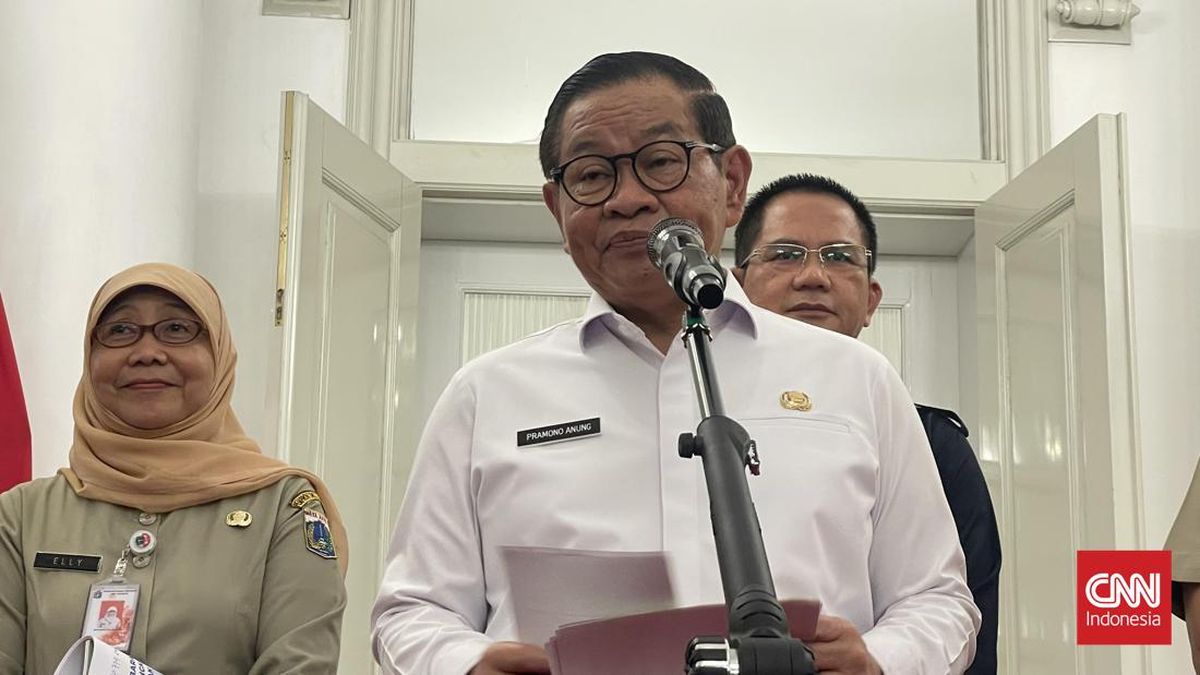
Governor of DKI Jakarta, Pramono Anung, has stated that he has signed a gubernatorial instruction (Ingub) on household waste sorting.
“I have signed the gubernatorial instruction for the waste sorting process,” said Pramono at Jakarta City Hall on Monday (4/5), quoted from Antara.
In addition, in the near future, the DKI Jakarta Provincial Government will collaborate with the Ministry of Environment and Forestry to declare waste sorting in Jakarta.
Pramono stated that waste management in the capital must be carried out collectively by both the government and the community. It is hoped that the household waste sorting movement can be carried out massively throughout Jakarta.
“The pilot has actually started in Rorotan, in Cilincing and so on, but hopefully next week this movement will become a massive one carried out by all administrative cities in Jakarta,” he said.
Previously, Pramono had said that the habit of sorting waste at home must begin to be implemented in this capital of Indonesia, because the capacity of the waste accommodation at the Bantargebang Integrated Waste Processing Site (TPST) is no longer adequate.
Moreover, he added, following the landslide that occurred at the site some time ago.
“For Jakarta residents later, like it or not, like it or not, they must start getting used to sorting waste. Because firstly, the limitations of Bantargebang make it impossible to manage all the waste as before,” he said.
Pramono has also uploaded a socialisation video regarding waste sorting on the official Instagram account of the DKI Jakarta Provincial Government.
In the video, Pramono invites all Jakarta residents to participate in the Source-Based Waste Sorting Movement.
The community must sort waste into four categories. The four categories are easily degradable waste that can be processed into compost, recyclable waste such as plastic, paper, and metal, which can be channelled to waste banks.
Then, hazardous and toxic materials (B3) waste, and residual waste that cannot be processed again.