
Pramono Inspects Sailfin Catfish Capture in North Jakarta, Yield Exceeds 200 Kg
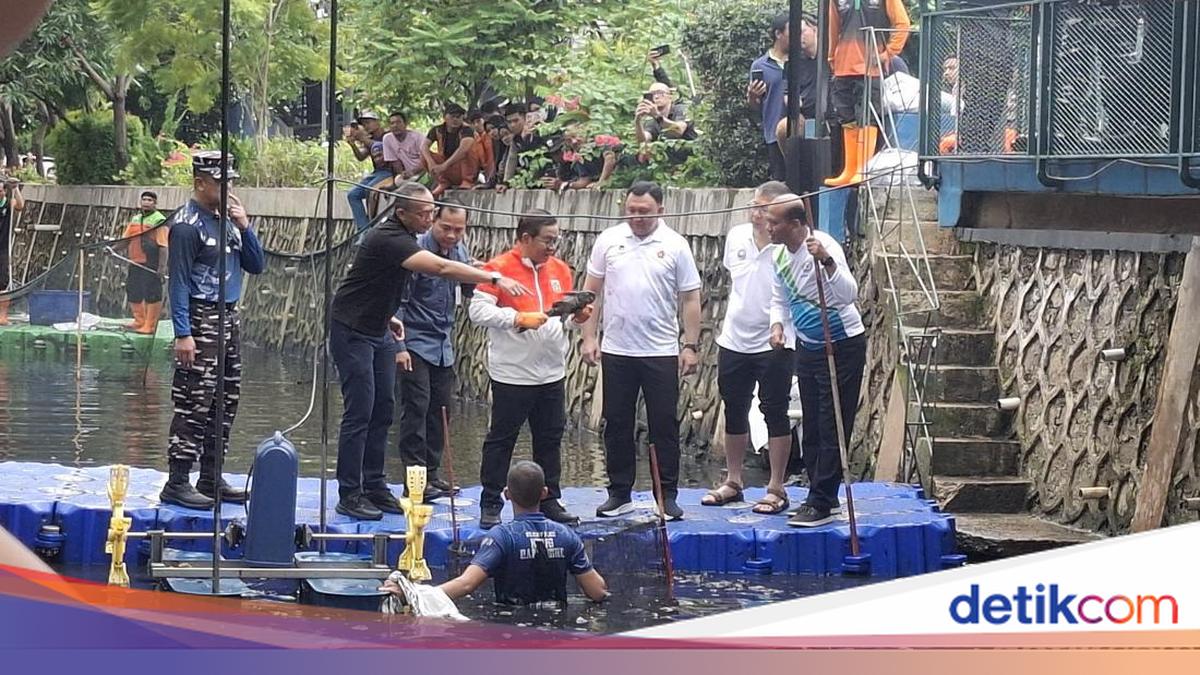
Governor of DKI Jakarta, Pramono Anung, directly inspected the sailfin catfish capture activities in the Kelapa Gading area, North Jakarta. In this capture operation, it is estimated that more than 200 kg of sailfin catfish were caught.
During the inspection, Pramono admitted that he had initially estimated the catch to be around 150 kilograms. However, the results on the ground showed a higher figure.
“Initially, we estimated it might only be around 150 kilograms. But from what we saw earlier, it’s definitely over 200 kilograms,” said Pramono in the Kelapa Gading area, North Jakarta, on Friday (17/4/2026).
According to him, this situation demonstrates the massive population of sailfin catfish in Jakarta’s waters, particularly in rivers and drainage channels. In addition to threatening the ecosystem, Pramono also warned of the potential dangers of sailfin catfish if consumed. He stated that the residue content in the fish is relatively high and poses a health risk.
“On average, it’s already above 0.3 residue levels. That’s very dangerous if consumed,” he emphasised.
The DKI Provincial Government, continued Pramono, will continue to intensify the routine capture of sailfin catfish and not just treat it as ceremonial. In fact, they will assign Public Facilities and Infrastructure Handling Officers (PPSU/PJLP) specifically to address this issue.
“We will assign special PJLP to reduce the dominance of sailfin catfish in rivers and drains,” he said.
Meanwhile, the captured sailfin catfish will temporarily be buried at prepared locations. Nevertheless, the government is also open to other utilisations such as organic fertiliser.
The Ministry of Marine Affairs and Fisheries (KKP) also appreciated the steps taken by the DKI Provincial Government. The Director General of Aquaculture at the Ministry of Marine Affairs and Fisheries of the Republic of Indonesia, Haeru Rahayu, stated that direct capture methods remain the most effective way to control the sailfin catfish population.
“Biologically, there is no predator yet, and chemically, it risks the environment. So, conventional methods like this are still the most effective,” he said.