
Pramono Claims Slum RW in Jakarta Down 52%, from 445 to 211
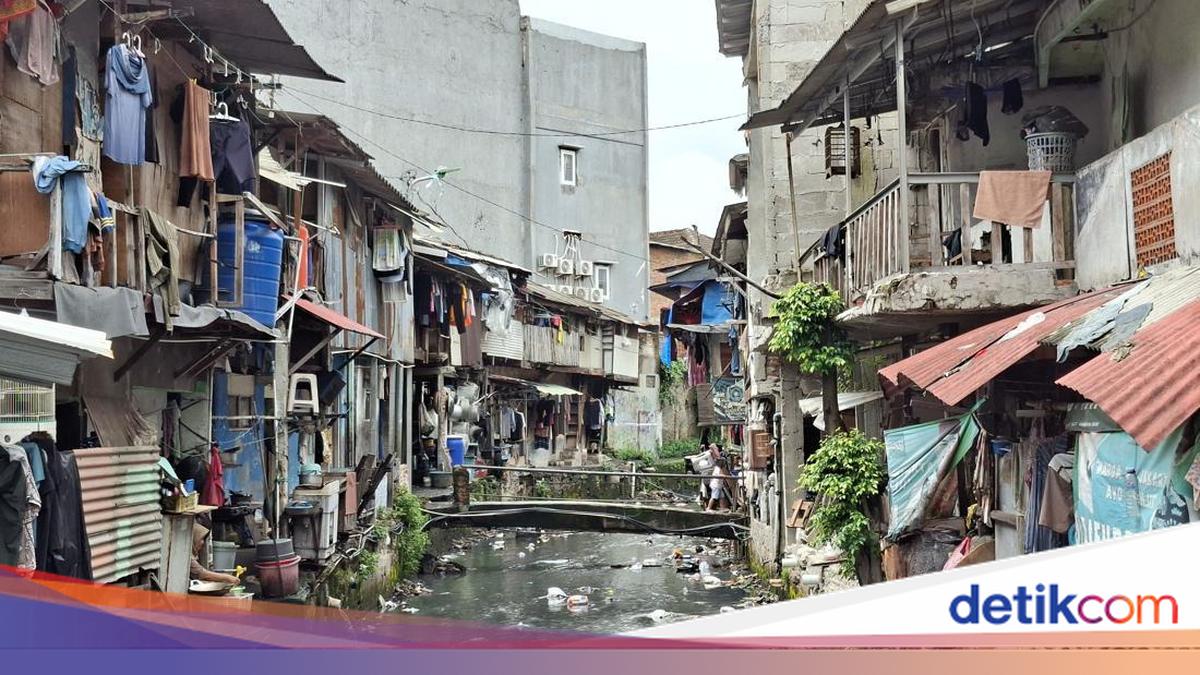
Governor of DKI Jakarta Pramono Anung stated that this achievement is the result of joint efforts by various parties, including collaboration with the Central Statistics Agency (BPS).
“Broadly speaking, in principle, from 445 slum RW in 2017 to 211 this year. The reduction is approximately 52.58 percent,” said Pramono at Jakarta City Hall on Wednesday (6/5/2026).
Nevertheless, Pramono emphasised that not all of this achievement is claimed as the result of his government’s work. He mentioned that various factors contribute, including population growth dynamics and the complexity of on-the-ground issues.
“I do not want to claim that it is all the result of what we have done. However, with the continuously increasing population and increasingly complex problems, this reduction should be appreciated,” he said.
Pramono also requested that data collection be deepened, including for areas previously considered no longer slum. This data, he said, will serve as the basis for improving the quality of life for Jakarta residents.
Meanwhile, BPS Head Amalia Adininggar Widyasanti explained that slum RW data collection is conducted using a new technology-based approach. In addition to field surveys, BPS also uses satellite imagery to enhance data accuracy.
“So we use two approaches: direct data collection in the field combined with calibration through satellite imagery methodology. Thus, the results are more accurate by utilising technological advancements,” said Widy.
BPS recorded that out of a total of 2,749 RW in DKI Jakarta, 211 RW were identified as slum areas based on the 2025 data collection finalised in 2026. Going forward, BPS together with the DKI Provincial Government will continue verification of 1,904 RW using satellite imagery technology to ensure the current on-the-ground conditions.
Not only that, the collaboration will also be expanded to data collection on green open spaces (RTH) in Jakarta. BPS is also preparing a data dashboard that can be used by the Provincial Government to monitor socio-economic conditions more comprehensively.
“We have also agreed to collaborate on data collection related to green open spaces. For this, we will certainly use satellite imagery technology,” she added.