
Pramono Anung Accelerates Green Space through Micro-Land Utilisation
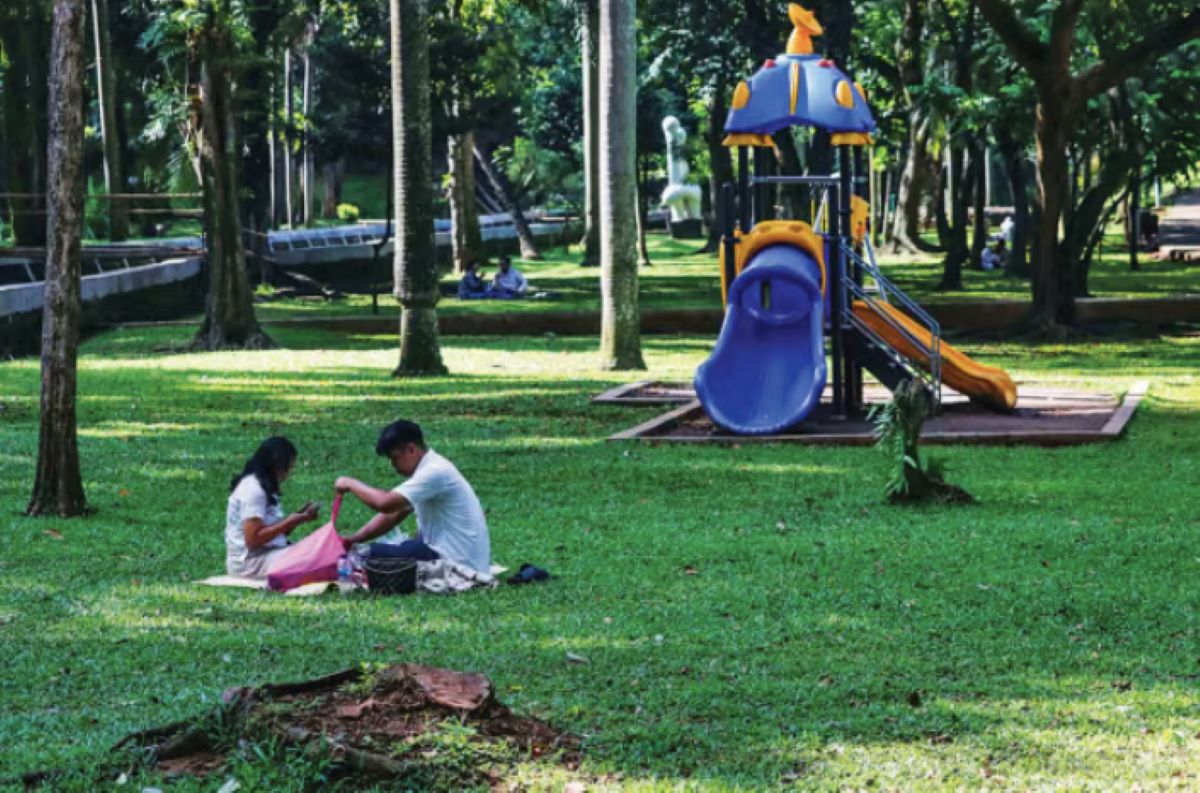
The Jakarta Provincial Government is redirecting its strategy to expand green open space (RTH) in the capital city. Rather than focusing exclusively on large-scale land acquisition, which has become increasingly difficult to locate, developing small-scale parks has become the primary priority.
Governor Pramono Anung emphasised that the effectiveness of green space is not determined solely by the size of the land area, but also by its distribution and management, which involves multiple stakeholders.
“Social and public facilities do not always have to be large. Land of around 1,000 square metres can be utilised to create parks and add green open space to Jakarta,” said Pramono on Sunday (15/3).
Pramono is confident that optimising these “micro-parcels” will reduce bureaucratic delays and technical obstacles in expanding the city’s green lung. “Through this approach, green open space in Jakarta can continue to increase without waiting for vast land areas,” Pramono explained.
Realistic Strategy
This initiative has received support from the legislature. Wibi Andrino, Deputy Chairman of the Jakarta Provincial Parliament, considered the policy highly relevant to Jakarta’s current geographical conditions. Given soaring land prices and dense residential settlements, utilising social and public facilities land has become the most tactical solution.
“This is permitted under regulations. So if there are parties willing to donate parks, that can be one way to increase green open space,” said Wibi.
He added that developing small parks is a more concrete first step than forcing large-scale park projects, which are frequently hindered by land acquisition difficulties.
“Rather than waiting for large parks that are difficult to realise due to land limitations, it is better for us to start with smaller projects first,” Wibi added.
Promoting Public Collaboration
Beyond physical acceleration, the Jakarta Provincial Government also hopes this scheme can stimulate the spirit of mutual cooperation between government and the private sector as well as the community.
The presence of small green spaces in residential areas is considered more effective in improving air quality and serving as spaces for direct social interaction among residents.
Wibi hopes this step will encourage greater collaboration between government and community in creating green space in Jakarta. Small public facilities spanning 2.2 hectares are projected not only as the city’s lung, but also as centres for social interaction and sports for residents.
He acknowledged that achievements remain far from ideal standards. The Jakarta Provincial Government is targeting that the proportion of green space in Jakarta can reach 30 per cent by 2045.
The main obstacle lies in land acquisition, both through purchase and land clearing, which often conflicts with the social and economic realities of a densely populated city.
Governor Pramono Anung has pledged to ensure that fund usage is conducted in an open and transparent manner. The Governor will also open a number of parks in Jakarta that operate around the clock, including Ayodya Park, Langsat Park, and Leuser Park.
The Jakarta Provincial Government has reminded residents not to damage public facilities, following incidents of damage to public facilities caused by residents hunting for virtual coins promoted on social media.