
Practitioner: AI Needs Greater Emphasis in Interpreting Training
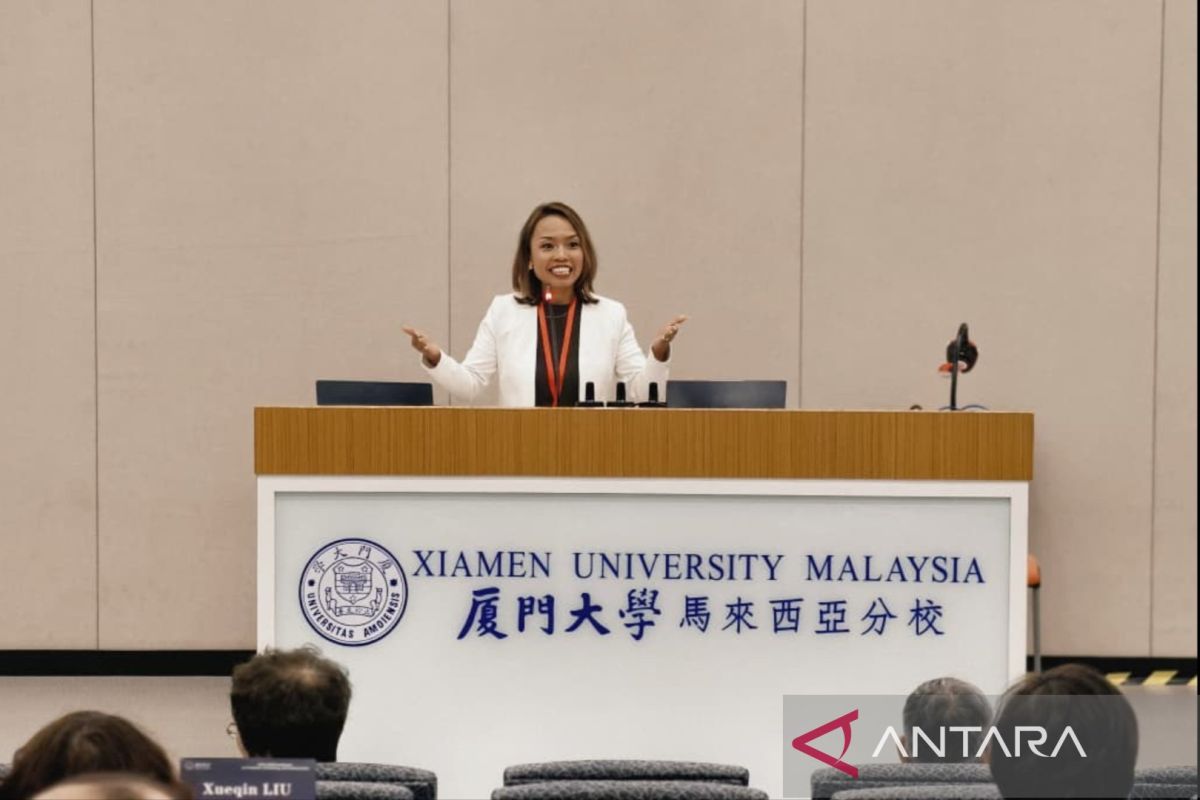
Kuala Lumpur (ANTARA) - Ni Ketut Ayu Puspita Dewi, Chair of the Internal Division of the Indonesian Translators Association (HPI), believes that the utilisation of artificial intelligence (AI) in interpreting training needs to be emphasised to support the future development of interpreting practitioners.
Ayu, who is also the founder of Bali Interpreting Academy, stated that from an industry perspective, AI can be applied in interpreter training programmes.
“In my view, from the interpreting industry perspective, AI could be more emphasised in the training field.
“For instance, academies and training programmes for interpreters in Indonesia could better embrace AI,” said Ayu.
She views AI as opening up significant opportunities to improve the quality and efficiency of learning, where AI-based tools can be used as learning assistants in translation practice, interpreting simulations, and translation/interpreting quality analysis.
Ayu mentioned that at the China-ASEAN Conference on Translation, Interpreting, and Communication initiated by Xiamen University, on 18-19 April 2026, at Xiamen University Malaysia (XMUM), she advocated for the creation of a learning community.
“I think this is one of my key takeaways, to bring back and implement AI in the interpreting teaching system,” said Ayu.
“I believe universities in Indonesia will also be able to embrace the application of AI in interpreter training in the future,” she explained.
She also encouraged enhancing the competencies of interpreting practitioners through the establishment of the China-ASEAN Certification of Competence and the China-ASEAN Learning Community.
“In the future, we can also support more research on interpreting related to ASEAN languages. Because currently, based on existing data and papers presented from the Xiamen University survey, research on interpreting for ASEAN languages is still minimal,” said Ayu.
On the other hand, Ayu appreciated the inauguration of the China-ASEAN Association for Translation, Interpreting, and Communication as part of the conference.
She considers the establishment of the association to be a timely initiative.
“So far, I have had considerable concerns about the lack of quality in training and research on languages in ASEAN countries. I very much welcome the establishment of this China-ASEAN Interpreters and Translators Association positively,” she said.
She views this as a concrete step to unite strengths to collectively address existing challenges.
“In this way, countries such as the Philippines or Cambodia, for example, which do not have associations and have limited availability of interpreters, can be assisted through our collective efforts,” she stated.
Furthermore, the China-ASEAN cooperation in the organisation is seen as able to help bridge intercultural understanding, as well as facilitate more efficient and effective communication.
“Because translators and interpreters will have better cultural context capabilities through this cooperation, thus improving the quality of their work. For example, bilateral or economic cooperation bridged by translators and interpreters will yield high quality,” explained Ayu.
The association, initiated by Xiamen University and founded jointly by more than 10 leading institutions from China, Indonesia, Malaysia, Singapore, Thailand, Vietnam, and other countries, has its secretariat at the College of Foreign Languages and Cultures, Xiamen University, China.
The launch of the association marks a new chapter in cross-cultural translation and communication cooperation between China and ASEAN countries, as well as an initial step to address challenges and opportunities in the era of artificial intelligence.