
Practitioner: AI Brings Challenges and Opportunities to the World of Translation
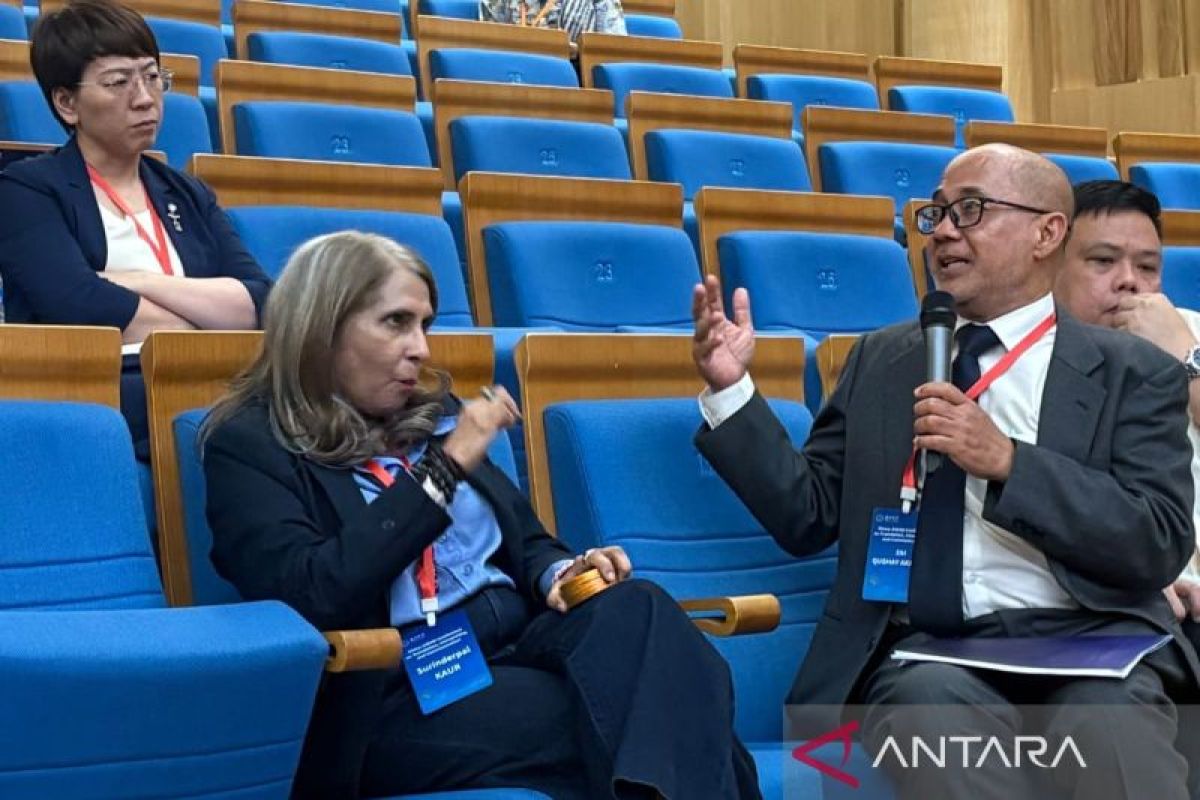
Kuala Lumpur (ANTARA) - Deputy Chairman of the Indonesian Translators’ Association (HPI), Eki Qushay Akhwan, believes that artificial intelligence (AI) brings challenges as well as great opportunities in the world of translation or language transfer.
“The presence of AI brings challenges as well as very significant opportunities in translator education. The main challenge is the change in competencies required by the market,” said Eki.
This was stated at the launch of the China-ASEAN Alliance for Translation, Interpreting, and Communication, as part of the opening of the China-ASEAN Conference on Translation, Interpreting, and Communication, at Xiamen University Malaysia (XMUM), in Malaysia, on Saturday (18/4).
Eki noted that in the past, translator education focused heavily on language mastery and conventional translation techniques. However, graduates now also need to understand technology-assisted translation, post-editing, terminology management, data literacy, quality assurance, and the ethics of AI use.
According to Eki, curricula that do not adapt risk producing graduates who are less prepared to face the rapidly changing industry reality.
Another challenge is the misconception that AI can fully replace human translators. In professional practice, especially for high-value, sensitive, creative, or legally and reputationally impactful texts, Eki believes the human role remains very important.
“What changes is not the need for translators, but the profile of their competencies. Future translators need to become language professionals who can work alongside technology, not compete with it,” he explained.
Eki said AI can increase productivity, speed up terminology research, help with term consistency, expand access to training, and open new service models such as multilingual content management, localisation, transcreation, and language services for the digital economy.
In education, AI can be used for simulating real projects, providing quick feedback, error analysis, and personalised learning.
According to him, if managed well, AI can actually improve the quality of translator education.
“As a representative of the Indonesian Translators’ Association, I very much hope for concrete cooperation with the China-ASEAN Association of Translation, Interpreting and Communication to address AI challenges collaboratively,” he hoped.
He noted that technology challenges are cross-border in nature, so the response should ideally be regional as well.
“No single institution or country can address all these challenges alone,” said Eki.
Joint curriculum and teaching material development, such as training modules on AI literacy, post-editing, prompting for language professionals, AI ethics, and quality management relevant to the Asian and ASEAN context.
Training for lecturers, trainers, and practitioners through capacity-building programmes so they can integrate the latest technology into teaching and work practices.
Joint research, particularly on the impact of AI on translation quality, changes in the job market, new competency needs, languages with limited resources, and quality evaluation standards in the region.
Student and expert exchanges, as academic and professional mobility will be very beneficial for sharing best practices, understanding cross-country market needs, and building networks for the new generation of language professionals.
Regional competency standards and certification, where all parties need to start discussing AI-era translator competencies to create a shared reference recognised across countries.
Development of digital language resources, such as corpora, multilingual glossaries, and quality datasets to support language technology for languages in the region.
The alliance, initiated by Xiamen University and founded together by more than 10 leading institutions from China, Indonesia, Malaysia, Singapore, Thailand, Vietnam, and other countries, has its secretariat at the College of Foreign Languages and Cultures, Xiamen University, China.
The launch of this alliance marks a new chapter in cross-cultural translation and communication cooperation between China and ASEAN countries, as well as an initial step in addressing the challenges and opportunities in the era of artificial intelligence.