
Prabowo's Strategy to Achieve 8% Economic Growth Through MBG to People's Housing
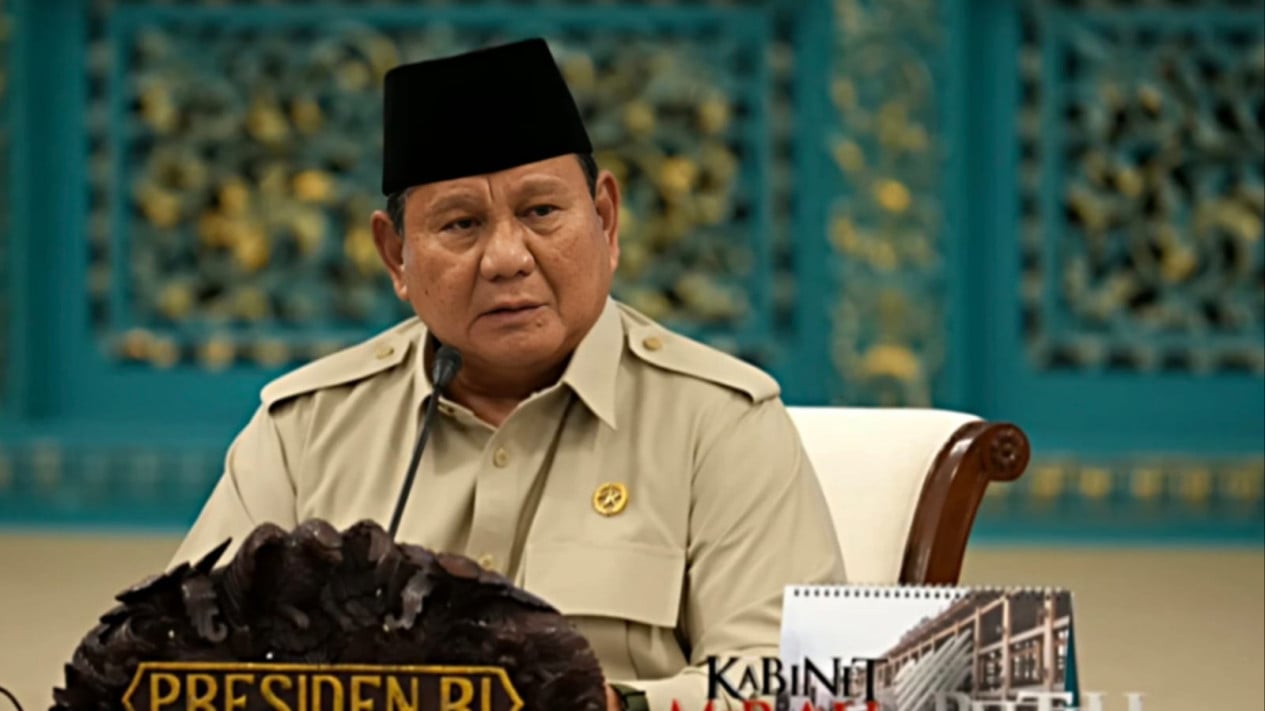
Jakarta, VIVA – President of the Republic of Indonesia Prabowo Subianto is targeting Indonesia’s economic growth to reach 8 per cent. One of his strategies is to create many job opportunities.
Various initiatives have been undertaken to create jobs, encompassing Free Nutritious Meals (MBG), Red and White Village Cooperatives, Red and White Fishermen’s Villages, to the one million homes construction programme.
Prabowo highlighted the significant impact of the MBG programme on employment absorption. He mentioned that at its peak, the programme will have around 30,000 kitchens, each employing 50 people.
“That’s already 1.5 million,” said Prabowo in an official statement, quoted on Sunday, 22 March 2026.
Not only that, each kitchen will also involve supply chains from food ingredient vendors, estimated to absorb an additional up to 1.5 million workers.
Besides MBG, the government is also relying on Red and White Village Cooperatives as drivers of village economies. With a target of 80,000 cooperatives, each employing around 18 people, this programme has the potential to create around 1.4 million new jobs.
In the maritime sector, Red and White Fishermen’s Villages are focused on increasing productivity and the welfare of fishermen. The government targets the construction of up to 1,100 fishermen’s villages by 2026.
“We’re making a pilot project in Biak, where fishermen’s incomes have risen on average by 60 per cent to 80 per cent,” said Prabowo.
Prabowo also emphasised that this programme not only increases income but also drives regional economic growth.
Meanwhile, the one million homes construction programme is said to be one of the biggest engines of job creation.
Each housing unit is estimated to involve five workers, so the total could absorb up to 5 million workers, not including the ripple effects from supporting industries such as building materials and utilities.
Prabowo is optimistic that the combination of all these programmes will become the national economic locomotive.
“I’m confident that when this runs, it will be more than 8 per cent,” he concluded.