
Prabowonomics: From Artificial Economic Growth to Fundamental
The public may have only recently latched onto the term “new normal” when the Covid-19 pandemic paralysed the world in 2020. In essence, however, this is an old concept. One of its intellectual roots is the giant of the Austrian school of economics, Joseph Schumpeter.
In 1942, through his book Capitalism, Socialism, and Democracy, Schumpeter demolished the naive classical and neoclassical fairy tale that believed the economy would always sweetly head towards a static equilibrium point between supply and demand. For Schumpeter, the economy is wild, turbulent, and constantly changing. Equilibrium in the economy actually itches entrepreneurs to innovate in order to dominate the market.
This innovation is the womb of what he called creative destruction. Entrepreneurs, through their creative destruction, ultimately create a business landscape that is always imbalanced. This imbalance is the real new normal; a new equilibrium. A calm market never lasts long. Although it crushes slow old players, it is creative because it gives birth to new value, industries, and efficiencies.
However, in the midst of this gladiatorial arena of innovation, where does society stand? Borrowing from Michael Porter’s Five Forces framework (1988), the bargaining power of buyers can vanish without a trace when the market is controlled by a handful of dominant players. The majority of society, which lacks alternative products or greater purchasing power, ultimately becomes forced price takers. They have no bargaining power and are potentially at the mercy of cartels or oligopolies amid the onslaught of innovations whose efficiencies are only enjoyed by capitalist elites.
This disparity feels particularly poignant when the market moves imbalanced. The risk of inequality becomes a time bomb ready to explode at any moment. This situation is clearly a danger signal for the state if it is content to act merely as a “night watchman” amid the stormy weather of globalisation’s creative destruction.
To address this despair, Indonesia does not need to ape the State Capitalism model of other countries. We have a far more exalted and irrefutable foundation: Article 33 of the 1945 Constitution. The constitution mandates that the state cannot just sit on the sidelines as a spectator. Branches of production that are vital to the state and control the livelihood of the people must be controlled by the state.
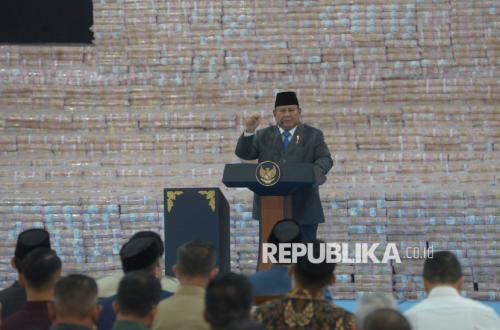
This constitutionally grounded active involvement is now being pushed with full force by President Prabowo Subianto through the establishment of BP BUMN and Danantara. As stated by the Head of BP BUMN Dony Oskaria at an event at Pertamina and Defend ID last week, in the Prabowo era, state companies must no longer merely serve as the engine of the economy, but must ensure that the growth occurring is not merely fragile artificial growth like a bubble of macro data on paper, but real fundamental growth.
The concrete step is to turn state entities into instruments for creating equitable efficiency. Let us take the example of our poultry industry. For years, the chicken industry has seemed like the “backyard” of giant corporations that monopolise from upstream to downstream. Innovation does occur, but its efficiencies are only enjoyed by a handful of capital holders, while independent farmers struggle and consumers (as price takers) remain choked by fluctuating prices.
This is where the state’s role enters the heart of the industry: not to kill off the private sector, but to break that monopoly. With the state’s presence in the food ecosystem ensuring affordable feed availability and fair market access, the state is disciplining runaway “creative destruction”. The state acts as a balancing actor to create fundamental growth through three main fortresses: food security, energy resilience, and human resource resilience.
Danantara is Indonesia’s grand dream for economic independence. And it proved effective when many countries faced crises, Indonesia was able to navigate through with strong financial capabilities, including robust economic policies. This situation is certainly inseparable from Prabowo’s choices of key figures steering Indonesia’s economy. One of them is bringing in Danantara, while also changing the status of SOEs into a more professional autonomous body, especially since the figures leading it are indeed the right and skilled ones in their fields.