
Prabowo, the Polymath Leader, and Indonesia's Strategic Path
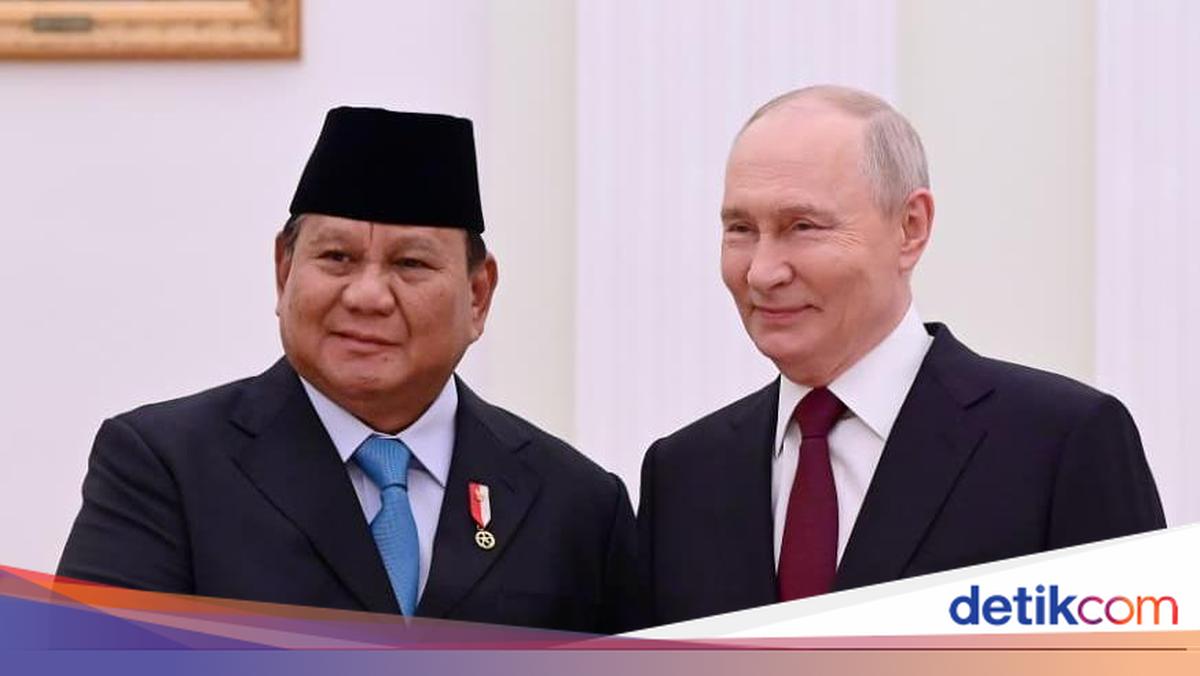
President Prabowo’s journey to Moscow, followed by Paris, reveals an architecture of leadership that operates across domains. The world today moves under simultaneous pressures. Energy pressures, regional conflicts, supply chain disruptions, and technological competition mean a single approach is no longer sufficient.
A figure with integrative capacity is required, namely a polymath capable of connecting economic, defence, and diplomatic variables within a single decision-making framework.
The term polymath refers to an individual with integrated multidisciplinary mastery, not merely broad but deep. This is essential because public policy today always lies at the intersection of multiple sectors. Energy is linked to geopolitics. Unlike the Renaissance man, which refers to a jack-of-all-trades. Polymath, on the other hand, refers to an integrative figure.
Defence is linked to industry. Investment is linked to regional stability. In Moscow, discussions with Vladimir Putin revolved around the axis of energy and strategic industries. In Paris, dialogue with Emmanuel Macron shifted to defence, technology, and investment.
These two points form a consistent line, namely strengthening national resilience through diversification of partners and enhancement of domestic capacity.
Polymath as a Strategic Decision-Making Framework
The polymathic approach is evident in the way issues are positioned in connection. Energy is not read merely as a commodity, but as an instrument of economic stability and geopolitical leverage.
Industrial cooperation does not stop at the transfer of goods but is directed towards increasing value added domestically. Defence is understood as an ecosystem, encompassing technology, logistics, to human resources.
In the Russian context, discussions on energy and minerals have a long-term dimension. Indonesia needs stable and measured access to energy sources to maintain growth continuity.
At the same time, there is a need to strengthen processing industries so as not to stop at the raw material level. This shows a comprehensive reading of the global economic structure.
In France, the focus on defence and technology reflects the need to enhance national capabilities. Modern weapons systems require integration of high technology and strong industrial support. Investment becomes a catalyst to accelerate that process. Here, the logic’s continuity is evident: from energy as a foundation, to defence as a guardian of sovereignty, then to investment as an accelerator of growth.
Polyglot, Cognitive Access, and Classy Diplomacy
The term polyglot is often used mockingly. There is an assumption that mastery of multiple languages has no direct correlation with substantive intelligence. Such an approach is too superficial.
In diplomatic practice, language is a cognitive instrument. It provides direct access to the interlocutor’s way of thinking, the logical structure used, and the nuances of meaning often lost in translation.
A leader who masters several languages has an advantage in negotiations. They can capture context in real-time, read intentions behind word choices, and respond with precision. This accelerates trust-building and reduces communication distortions. In high-level meetings, such details determine the quality of outcomes.
Polyglot ability also expands the spectrum of references. Leaders can access literature, policy documents, and global discourse without fully relying on third parties. This increases independence in thinking.
When combined with polymath capacity, the result is decisions richer in data, sharper in analysis, and more adaptive to international dynamics.
Indonesia is in a phase that demands consistency and resilience. Global pressures will not subside in the near future. Every diplomatic step must yield concrete benefits for strengthening the economy and national sovereignty. The visits to Russia and France indicate that direction. There are efforts to open wider manoeuvre space, maintain balance, and strengthen Indonesia’s position amid global competition.
Such leadership requires continuity. Agendas that have been opened must be followed by disciplined implementation domestically. Industries must be ready to absorb opportunities. Regulations must support acceleration. Human resources must have their capacities enhanced. At this point, the quality of leadership is tested continuously.
Prabowo brings an approach that combines experience, analytical capacity, and cross-cultural communication skills. This forms a profile of a leader capable of reading complexity and acting under pressure. Indonesia needs this type of leadership to move further, measured, adaptive, and oriented towards real results.