
Prabowo Targets Waste Issues in Indonesia to be Resolved in 3 Years Using Local Technology
The government faces policy dilemmas with no truly comfortable options. The government faces policy dilemmas with no truly comfortable options.
President Prabowo Subianto has set a target to resolve the waste issue in all cities across Indonesia within the next two to three years. The President emphasised that the key to solving this long-standing problem lies in the use of efficient and affordable domestic technology.
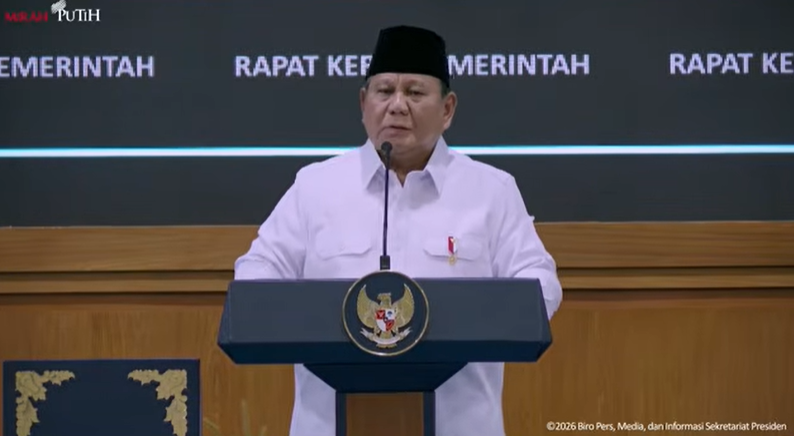
“We now have technology, technology to clean up waste, made by us ourselves, not too expensive,” said President Prabowo during a briefing at the Government Working Meeting at the Presidential Palace in Jakarta on Wednesday (8/4).
The President is confident that by optimising the role of universities and local innovations, Indonesia no longer needs to rely on expensive foreign technology to manage waste. This vision is expected to create a uniformly clean environment from Sabang to Merauke.
“Within two to three years, we will resolve the waste issue across all of Indonesia. There will be no city, no road, no part of Indonesia that smells of waste,” stressed the President, who was immediately met with enthusiastic applause from the meeting participants.
This strategic meeting at the Palace was attended not only by ministers and deputy ministers of the Red and White Cabinet but also by all echelon I officials from ministries and agencies as well as CEOs of state-owned enterprises.
Head of the Government Communication Agency (Bakom RI), Angga Raka Prabowo, explained that the involvement of echelon I officials is crucial so that the President’s directives can be directly executed down to the technical level.
“Mr. President feels it is important to convey directly to all echelon one because we are all one unit. In the ministries, there are ministers, supported by echelon one and the ranks below them,” Angga clarified.
This step is taken to strengthen cross-sector coordination and ensure that government policy implementation runs smoothly without bureaucratic obstacles in the field.