
Prabowo Reveals Reasons Behind Cutting Unproductive Spending
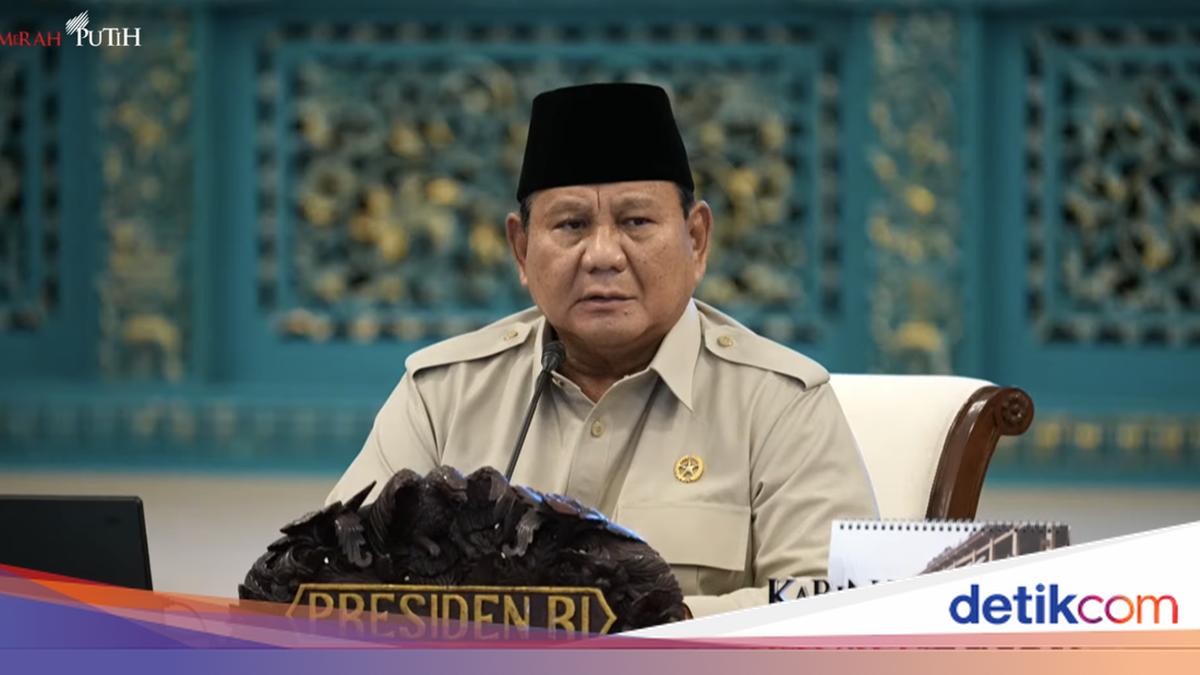
President Prabowo Subianto has revealed that the policy of cutting state spending is solely aimed at saving the people’s money, as it can minimise opportunities for corruption.
Prabowo stated that his administration has successfully saved Rp 308 trillion through the reduction of inefficient spending. If those funds were not promptly cut, they would likely open doors to corruption.
“When we first implemented efficiency measures, we saved Rp 308 trillion from the central government. Where did that come from? From all sorts of questionable expenditures. My belief is that all of this Rp 308 trillion, if not cut, would lead to corruption,” said Prabowo in a written statement on Friday (20/3/2026).
Prabowo linked this step to the Incremental Capital Output Ratio (ICOR) economic indicator, which shows a country’s investment efficiency level. He noted that Indonesia’s ICOR stands at 6.5, far higher than neighbouring countries such as Thailand (4), Malaysia (4), and even Vietnam (3.6).
The high ICOR figure indicates that Indonesia requires much more capital to produce one unit of economic growth compared to other countries. With a state budget approaching Rp 3,700 trillion (US$230 billion), Prabowo sees inefficiencies amounting to around 30%, or equivalent to US$75 billion.
“So this figure means 30% less efficient than Thailand, Malaysia, the Philippines, or Vietnam. If I use this as a basis, it approaches our GDP of Rp 3,700 trillion or US$230 billion. 30% of that is US$75 billion. This is inefficient,” he continued.
According to him, the efficiency measures already implemented by his government are only the initial stage. He assessed that there is still much room for savings, particularly from routine spending that is not essential.
Several budget items that have been cut include ceremonial costs, purchases of office stationery, and expenditures for meetings and seminars outside the office. In addition, he highlighted the habit of procuring goods such as computers and office equipment almost every year, as well as the prevalence of study activities deemed not to address core issues like poverty and employment.
In facing potential crises, Prabowo stressed the importance of controlling consumption and efficiency across various sectors. He cited policies implemented in other countries, such as reducing workdays to four days, as in the Philippines and Pakistan, and the adoption of work from home (WFH).
“I see other countries, for example, reducing workdays from five to four, in the Philippines, Pakistan. Then work from home, working from home. During COVID, we did it quite successfully. I think we can do that too. Perhaps 75% of employees or civil servants can work from home,” added Prabowo.