
Prabowo Puzzled by Citizens Who Criticise Heavily: I'm Called Stupid, But They Refuse to Join the Work
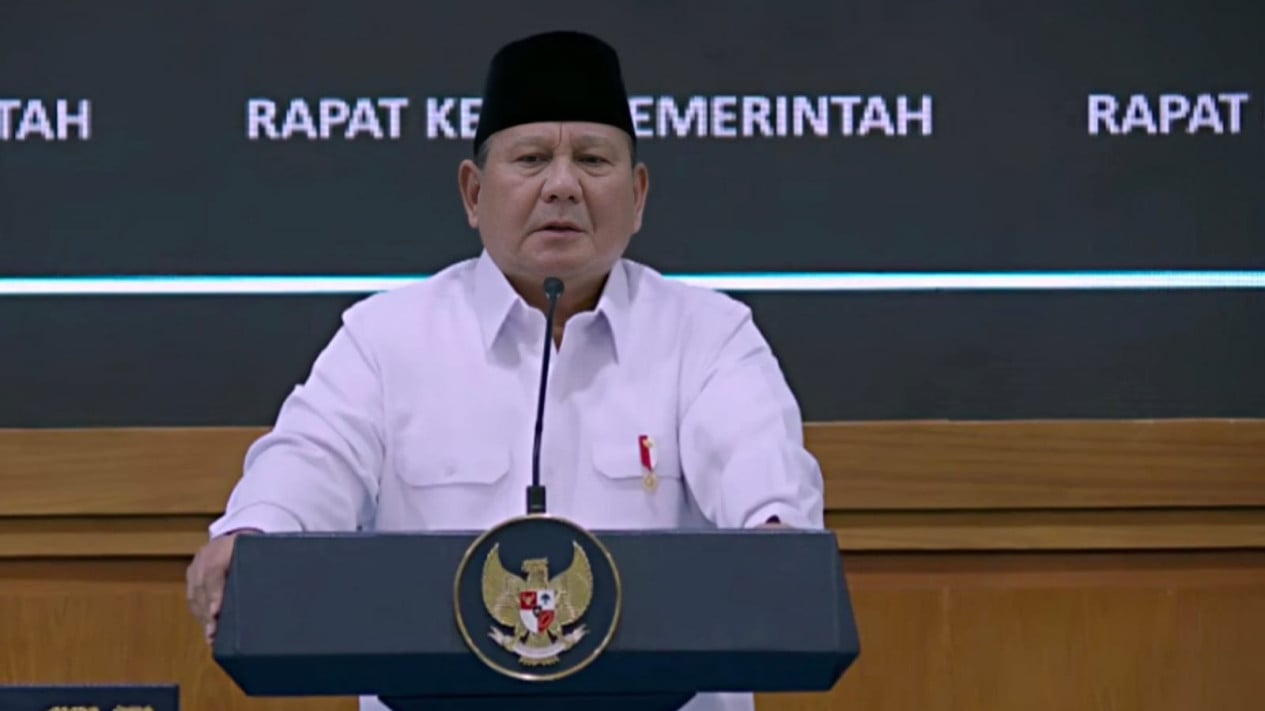
President of the Republic of Indonesia Prabowo Subianto admitted to being puzzled by members of the public who refuse to be involved in collaborative efforts to build the nation. However, he stated that this does not pose a problem and that he respects such attitudes.
Prabowo made these remarks during a briefing at the Government Working Meeting (Raker) at the Presidential Palace Complex in Central Jakarta on Wednesday, 8 April 2026.
“There is one phenomenon that we all feel. There are groups in society, our brothers and sisters, also citizens, also part of the large NKRI family, who have an attitude that can be said to be very unwilling to cooperate. We respect it, we have no issue,” said Prabowo.
He then likened the situation to villagers wanting to build a bridge through gotong royong (mutual cooperation). According to him, when the majority of villagers agree to build, the process must continue even if some choose not to participate.
“If there are those who don’t want to join in building the bridge, that’s fine. Please sit, watch, even criticise,” he explained.
Nevertheless, Prabowo assessed that criticism delivered without tangible contributions could hinder the development process.
He gave the example of parties who only comment without getting involved, thus preventing the work from being completed.
“Please, sit, watch, or whatever, you can criticise, that’s allowed. But I also don’t understand, if people are trying to build a bridge, there’s someone sitting, not wanting to join in building the bridge, but criticising,” said Prabowo.
“You, you’re stupid. The wood is wrong, not there. The nails are wrong, should be here. The rope is wrong.” Everything is wrong. But the bridge never gets built. You’re stupid. You want to build a bridge, stupid.’ Yes. I’m stupid, but the village people need a bridge, I’m building a bridge for our people,” he continued.
Furthermore, Prabowo linked this phenomenon to Indonesia’s long history.
He stated that similar attitudes have existed since the colonial era, where some domestic parties actually facilitated foreigners in controlling their own nation.
“So this is not a new phenomenon. It’s normal. Seeds of envy, jealousy, spite, that’s part of human nature. Hatred, grudges, resentment, that’s part,” he said.