
Prabowo Prepares Strategy to Shield Indonesia from War Threats
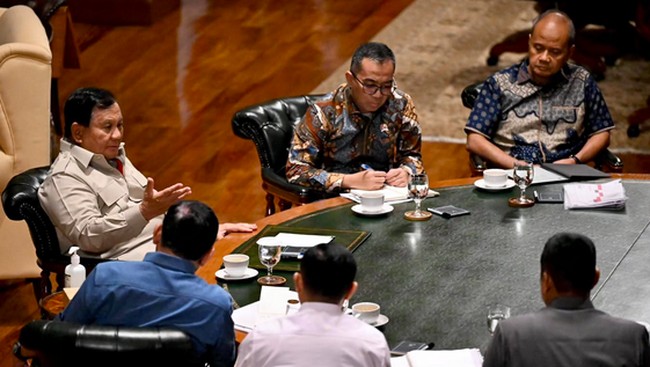
President Prabowo Subianto has reaffirmed his commitment to achieving energy self-sufficiency as a strategic measure, particularly in response to global uncertainty and conflict threats in various regions worldwide.
According to Prabowo, Indonesia possesses significant potential to meet its crude oil requirements from domestic sources through the development of biofuels. He emphasized that the government has been pursuing national energy independence for many years.
“We have received a tremendous blessing from the Almighty, that we will soon be able to meet our fuel requirements not from foreign imports, but from our own plants. From palm oil, from cassava,” Prabowo stated during a virtual press conference on Tuesday, 10 March 2026.
Prabowo also highlighted his ongoing efforts towards food self-sufficiency. Amid global conflicts, Indonesia is progressing towards food self-sufficiency, particularly for rice commodities.
“We will soon also achieve the capacity to meet our protein needs. Whatever happens and wherever other nations face difficulties, we will at least be secure in terms of food,” Prabowo remarked.
Earlier, Energy and Mineral Resources Minister Bahlil Lahadalia stated that the government is conducting various policy simulations to determine the most effective efficiency measures in response to global energy supply uncertainties. The efficiency measures concern both protecting state finances and optimising all available domestic energy resources.
“We will also assess how important this is and what steps we must take to achieve efficiency,” Bahlil said at the Energy Ministry on Monday, 9 March 2026.
Bahlil outlined one measure the government is considering: accelerating biofuel utilisation through increased biodiesel and bioethanol blending. The government plans to boost biodiesel application with higher blending ratios up to B50 and promote E20 bioethanol adoption for petrol-type fuels.
“If fossil oil prices exceed US$100 per barrel, blending becomes more cost-effective. For diesel, we would increase from B40 to B50, or mandate it for petrol, which is also cleaner,” he explained.