
Prabowo Prepares Presidential Instruction to Save Elephants
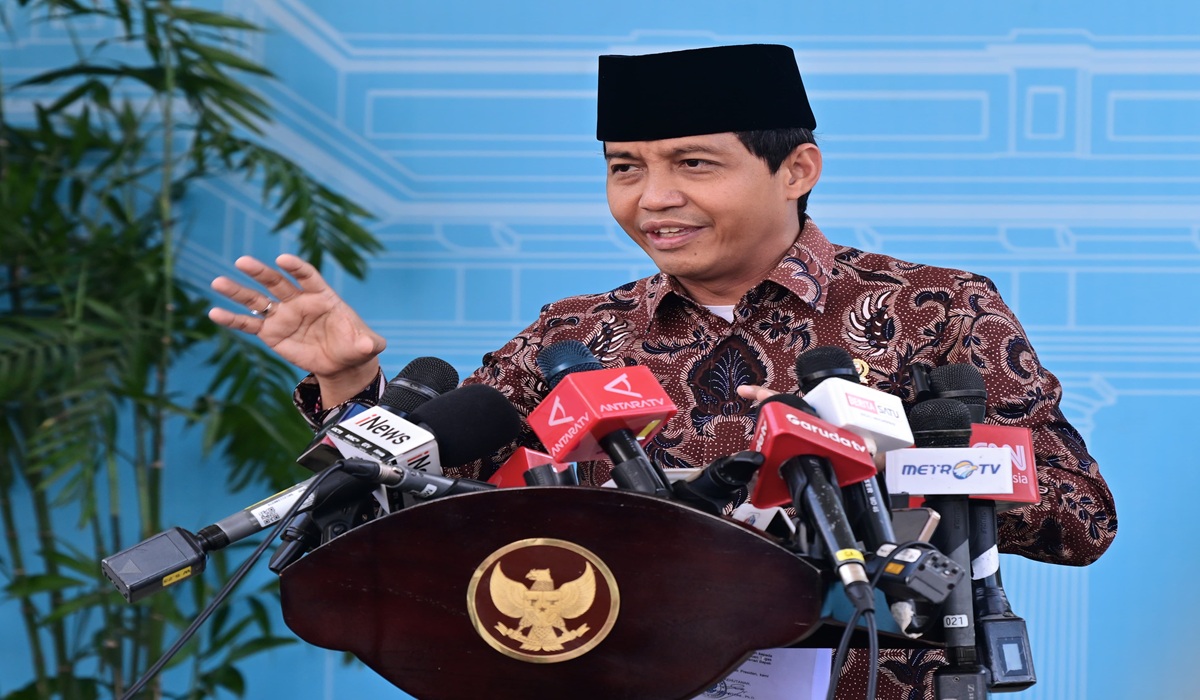
President Prabowo Subianto is preparing a Presidential Instruction (Inpres) to strengthen efforts in wildlife conservation, particularly the protection of elephant populations in Indonesia. The plan was discussed at a meeting with Minister of Forestry Raja Juli Antoni at Merdeka Palace in Jakarta on Thursday, 12 March.
Following the meeting, Raja Juli stated that the government is preparing a presidential instruction specifically governing the protection of Sumatran and Bornean elephant populations. This policy is considered urgent as elephant populations face serious pressure from the shrinking of their natural habitats.
“Without serious government intervention, the destruction of these elephant pockets is inevitable. Consequently, the elephant population, as one of Indonesia’s protected species and an iconic species, may well become extinct,” Raja Juli told journalists.
He explained that through this policy, the government will involve several ministries to support conservation efforts, including building habitat corridors that allow elephants to move from one region to another.
These corridors will also be built within elephant pocket areas to expand the animals’ roaming space whilst preventing inbreeding that could threaten population sustainability.
“For example, in concession areas where palm oil plantations have been granted, in Sumatra, what is called a preservation area will be established. A preservation area is a region that allows for elephant corridors between pockets so that elephants can move from one pocket to another,” said Raja Juli.
In addition to elephant conservation policy, the government is also preparing a presidential decree (Keppres) to establish a task force focused on innovative financing for national park management. The task force is expected to present more sustainable funding models.
According to Raja Juli, the government is open to involving the private sector in supporting the management of conservation areas.
“We will seek innovative and sustainable funding, including involving the private sector so that our national parks once again become world-class parks, with forests protected and preserved, whilst simultaneously the wildlife that is our pride and the nation’s wealth can also be properly maintained,” he said.
As an initial step, the government plans to make Way Kambas National Park one of the pilot projects for the new national park management model. This area has long been known as an important habitat for Sumatran elephants.
Raja Juli also revealed that Prabowo is preparing financial support to reduce human-elephant conflicts that frequently occur around national park areas.
“He has decided to allocate presidential assistance funds to build fences or canals that will protect the boundary between Way Kambas National Park and the villages along Way Kambas National Park in Lampung,” he said.
He assessed that these measures demonstrate the government’s attention to wildlife protection in Indonesia.
“This once again shows that President Prabowo Subianto, as conservation activists have stated, is the president in Indonesian history most concerned with elephant conservation in Indonesia,” concluded Raja Juli.
The Ministry of Forestry is targeting the restoration of approximately 80,978 hectares of forest area that serves as elephant corridors. Of approximately 1,100 elephants throughout Sumatra, it is estimated that only 216 remain in Riau. A young Sumatran elephant from the wild population was found dead in Way Kambas National Park. The Directorate General of Forest Law Enforcement is intensifying investigations to uncover the network behind the killing of a Sumatran elephant in Riau Province. Way Kambas National Park is planning to strengthen area security infrastructure, including the construction of embankments and canals, security fencing, retaining walls, and permanent barriers.