
Prabowo Orders Minister Bahlil to Phase Out Diesel Power Plants to Cut Fuel Costs
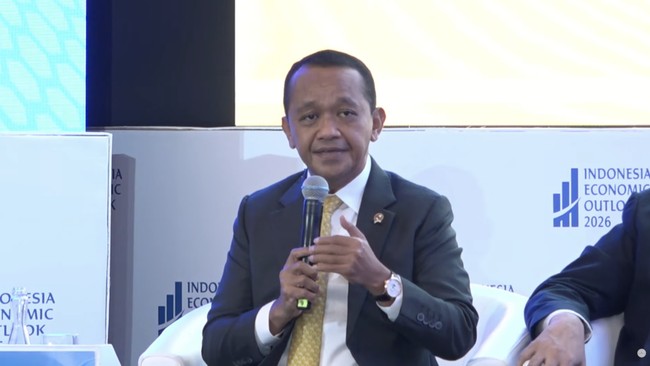
President Prabowo Subianto has instructed Minister of Energy and Mineral Resources (ESDM) Bahlil Lahadalia to “phase out” diesel-powered power plants (PLTD) and transition to domestically-sourced renewable energy such as solar power plants (PLTS) and geothermal power plants (PLTP).
This measure is necessary to optimise domestic energy resources and reduce reliance on imported fuel, particularly amid geopolitical uncertainty.
“Given the current geopolitical situation, we cannot guarantee what our energy situation will look like in the long term,” Bahlil said following a limited cabinet meeting with President Prabowo at the State Palace on Thursday, 12 March 2025, regarding the work of the Energy Transition Acceleration Task Force (EBTKE).
“Therefore, we are optimising all our domestic potential and converting fossil-based energy sources accordingly,” he added.
Bahlil explained that to implement the President’s directive, he has already held an initial meeting with eight ministers and PT PLN (Persero).
Bahlil was appointed by President Prabowo as head of the Energy Transition Acceleration Task Force (EBTKE) to accelerate the realisation of clean and renewable energy transition, including the acceleration of electric vehicles and motorcycles.
“I reported to the President on the progress of EBTKE Task Force discussions, renewable energy, and vehicle conversion from petrol to electric. Yesterday, we held our first meeting attended by eight ministers at the ESDM office, including PLN, and I reported on the steps that must be taken,” he said.
“Possibly by Eid celebrations we can already be in action, and the first thing we will complete is diesel plants, PLTD that run on solar fuel, we will replace all of them with PLTS and also geothermal,” he said.
He noted that many diesel plants are currently scattered throughout Indonesia and will be replaced with solar installations.
“Their locations are spread across Indonesia, particularly power plants that have been using diesel fuel,” he said.
However, before PLTD plants are completely phased out, the government will ensure that PLTS has already been installed to maintain safe electricity supply transition.
“Build the solar plants first. If you stop the diesel plants before the replacement is built, then there’s no alternative. So we proceed in parallel—once it’s built and online, then the diesel plants are shut down,” he explained.
To accommodate this, the government will also revise PT PLN’s electricity supply business plan (RUPTL) for 2025-2034.
“I also plan to revise the RUPTL,” he said.
The government had released the 2025-2034 RUPTL in July 2025.
In the 2025-2034 RUPTL, a total planned increase in new generation capacity of 69.5 GW by 2034 is recorded, consisting of 42.6 GW or 61 per cent from renewable energy-based power plants, and 10.3 GW or 15 per cent from storage systems.
Among all types of renewable energy generation, solar energy (PLTS) holds a significant portion at 17.1 GW. This is followed by hydroelectric power (PLTA) at 11.7 GW, wind (PLTB) at 7.2 GW, geothermal (PLTP) at 5.2 GW, bioenergy at 0.9 GW, and nuclear (PLTN) at 0.5 GW.
Meanwhile, energy storage system capacity includes pumped storage hydroelectric at 4.3 GW and battery storage at 6.0 GW. Fossil fuel generation will still see 16.6 GW of new capacity built, consisting of gas at 10.3 GW and coal at 6.3 GW.