
Prabowo Orders Audit of KAI Safety System, Citizens Respond
Pressure for a thorough audit of the railway safety system has intensified following consecutive accidents at Bekasi Timur Station on Monday night (27/4/2026). The incident involving the Argo Bromo Anggrek train and the KRL Commuter Line not only disrupted travel on the busy Jakarta-Cikarang route but also brought national railway safety preparedness into sharp focus.
Based on the chronology gathered, the accident began at a level crossing when an electric taxi stalled on the tracks and was hit by a KRL train. Another KRL train behind it was also halted on the line. In this situation, the Argo Bromo Anggrek train passing on the same track then collided with the rear of the stationary KRL at Bekasi Timur Station. This chain reaction involved three train sets in a single accident.
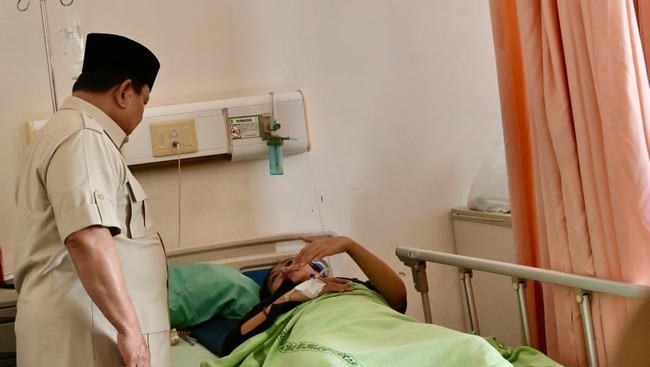
Several reports mention fatalities and dozens of injuries from the incident. Even until the morning after, evacuation efforts continued to rescue passengers trapped inside the train sets. Passenger panic was inevitable, especially as some were trying to escape during the second collision.
After President Prabowo directed the KNKT to conduct an audit, civil society also voiced their opinions. Doddy Herlambang, Chairman of the Indonesian Transport Community Railway Forum (MTI), assessed that this accident indicates serious vulnerabilities in the railway operational system, particularly on routes with mixed traffic between KRL and long-distance trains.
“There are two safety issues in this KKA: first, the electric vehicle stalling at an unguarded level crossing (JPL 85), and second, the driver allegedly failing to see the stop signal, resulting in the train colliding with another train from behind / rear-end collision. Railway accidents (KKA) with the potential to recur repeatedly with the same cause will raise boundless concerns,” Doddy stated on Tuesday (28/4/2026).
MTI highlighted the possibility of negligence in reading the stop signal as one triggering factor, which could lead to a rear-end collision.
MTI also emphasised that the signalling system on that route is designed to prevent collisions. Under normal conditions, the automatic signal would turn red when a train is stopped on the line, requiring the following train to halt. However, the suspected failure in signal compliance is a serious concern.
Additionally, another safety issue arose from the existence of a level crossing without optimal safeguards, which was the starting point of the incident. The vehicle stalling on the tracks was seen as a classic risk that has not been addressed systematically.
MTI urged a comprehensive safety audit, including evaluation of train movement control systems, implementation of safety technologies such as Automatic Train Protection (ATP), and enhancement of risk management based on safety. They also highlighted the need to separate tracks between KRL and long-distance trains on busy routes to reduce accident potential.
Transport policy analyst Azas Tigor Nainggolan assessed that there are many fundamental questions that operators must answer.
“Why did the Green taxi stall at the Bulak Kapal railway crossing? Why was the evacuation of the Green taxi and KRL along with its passengers slow, leading to it being hit by the Argo Bromo train? Why could the Argo Bromo train on the same line continue until it hit the KRL?” he said.
He also questioned aspects of communication and train movement control that should prevent chain accidents.
“Why didn’t the Argo Bromo train driver know or receive information that there was a KRL on the same line ahead? As a result, the Argo Bromo train driver did not brake?” he added.
According to him, this incident is an anomaly amid the increasingly modern development of railway technology.
“This train collision accident on the same line is odd in the context of the already modern railway business and technology development,” he continued.
The push for an audit has emerged with growing public pressure for the government and operators not only to evaluate post-incident but also to build a preventive safety system. The Bekasi Timur accident is seen as a harsh warning that infrastructure and technology modernisation must go hand-in-hand with operational discipline and reliable system integration.
“This train accident incident should not have happened if management or handling is done by professionals with integrity for safe, secure, and comfortable services,” Tigor stated.
With increasing pressure from various parties, the government is expected to take firm steps soon to ensure such incidents do not recur, while restoring public trust in rail-based mass transportation, which has long been the backbone of mobility in urban areas.
“Now change is in the government’s hands to improve PT KAI management. A thorough evaluation and audit must be conducted by the government, replacing all responsible management elements. So that in the future, PT KAI as a state-owned company managing mass public transport services works well - serving properly. PT KAI’s services are responsible for providing safe, secure, and comfortable services to millions of passengers or users,” Tigor said.