
Prabowo Instructs Acceleration of Downstream Processing and Strengthening of Danantara Programme
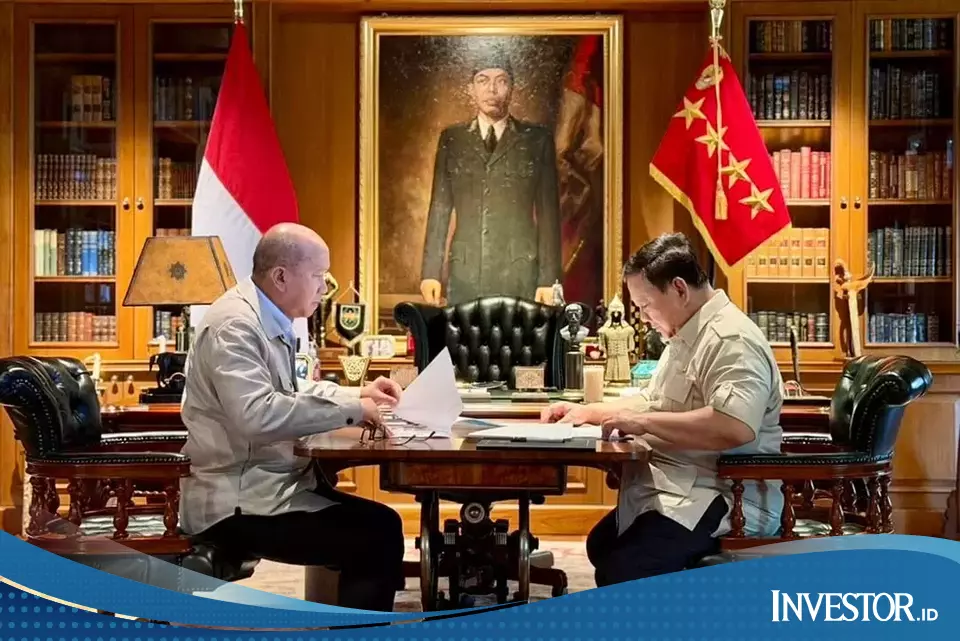
President Prabowo Subianto has issued strategic directives on accelerating industrial downstream processing and strengthening the Danantara priority programme. These instructions were delivered directly to the Minister of Investment and Downstream Processing/Head of the Investment Coordinating Board (BKPM), Rosan Roeslani, during a meeting in Hambalang, Bogor Regency, on Friday (24/4/2026).
This meeting is crucial in ensuring the sustainability of investments that provide significant added value to the national economy. Rosan affirmed that the president’s directives will serve as the foundation for guiding the government’s major targets in the investment sector.
“Thank you, Mr President @prabowo, for the directives on accelerating downstream processing and strengthening the Danantara priority programme, today in Hambalang,” wrote Rosan, who is also CEO of Danantara Indonesia, in an official post on his social media account @rosanroeslani.
This policy strengthening is taking place amid positive trends in national investment realisation. Previously, the Ministry of Investment/BKPM recorded first-quarter 2026 investment realisation at Rp 498.8 trillion. This figure equates to 24.4% of the total national investment target for 2026, set at Rp 2,041.3 trillion.
Beyond the figures, the incoming investments are also directly impacting the employment sector. “The first-quarter 2026 investment realisation reached Rp 498.8 trillion, with labour absorption of 706,569 people or an 18.9% year-on-year increase,” Rosan stated on Thursday (23/4/2026).
Rosan had previously met with President Prabowo at the Presidential Palace on Tuesday (21/4/2026). In his instructions at that time, President Prabowo directed that investments in Indonesia should not only pursue quantity but must also create more jobs.
Subsequently, at a press conference on Thursday (23/4/2026), Rosan explained that the government is currently considering ensuring that fiscal incentives for the downstream processing sector are no longer solely based on investment value, but prioritised for labour-intensive sectors or those absorbing more jobs. This incentive evaluation is particularly focused on downstream processing sectors with established ecosystems, such as nickel.
“If the ecosystem is already formed and operational, we will gradually review and evaluate whether incentives will continue to be provided,” Rosan said.