
Prabowo Frankly Reveals Reasons for Cutting Unproductive Expenditure
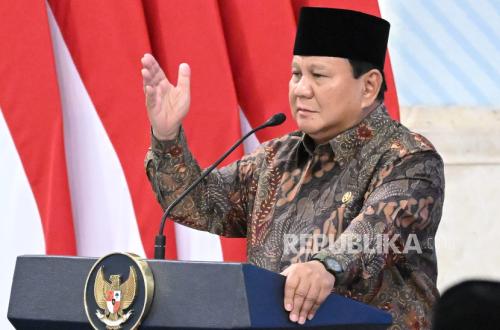
President of the Republic of Indonesia Prabowo Subianto has emphasised that the policy of cutting unproductive state budget expenditures is aimed at improving efficiency and preventing potential corruption. The government considers this step essential to ensure that the use of state funds remains on target.
Prabowo stated that in the initial stage of efficiency measures, the government has saved up to Rp308 trillion from central government spending.
“When we first implemented efficiency measures, we saved Rp308 trillion from the central government. Where did that come from? From all sorts of questionable expenditures. I am convinced that this entire Rp308 trillion, if not cut, would have gone towards corruption,” said Prabowo during the broadcast “President Prabowo Answers” which aired on Thursday (19/3/2026).
Prabowo linked the policy to the Incremental Capital Output Ratio (ICOR) indicator, which shows a country’s investment efficiency level.
Prabowo noted that Indonesia’s ICOR is around 6.5, higher than that of Thailand, Malaysia, and Vietnam, reflecting a lower level of investment efficiency.
“So this figure means 30 percent less efficient than Thailand, Malaysia, the Philippines, or Vietnam. If I use this as a basis, it approaches our GDP of Rp3,700 trillion or $230 billion USD. Thirty percent of that is $75 billion USD. This is inefficient,” said Prabowo.
Prabowo assessed that there is still significant room for efficiency, particularly from routine spending that is not essential, such as ceremonial activities, purchases of office stationery, and off-site meetings and seminars.
Prabowo also highlighted the habit of repeated annual procurement of goods and study activities that are deemed not to target main issues like poverty and employment.
In facing potential crises, Prabowo stressed the importance of controlling consumption and efficiency across sectors, including considering policies to reduce working days and implement work from home.
“I see that other countries, for example, have reduced working days from five to four, like in the Philippines and Pakistan. Then work from home. During Covid, we did it quite successfully. I think we can do that too. Perhaps 75 percent of employees or civil servants can work from home,” said Prabowo.