
Prabowo Forms a Special Export State-Owned Enterprise After Purbaya Reveals Exporters’ Underhand Tactics
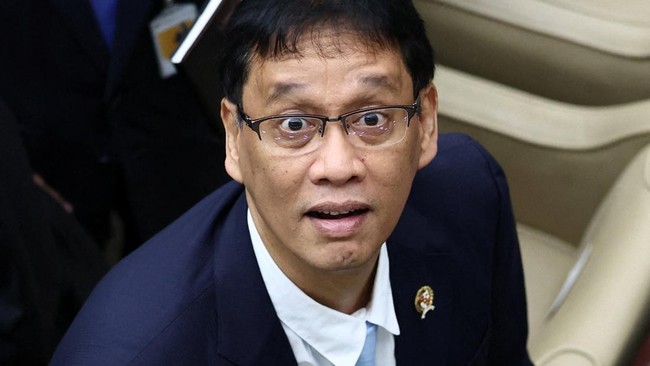
Jakarta — President of Indonesia, Prabowo Subianto, has formed a Special Export State-Owned Enterprise (BUMN) to root out practices of export price manipulation, or under-invoicing, deemed to deprive the state of trillions of rupiah. Finance Minister Purbaya Yudhi Sadewa revealed that under-invoicing practices are frequently raised by the president during cabinet meetings. To act on this, Purbaya conducted an inquiry at the National Single Window (Lembaga National Single Window, LNSW), which holds comprehensive data on Indonesia’s exports and imports.
‘That the president spoke about under-invoicing is not the first time; he has mentioned it several times in cabinet meetings. So I went straight to the LNSW under the Ministry of Finance—there is all the export and import data, but no one could answer,’ Purbaya said in the DPR complex, Jakarta, on Wednesday (20 May 2026).
According to him, under-invoicing is hard to detect because the government does not have price-comparison data for recipient countries. Therefore, the Ministry of Finance has formed a special ten-person team and is using artificial intelligence (AI) to track export transactions.
Purbaya explained that the team randomly checked ten crude palm oil exporters and traced each ship’s documents one by one.
The results showed the same pattern in nearly all of the sampled companies.
The modus operandi was to sell products to affiliated companies in Singapore at low prices, before reselling to the United States at markedly higher prices.
‘The results are clear. We see Indonesian companies sending their products to Singapore, though the names are foreign-owned. We can track who owns them. Then the goods are sent to the United States via Singaporean companies. So the vessel goes directly from Indonesia to the United States, but the documents are manipulated in Singapore,’ Purbaya said.
As a result of this practice, Indonesia loses potential state revenue on a large scale because profits are recorded abroad, resulting in very small income tax receipts for Indonesia.
‘That is the main objective. So if you ask whether I benefit (from the Special Export State-Owned Enterprise)? I am very fortunate,’ he said.
Earlier, President Prabowo Subianto disclosed that sales of all Indonesia’s natural resources—including palm oil, coal and ferro‑alloy iron—must be conducted through a Special Export State-Owned Enterprise.
‘Sales must be conducted through a state-owned enterprise designated by the Government of the Republic of Indonesia as the sole exporter. In other words, every export will be passed from the exporter to the government-designated SOE managing those activities,’ Prabowo explained.
Prabowo stated that the aim of establishing this Special Export SOE could be described as a marketing facility, aimed at strengthening oversight and monitoring to root out under-invoicing, transfer pricing, and even the leakage of export earnings.
‘The policy will optimise tax revenue and national earnings from our management of natural resources. With this policy, we hope our revenue could reach levels similar to Mexico, the Philippines and our neighbouring countries,’ he said.
‘We do not want our revenue to be the lowest because we are not brave enough to manage our own assets, our nation’s assets,’ Prabowo asserted.