
Prabowo Donates 34 Cattle to North Sumatra, Each Weighing Up to a Tonne
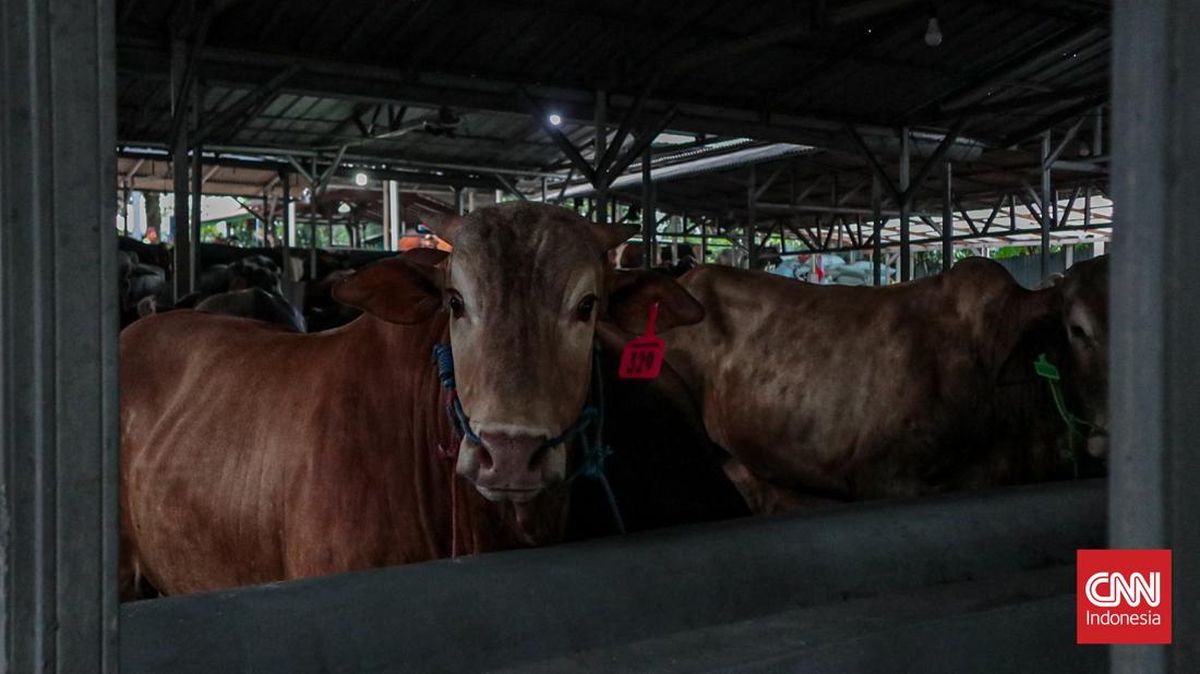
President Prabowo Subianto has distributed 34 sacrificial cattle to the people of North Sumatra ahead of Idul Adha 1447 Hijri. Thirty-three cattle were allocated to each district/city, while the remaining animal was designated for the North Sumatra provincial government. ‘For Idul Adha this year, the President’s community assistance programme provides 34 sacrificial cattle in Sumut funded from the state budget (APBN),’ said Yusfahri Perangin-Angin, Secretary of the North Sumatra Department of Agriculture and Food Security, on Wednesday (20 May).
According to Yusfahri, all cattle in the President’s aid programme originate from local breeders in North Sumatra. The weights of the cattle distributed are large, ranging from 800 kg to as much as 1 tonne. ‘The weight of these cattle is very large, ranging from about 800 kilograms up to 1 tonne, and all of the cattle in this community aid programme are sourced from our breeders in Sumut,’ he said.
Yusfahri assured that the supply of sacrificial animals this year is under control, both in terms of distribution and livestock health monitoring. ‘Our current meat stock stands at 748,000 head, which is more than sufficient to meet the community’s needs ahead of Idul Adha, estimated at 2,500 to 5,000 head,’ he added.
In addition to meeting demand in Sumut, Yusfahri said the region also serves as a supplier of sacrificial animals to several other provinces, such as West Sumatra and Riau. ‘Over the past two years, Sumut’s farmers have begun to increase the provision of large-sized sacrificial cattle,’ he noted.
However, not all regions are yet able to meet demand independently, so distribution remains conducted with interregional cross-subsidy. ‘But it remains cross-subsidised; for instance, we supply Nias, Tarutung and Sibolga from Simalungun, Langkat and Binjai as well,’ he explained.
The North Sumatra provincial government continues to tighten health controls on sacrificial animals. Animals to be sacrificed must be healthy, free from deformities or disease, and meet age requirements — cattle must be at least two years old and goats at least one year old.
‘Slaughtering should follow proper guidelines; ideally it should be carried out by a certified slaughterman, which is why we recommend that sacrificial animal slaughtering take place at a Rumah Potong Hewan (RPH, slaughterhouse),’ he emphasised.
Nevertheless, since many sacrificial practices in North Sumatra are carried out in mosques and open fields, the North Sumatra Department of Agriculture and Food Security has issued circulars to all regencies/cities regarding hygienic and sharia-compliant standards for sacrificial animal slaughter. ‘We will continue to monitor the health of sacrificial animals and the slaughtering process, ensuring that the animals sacrificed meet hygienic, clean and halal standards,’ he said.