
Prabowo Continues MBG Amid Efficiency Drive: Many Other Ways to Save
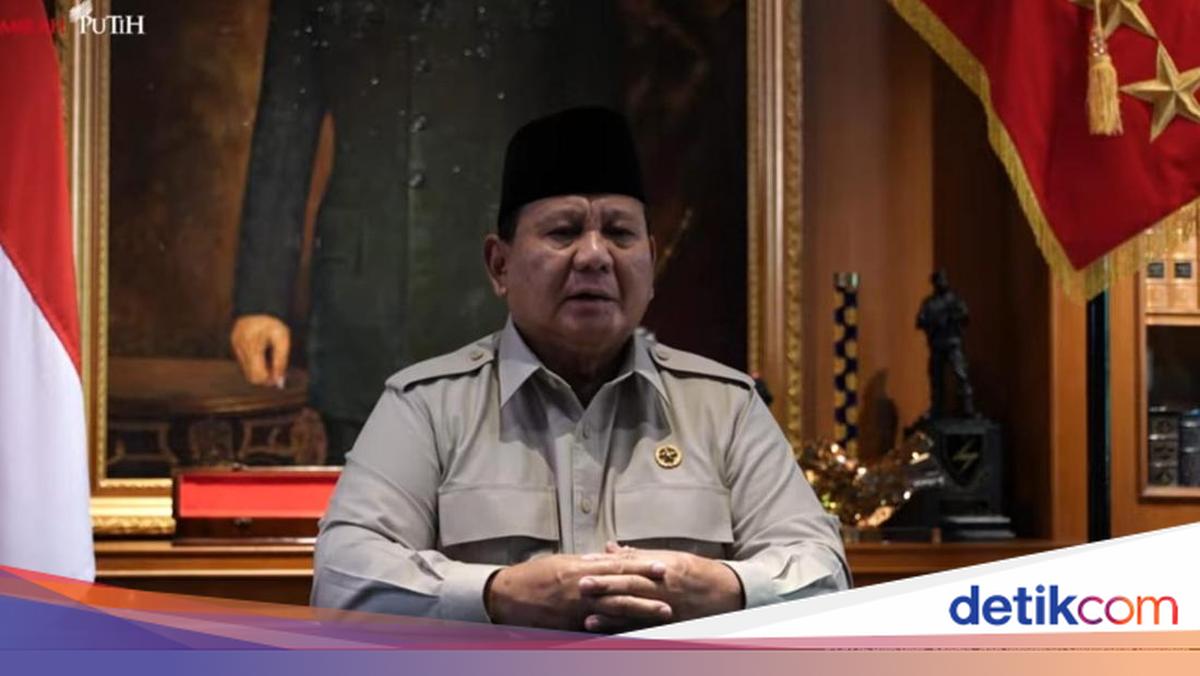
President Prabowo Subianto has assured that the free nutritious meals programme (MBG) will continue amid budget efficiency policies due to the impact of the Middle East conflict. He emphasised that the programme will not be halted, with savings focused on other sectors.
This was stated by Prabowo during a discussion session with journalists and observers broadcast on Sunday (22/3/2026). Prabowo was initially asked about the sustainability of the MBG programme amid the Middle East crisis situation, particularly considering the cost-benefit analysis of the programme.
Prabowo reaffirmed his commitment to maintaining the MBG programme for the people. He is confident that Indonesia’s budget can be realised for the programme.
“I will hold on as much as possible rather than having money corrupted. It’s better if my people can eat. Haven’t you seen the stunted children? I have seen them; I’ve campaigned many times in the villages. I saw a child, ‘How old are you?’ 11 years old. His body is like a 4-year-old child,” said Prabowo.
“I am absolutely certain I am on the right path. Our money exists. Our money exists. I stake my leadership; by 2029, we will see,” he continued.
He stressed that the global crisis, including the conflict in the Middle East, is not a reason to stop the MBG programme. According to him, there are still many other sectors that can be economised without sacrificing this strategic programme.
“So don’t go towards, okay, there’s a crisis, then we stop MBG. Right? There are still many other ways we can save. There are still many,” he said.
Prabowo added that similar programmes are now being run in more than 100 countries. Indonesia is the 77th country to launch the programme.
Prabowo even revealed that the MBG programme has received attention from international institutions, including the Rockefeller Institute and the UN’s World Food Programme (WFP). Based on their studies, every dollar invested in the programme can yield multiplied benefits, both in the short and long term.
“I was approached by the Rockefeller Institute from the United States who came to check our SPPG, and he came to me, he said, ‘This is the best investment, Mr. President, you have made the best.’ Do you know why? Because one dollar spent on MBG returns between 7 and 35; in the long run 35, in the short run 7 dollars, and this is from the Rockefeller Institute. This is also from the World Food Programme of the UN,” he stated.
“So this is strategic; this is for our human capital. So there are still many real savings that we can make. We have already exercised; we have made savings in many fields,” he continued.
Nevertheless, he acknowledged that there are still various shortcomings in the field implementation. The government, he said, has taken action against several violations, including closing more than a thousand service points that do not meet standards.
“That there are shortcomings, we take action. I have said there are more than 1,000 that we have closed. Right? But you see that in many areas outside Java, they really need it,” he said.
“But it’s sad if they wrap it up to take home. Well, but this is also how we must convince them to wash their hands if they want to eat with their hands. We have already distributed plastic spoons, but yes. But the violations, we pursue,” he added.
Furthermore, he highlighted the economic inequality still felt by the majority of society. According to him, the MBG programme is very meaningful for groups that have not yet enjoyed even economic growth, especially in areas outside Java Island, which are considered to still greatly need such support.
“So I think we are a strong country. I don’t want to boast; I don’t want to give nice-nice. We are ready for the toughest… but our people for the most part have gone too long without enjoying the benefits of our economy. Too long,” he said.
“The top 10-20% maybe enjoy it. But most of us have had very difficult lives all this time. Can you imagine how happy they are to receive it? If it’s the child of rich people in Menteng, they don’t need this,” he added.