
Prabowo Considers Work From Home and Fuel Consumption Reduction
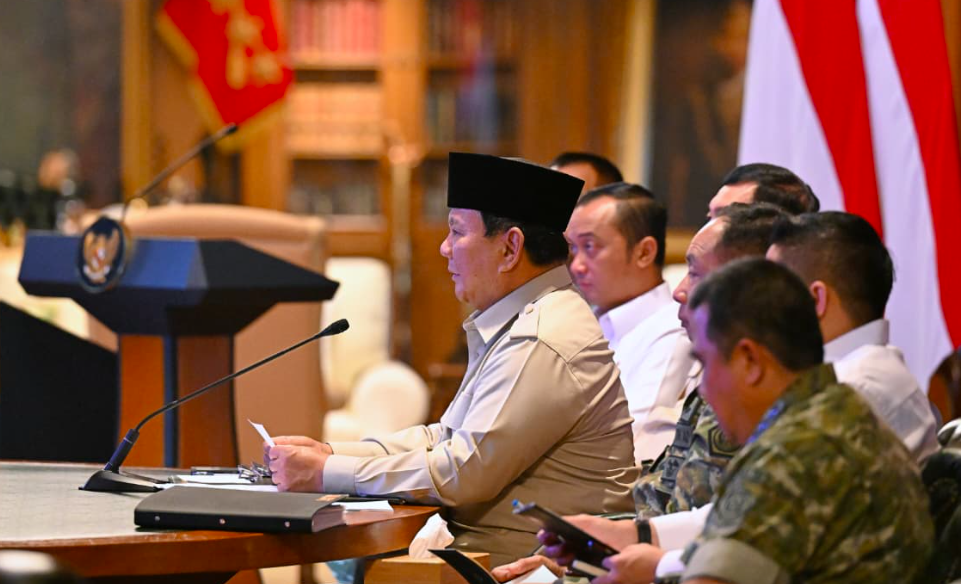
President Prabowo Subianto has instructed the government to implement proactive measures to reduce fuel consumption and is considering work-from-home (WFH) policies as precautionary steps against potential global crises.
During a Full Cabinet Session at the State Palace in Jakarta on Friday, 13 March, Prabowo emphasised the necessity for fuel consumption savings. “We must now take proactive steps to reduce fuel consumption. We cannot assume we are safe regardless of circumstances. We are grateful for our current safety, but we must make efforts to reduce our fuel consumption,” he stated.
The President highlighted that developments in global situations in the European and Middle Eastern regions could affect fuel prices. Rising energy costs could consequently impact food prices, necessitating proactive government measures. Indonesia has already secured basic food requirements, and the government has energy sector plans ready for accelerated implementation.
Nevertheless, Prabowo maintained that fuel consumption reduction remains essential as part of efforts to address global uncertainty.
As a point of comparison, the President cited examples of cost-saving measures adopted by other countries, particularly Pakistan. That country has implemented critical measures including work-from-home policies for up to 50% of government and private sector employees, and reducing the working week to four days.
Pakistan’s government has also pursued savings through reducing cabinet and parliamentary salaries, cutting government vehicle fuel usage, limiting official vehicle use, and halting various government expenditures such as vehicle purchases, air conditioning, and office furniture.
Additional measures include suspending government-funded foreign visits and restricting budgets for ceremonial activities.
The President stated that these examples could serve as reference points for the government to determine necessary cost-saving policies. “These are merely examples. I believe we could examine this matter in a few days. I think we should also strive to implement savings. I believe that within two or three years we will be very strong, but we must still conserve fuel consumption,” he said.
The Head of State noted that Indonesia’s experience during the COVID-19 pandemic demonstrated that work-from-home arrangements could enhance efficiency and reduce fuel consumption. Prabowo requested that coordinating ministers discuss this matter urgently. “I would like this discussed by the coordinating ministers in the coming days. Let us consider it. Previously we addressed COVID successfully, and we were able to have many people working from home, achieving efficiency and saving very large quantities of fuel,” he said.
“For example, if several civil servants and officials do not need to go to the office, we can reduce traffic congestion and implement major savings. We should also consider reducing working days and implementing other cost-saving measures,” he added.
The President stated that energy consumption savings are expected to help maintain the state’s fiscal condition and prevent budget deficits from increasing. The government targets more balanced management of the State Budget.
The President also referenced potential leakages and inefficiencies in budget management, including improper administrative practices. Prabowo noted that government system synchronisation efforts through GovTech development, coordinated by the National Economic Council, are estimated to reduce leakages by approximately 40% of government expenditure. “We have already taken steps through the DEN Chairman regarding GovTech, synchronising all ministries and agencies into a single GovTech network. This is estimated to reduce leakages by up to 40% of our spending,” he stated.
Concluding his speech, the President reminded the government to remain vigilant against worst-case scenarios amid global uncertainty, including potential prolonged conflict in the Middle East. “Although we feel safe and are not panicking, we must not be complacent. We must prepare for the worst possibility. We hope the worst scenario does not occur in the Middle East, but many forecasts suggest this could become a very long war,” he concluded.