
Prabowo: Budget Deficit Limit of 3 Per Cent Will Only Be Breached During Crisis
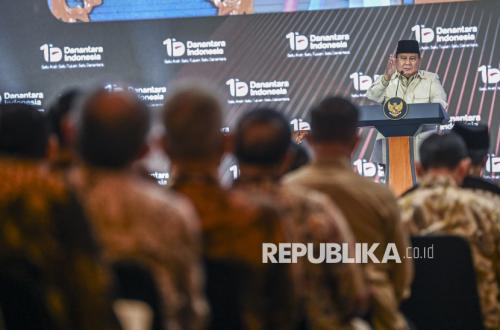
President Prabowo Subianto has reaffirmed that the government will only consider exceeding the 3 per cent budget deficit ceiling as a percentage of gross domestic product (GDP) under emergency conditions. He stressed the administration’s ongoing commitment to fiscal discipline and assessed that Indonesia must live within its financial means.
In an exclusive interview with Bloomberg News at his residence, Prabowo said the government would only approve a temporary increase in the deficit above the legal ceiling if global oil prices remain elevated for an extended period due to conflict between the United States and Israel with Iran. He compared the situation to the COVID-19 pandemic, when Indonesia’s budget deficit exceeded the legal limit for two years to enable emergency spending.
“The deficit limit is a good tool to discipline ourselves,” Prabowo said in the interview, as reported on 15 March 2026.
He added that the government has no plans to revise the rule except in major emergencies such as pandemics.
“But I hope we do not need to change it. Actually, I do not believe in deficits. Perhaps I am somewhat old-fashioned,” he said.
Indonesia has capped its budget deficit at a maximum of 3 per cent of GDP since the early 2000s, after the Asian financial crisis prompted the government to tighten public debt management. The rule has long been closely monitored by investors as a pillar of the country’s fiscal discipline.
Last week, Coordinating Minister for Economic Affairs Airlangga Hartarto had floated the option of temporarily adjusting the deficit ceiling as one way to address surging oil prices without sacrificing economic growth.
Meanwhile, Finance Minister Purbaya Yudhi Sadewa previously warned that the budget deficit could widen to 3.6 per cent of GDP if average crude oil prices reach 92 US dollars per barrel this year and the government does not cut spending. Under current budget assumptions, oil prices are projected at around 70 US dollars per barrel.
Pressure on Indonesia’s financial assets has intensified in recent times amid market concerns about fiscal conditions since Prabowo took office as president in October 2024. This pressure has intensified this year after rating agencies Fitch Ratings and Moody’s Ratings downgraded Indonesia’s credit rating outlook to negative.
Both agencies assessed that there has been a decline in policy certainty and economic policy credibility, although the Indonesian government has disputed this assessment.
Prabowo has previously targeted acceleration of Indonesia’s economic growth from around 5 per cent to 8 per cent before his tenure ends in 2029. The target will be driven through various major government programmes, including public housing development, strengthening village cooperatives, and free meal programmes for tens of millions of students and other groups.
However, surging oil prices resulting from the Middle East crisis have created uncertainty around these efforts. Indonesia still depends on imports for much of its fuel needs, so rising oil prices increase import burdens, particularly as the rupiah is near historic lows.
On the other hand, raising fuel prices for the public is not straightforward in a country with the world’s fourth-largest population. Subsidised fuel prices have long been viewed as a form of economic right for citizens and a symbol of the state’s obligation to distribute the benefits of natural resources.
The Prabowo government has also pledged not to raise subsidised fuel prices ahead of this year’s Eid al-Fitr celebrations, when millions of people travel home. More than 100 million people are estimated to travel during this period.
In the interview, Prabowo said the government remained optimistic about avoiding a fuel price increase, though he acknowledged the situation would be very difficult if global oil prices exceeded 120 US dollars per barrel for an extended period.
He said the government is seeking ways to reduce fuel consumption, including considering a four-day work week and increasing online meetings to reduce mobility and energy consumption.
Prabowo also reaffirmed that the government will not reduce the free meal programme, which is one of its flagship initiatives. He described the programme as grassroots-level economic stimulus.
The programme is designed to provide meals to more than 80 million people almost daily and absorbs around 11 per cent of the central government’s budget this year.
Prabowo referred to the Iran-related crisis as a “harsh warning” that is driving accelerated energy transition in Indonesia. He is targeting the phased removal of fuel subsidies within the next three years and replacing them with solar energy development of up to 100 gigawatts.
“I am determined to eliminate fuel subsidies. In the long term we cannot sustain subsidies,” Prabowo said.
According to him, Indonesia is in a relatively more fortunate position than many other countries because it has alternative energy sources such as palm oil and coal that remain relatively inexpensive and can guarantee national energy security.
Additionally, the government plans to accelerate development of geothermal energy, solar power, hydroelectric power, and biofuel.
“If we can get through this situation, within two years we will be far more efficient. We will not be so dependent on external energy sources,” Prabowo said.
Nevertheless, he continued to emphasise the importance of fiscal discipline, despite many other countries no longer strictly adhering to budget deficit limits.
Prabowo said Indonesia initially adopted the European Union rule that caps budget deficits at a maximum of 3 per cent of GDP. However, many member states of the bloc no longer comply with the rule.