
Prabowo asks Bahlil to raise Indonesia's fuel stockpile to three months
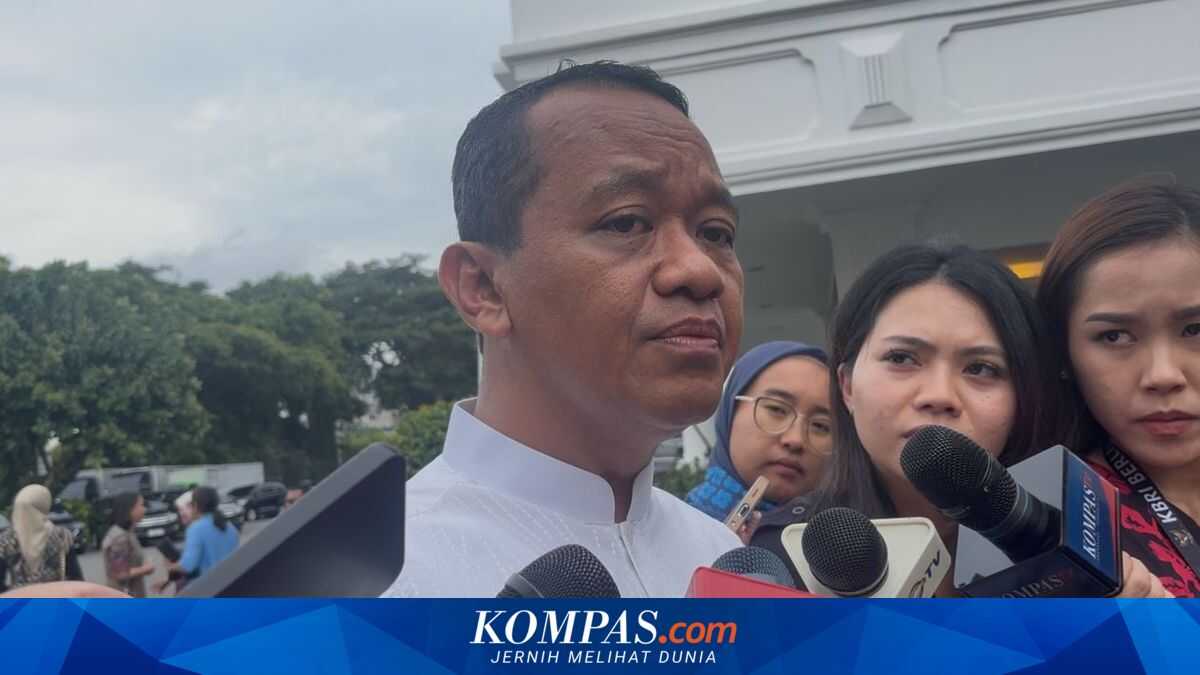
JAKARTA, KOMPAS.com - President Prabowo Subianto has asked that the national fuel stockpile be increased from the current standard of 21 days to 90 days, or three months. The instruction was delivered by the Minister of Energy and Mineral Resources (ESDM) Bahlil Lahadalia after a meeting with Prabowo at the Presidential Palace in Jakarta, on Wednesday (4 March 2026). The storage expansion aims to safeguard national energy security amid the escalating conflict in the Middle East that could disrupt global supply. One potential site for development is in Sumatra. ‘The President’s instruction is that we should immediately build storage so that our reserves can reach three months,’ said Bahlil. He explained that currently the capacity for national fuel stockpiles is a maximum of 25 days. Meanwhile the national minimum standard for fuel stockpiles is 21 days. As for Pertamina’s stockpile, it is currently in the range of 20-23 days, thus still above the minimum threshold. Therefore, Bahlil assures that Indonesia’s fuel stocks are currently safe to meet public needs, including ahead of the homecoming period and Eid al-Fitr. ‘The government guarantees the availability of fuel for the public during mudik and Eid. The national minimum stockpile standard is 20 to 21 days,’ he said. Furthermore, Bahlil confirmed that to date the conflict between the United States, Israel and Iran in the Middle East has not disrupted the national fuel supply. According to him, supply conditions in the next one to two months remain relatively safe and show no signs of disruption. However, he acknowledged that if the conflict lasts for a long time, its impact on global and national energy supply will almost certainly occur. ‘If up to now the situation has not been disrupted, it has not been disrupted. But if the war lasts long, it will certainly have an impact. That is for sure,’ he said. As a short-term precaution, the government decided to redirect all crude oil imports from the Middle East to the United States. He noted that around 25 percent of Indonesia’s total crude oil imports have traditionally come from the Middle East. The remainder is sourced from other countries, such as Angola in Africa, the United States, and Brazil. ‘From that 25 percent we have already redirected our precautionary measures to the United States or to countries with no connection to Hormuz Strait,’ he concluded.