
Prabowo Affirms 3% Budget Deficit Limit to Remain in Place
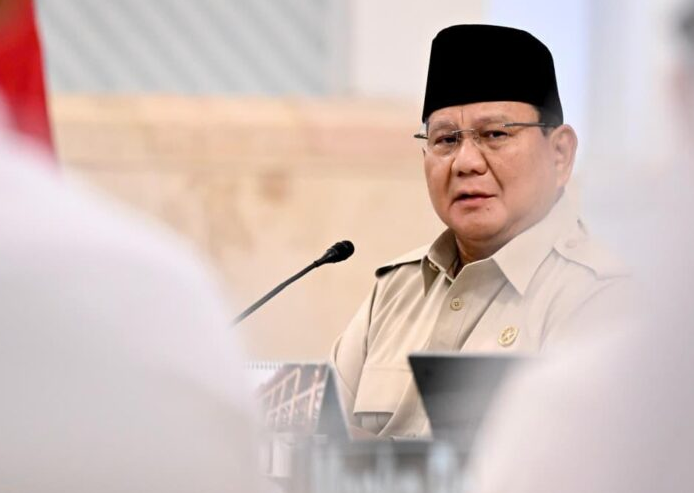
President Prabowo Subianto has affirmed that the government has no plans to alter the 3% budget deficit ceiling relative to gross domestic product (GDP). This regulation will be retained as a fiscal discipline benchmark, with exceptions only in cases of major crises such as pandemics.
In an interview with Bloomberg, Prabowo stressed that the deficit limit functions as an important instrument for maintaining prudence in national financial management. “The deficit limit is a good tool for disciplining ourselves. We have no plans to change it unless there is a very large emergency situation like Covid-19,” Prabowo stated, quoted on Monday (16 March 2026). He added that the government hopes there will be no need to implement such regulatory relaxation. “I hope we will not need to change it,” he said.
Indonesia has maintained a maximum 3% deficit ceiling relative to GDP since early 2003, following the impact of the Asian financial crisis. This provision has served as a fiscal discipline indicator monitored by investors over two decades. Although some countries have begun abandoning strict deficit limits, Prabowo believes Indonesia should maintain its principle of fiscal prudence. He also rejected the concept of accelerating economic growth through substantial debt increases.
According to Prabowo, this perspective contradicts the simple principle he has upheld since childhood regarding financial management: “Do not spend more than we earn. That is the basic principle of life for survival,” he said.
Moreover, Prabowo assessed that Indonesia holds an advantage over other nations due to abundant natural resources, such as palm oil and coal, which help maintain national resilience. The government will also continue expanding the use of alternative energy, including geothermal, solar power, hydroelectric power, and biofuel.
Prabowo expressed optimism that these energy efficiency efforts would reduce Indonesia’s dependence on foreign resources in the coming years. “If we can get through this, in two years we will be very efficient. We will be very, very independent of external sources,” he concluded.