
Prabowo Administration to Allocate Rp9.95 Trillion for Rejuvenation of Community Plantations
The government is preparing a budget of nearly Rp10 trillion for a plantation rejuvenation programme designed to increase the productivity of plantation commodities and improve farmers’ welfare. The programme covers various strategic commodities, ranging from coconut to cocoa, targeting 870,000 hectares (ha) of community plantations.
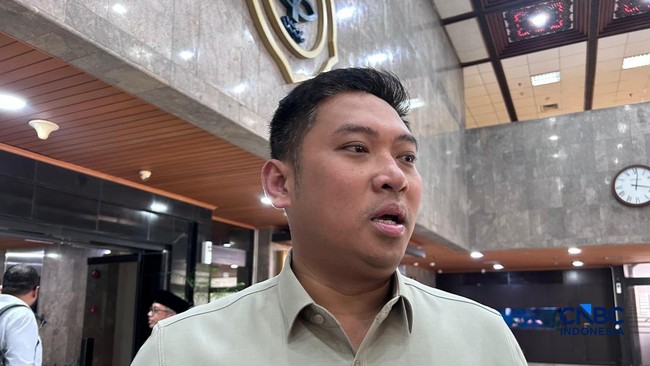
Deputy Minister of Agriculture (Wamentan) Sudaryono explained that the Rp9.95 trillion budget will not be disbursed all at once, but will be divided over several years to allow for the staged provision of seedlings.
“So the Rp9.95 trillion is divided over three years—last year, 2025, this year 2026, and next year 2027. Why divide it over three years? Because seedlings cannot simply be planted all at once, say one million trees. The seedlings must be nursed first. So we need time, which is why three years are necessary,” Sudaryono told journalists at the Ministry of Agriculture office in Jakarta on Thursday, 12 March 2026.
He added that the funds are not solely focused on coconut, but encompass various strategic plantation commodities with high economic value in global markets.
“And not all Rp10 trillion is for coconut alone. There is coconut, cocoa, cashew, coffee, nutmeg, pepper, and gambir,” he said.
According to Sudaryono, these commodities were selected because they have strong export demand and therefore have the potential to increase farmer income.
“These are important commodities that have large economic value, have a significant impact on farmers, and have large economic value,” he explained.
He cited the example of coconut market opportunities that are currently increasing alongside changing consumption patterns in several countries, including China.
“For instance, coconut is now in demand in China. With over 1.1 billion people, they are shifting their diet. Apparently, they drink coffee mixed with coconut milk. So who benefits? Us. Why? Because coconut milk is made from coconut, and not all countries can grow coconut,” he said.
However, according to him, many coconut plantations in Indonesia are now old and need to be rejuvenated to increase their productivity.
The budget allocated for rejuvenation this year alone, Sudaryono said, is approximately Rp5 trillion from the total budget.
“Around Rp5 trillion this year. So last year was Rp2 trillion, now Rp5 trillion, perhaps the remainder will be Rp1 trillion (in 2027),” Sudaryono said.
This rejuvenation programme, he continued, represents government intervention to help farmers improve their plantation productivity and product quality.
“So this Rp9.95 trillion does not stand alone. This Rp9.95 trillion is an intervention by the government to farmer groups, in this case the rejuvenation of their plantation commodities,” he said.
In addition to plantation rejuvenation, the government is also preparing downstream industry development for various commodities through an investment scheme. The investment value being prepared is estimated to reach Rp371 trillion and does not come from the state budget.
“The downstream aspect involves building factories, yes? Building coconut milk factories, building sugar factories, building cocoa factories, building coffee factories, building gambir factories, building processing facilities,” Sudaryono explained.
According to him, this step is important so that increased production from community plantations is accompanied by strengthened processing industry.
“This processing does not use a state budget scheme. Rather, it creates an ecosystem where this is investment. Who invests? Those who invest are state-owned enterprises with Danantara as the leader, involving private parties and farmers,” he concluded.