
Prabowo Administration Overhauls Civil Service with New Regulations
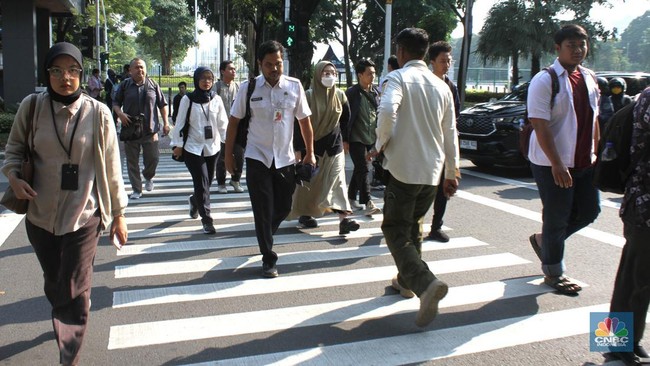
The government is committed to cleansing the Civil Service (ASN) of practices involving corruption, collusion, and nepotism (KKN). Several new regulations have been issued to realise this intention.
Among them is Ministerial Regulation of the Ministry of State Apparatus Utilisation and Bureaucratic Reform (PermenPANRB) No. 19 of 2025 concerning the Implementation of Merit System in ASN Management. This regulation came into effect on 31 December 2025.
“This Ministerial Regulation is established to ensure the realisation of an ASN characterised by integrity, professionalism, neutrality, freedom from corruption, collusion, and nepotism (KKN), as well as capable of implementing policies and public services effectively,” stated Deputy Minister of State Apparatus Utilisation and Bureaucratic Reform Purwadi Arianto in a press statement.
Purwadi explained that through this regulation, sharpening of merit system implementation going forward is conducted through five key measures. First, strengthening of eight aspects of the merit system is carried out comprehensively and integrated throughout the entire ASN management cycle.
The eight aspects of the merit system are: planning of staffing needs and position standardisation; talent management; performance management; competency development; strengthening of work culture and institutional image; rewards and recognition; discipline, dismissal, and administrative action; and digitalisation of ASN management.
Second, there is a shift in orientation for measuring merit system maturity, emphasising measurement across three dimensions: availability, quality, and utilisation.
Third, the merit system index will be produced more objectively, supported through satisfaction and engagement survey instruments for ASN and considering correction factors. “This is done so that the index measurement results are filtered strictly and proportionally,” he said.
Fourth, the merit system going forward is strongly integrated with talent management, becoming the primary foundation instrument in position filling, career development, and succession planning based on the best talent possessed by institutions. Fifth, strengthening of the merit system is also supported by ASN management digitalisation and more objective oversight.
“With this sharpening, the merit system is expected no longer to be understood as fulfilling administrative aspects, but truly to become an instrument that impacts improved ASN performance quality and organisational performance,” Purwadi stressed.
Purwadi emphasised that strengthening of the merit system became important after President Prabowo Subianto established strengthened ASN management as set out in the Grand Design of National Bureaucratic Reform (DBRBN) 2025-2045.
In the DBRBN 2025-2045, the government has established the vision of World Class Bureaucracy 2045. This vision affirms the commitment to building a bureaucracy that is collaborative, capable, and integrity-driven, to support Golden Indonesia 2045.
Within this framework, one primary target is the creation of a competent and high-performing state apparatus based on merit system principles.
“The target is clear. All government institutions are in the leading category in the Merit System Index by 2045. This means the merit system is not merely a personnel management instrument, but becomes the foundation in building national ASN quality,” he said.
Meanwhile, Head of the State Personnel Agency (BKN) Zudan Arief Fakrulloh stressed that the process of filling ASN positions must align with organisational needs and objectives, from the vision and mission of regional heads to the President’s Eight Priority Programmes (Asta Cita). He expressed this during a talent management preparation exposition from the South Bolaang Mongondow and East Halmahera Regional Governments at BKN Central Office in Jakarta.
“The spirit is that we together build talent management to realise the President’s Asta Cita. The task of talent management is to select officials or human resources in regencies and municipalities to realise the vision and mission of regional heads,” said Zudan.
In implementing talent management, Zudan gave an example that if a region wishes to realise a religious area or improve health services, then the right officials must be sought, from heads of services to leaders of units or work units, such as Civil Service Police Units (Satpol PP) or Heads of Community Health Centres (Puskesmas).
He urged that implementation must ensure every position is filled by ASN with clear potential, competence, and track record.
“When we seek candidates, of course we select those with potential, competence, and success factors, namely willingness, knowledge, and track record,” he said.
As known, the State Personnel Agency has since last year been strengthening talent management programmes across various government institutions, both central and regional, following issuance of State Personnel Agency Head Decision No. 411 of 2025.
“To realise a progressing Indonesia and support the achievement of National Development objectives within the President’s Eight Priority Programmes, a professional, competent, and highly integrity-driven Civil Service is needed through Civil Service Talent Management,” as stated in the preamble of the decision signed by Zudan since 11 August 2025.
In the sixth operative clause of this decision, all government institutions are required, effective 1 January 2026, to use the ASN Talent Management Service Information System of the State Personnel Agency to support the application of integrated Civil Service talent management.