
PPPK Challenge UU ASN in the Constitutional Court, Refusing to Be Second-Class Civil Servants
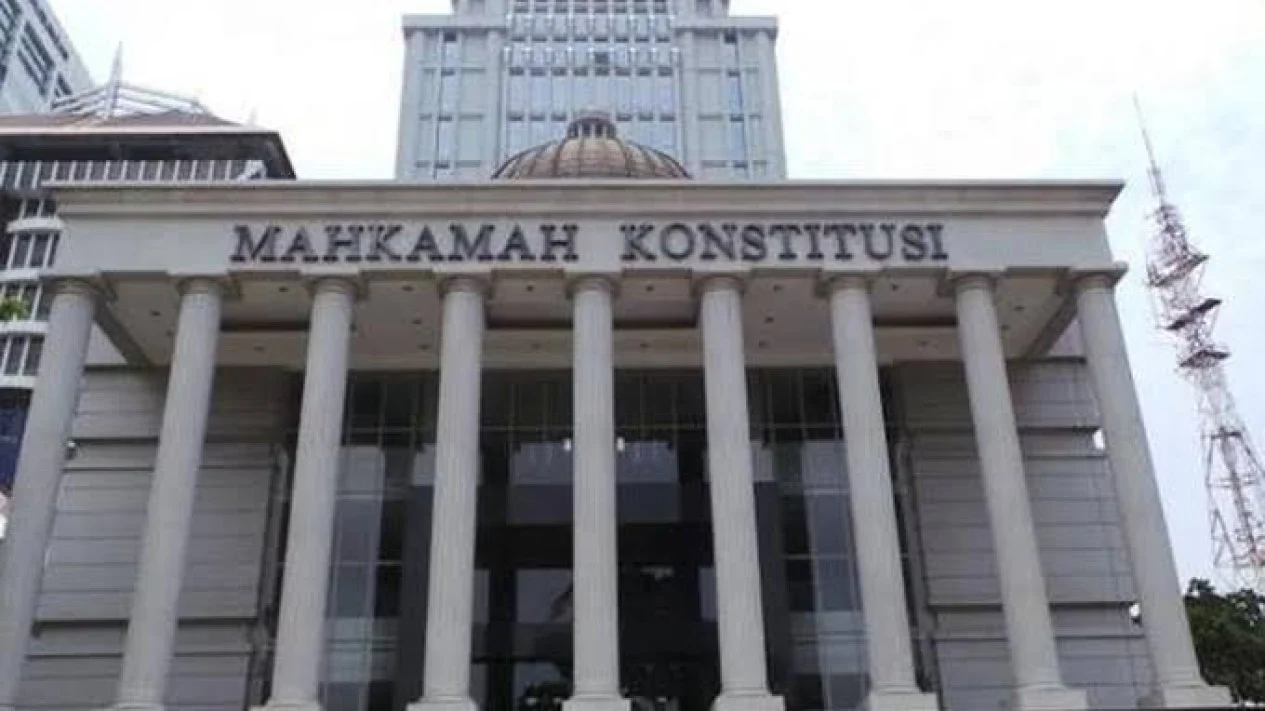
Jakarta, VIVA – Government employees with work agreements (PPPK) are challenging Law Number 20 of 2023 on the Civil Service (UU ASN) before the Constitutional Court (MK) because they do not want to become second-class civil servants.
The Forum for Nusantara Intellectual Aspirations (FAIN), the body that represents PPPK lecturers and education staff, asks the MK to grant PPPK the same opportunities as civil servants (PNS) to hold managerial and non-managerial positions and equality in pension arrangements.
‘Articles 34(1) and (2) and Article 52(3)(c) of the UU ASN actually restrict the constitutional rights of the applicants in civil service positions, thereby legally placing PPPK not as full ASN, but merely as “second-class ASN”,’ said the applicant’s counsel, Muhamad Arfan, at the first hearing at the MK in Jakarta on Friday, 6 March 2026.
In this petition, FAIN, as the umbrella organisation for PPPK lecturers and education staff, says their constitutional rights to obtain guarantees, protection, legal certainty, and equality before the law are being violated.
According to the applicant, the phrase ‘prioritised to be filled by PNS’ in Article 34(1) UU ASN has created a preference that places PPPK in a subordinate position. The phrase is considered to create status discrimination between PNS and PPPK.
‘This norm shifts meritocracy from a principle to an administrative preference, thereby contradicting the merit system which is the very core of ASN management,’ Arfan said.
Additionally, the applicant also challenges the phrase ‘can be filled from PPPK’ in Article 34(2) UU ASN. The phrase is regarded as permissive or open-ended, not imperative or a directive, thus only providing a possibility rather than guaranteeing rights.
‘Thus, PPPK are not placed as legal subjects with normative rights to access positions, but merely as alternatives whose existence depends on the administrative policy of the agency,’ said the other counsel, Dicky Supermadi.
The applicants argue that if PPPK can only fill certain positions, while PNS are prioritised for most positions, PPPK face the risk that their careers will be hampered or even excluded from filling major positions.
With the application of this phrasing, PPPK experience legal uncertainty regarding career pathways and position development, which has implications for their motivation, life planning, and job stability.