
PPNS develops robot to assist shrimp farmers in Jember
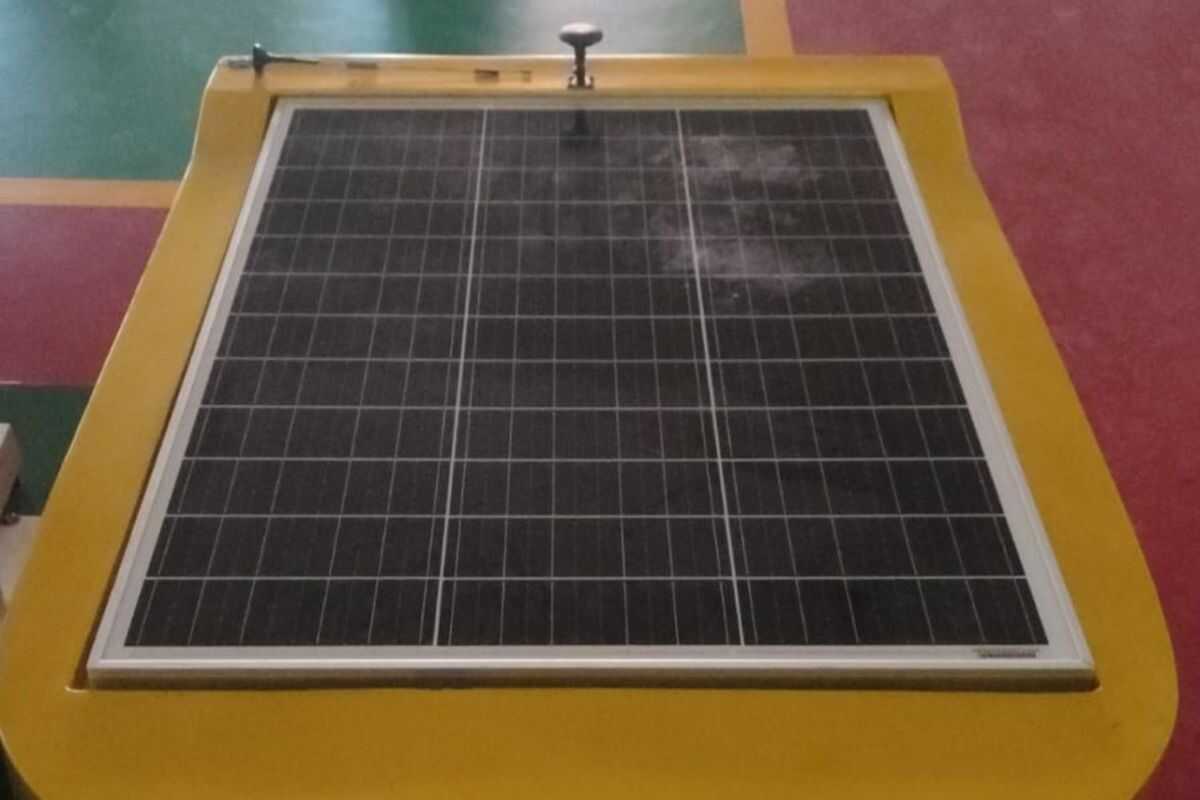
Surabaya (ANTARA) - The State Shipbuilding Polytechnic of Surabaya (PPNS) has developed an unmanned surface vehicle to assist vaname shrimp farmers in Jember Regency in monitoring water quality in real time, with the aim of improving pond stability and sustainable aquaculture productivity.
The head of the research team, Dr Eng Imam Sutrisno from PPNS, explained that the technology enables early detection of water quality changes that could potentially endanger shrimp.
“This technology enables early detection of water quality changes that could potentially endanger shrimp. With real-time data, farmers can immediately intervene, such as increasing aeration, partially replacing water, or adjusting feed provision,” he said in a statement received in Surabaya on Wednesday.
The technology, named Remotely Surface Vehicle for Water Monitoring Automation System (RSV EMAS), is an unmanned surface vehicle equipped with multi-parametric sensors to measure temperature, pH levels, dissolved oxygen (DO), salinity and pond water turbidity.
The system is integrated with web-based and mobile applications, enabling farmers to monitor pond conditions remotely without having to be on site. The device’s primary energy source uses solar panels, which are considered more environmentally friendly and efficient.
Field trial results at vaname shrimp ponds in Jember showed an improvement in water quality stability from approximately 60 per cent to more than 80 per cent under optimal conditions.
Shrimp mortality was reported to have decreased, whilst decision-making in pond management became faster and data-driven.
The development of RSV EMAS is also considered strategically important for reducing dependence on imported monitoring equipment, which is relatively expensive and less adaptive to local conditions.
A number of fisheries industry players have reportedly begun showing interest in developing the system towards broader-scale production.
In addition to supporting productivity, the use of solar energy on the device also promotes more sustainable aquaculture practices by reducing the use of conventional electricity and fossil fuels.
The research also involved university students and vocational secondary school (SMK) students specialising in fisheries in the design, assembly and testing processes, thereby supporting the strengthening of vocational education and aquaculture technology innovation domestically.