
PPIH Medan: Hajj pilgrims should not post Nusuk Cards on social media
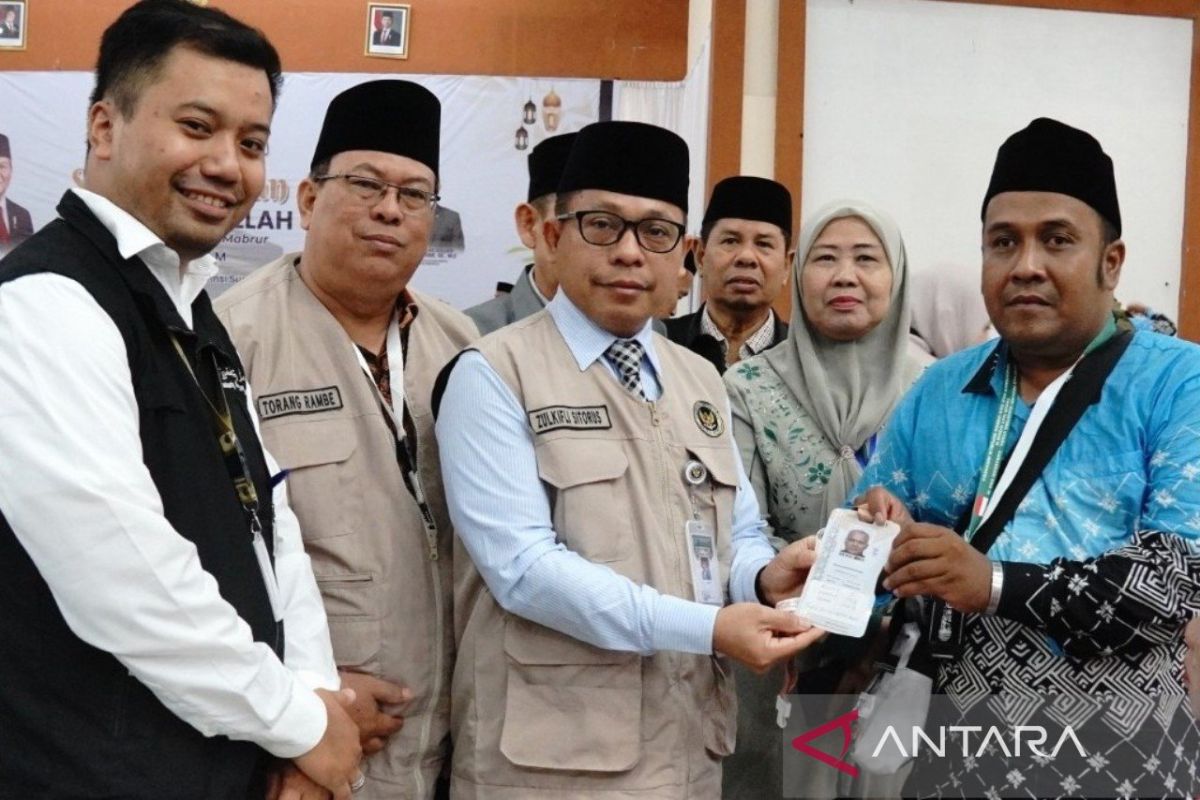
Medan (ANTARA) - The Hajj Organising Committee (PPIH) for Medan Embarkation has advised 5,990 prospective pilgrims from North Sumatra not to upload their Nusuk Cards on social media.
PPIH Medan Embarkation Chairman Zulkifli Sitorus stated that the Nusuk Card contains complete pilgrim data that could be misused by irresponsible parties.
“The Nusuk Card includes full identity details, transportation services, accommodation, meals, and even a barcode. Do not photograph and disseminate it,” Zulkifli said after seeing off the JCH of Kloter 12 from Medan Embarkation at the Medan Hajj Hostel on Tuesday.
Zulkifli, who also serves as Head of the North Sumatra Provincial Office of the Ministry of Hajj and Umrah, emphasised that the Nusuk Card is a vital document for Indonesian pilgrims.
Therefore, he continued, the Nusuk Card must be safeguarded by every Indonesian pilgrim, particularly those from North Sumatra, throughout their time in the Holy Land.
“If there is no Nusuk Card, pilgrims will not be allowed to enter Masjidil Haram to perform tawaf and sai,” he said.
He also noted that the Hajj pilgrimage is a sacred calling that should be appreciated with gratitude.
Thus, physical and mental readiness must be maintained to ensure the entire worship process runs smoothly during this year’s Hajj season.
“We also remind pilgrims to maintain unity and help one another in the Holy Land without distinguishing by regional origin,” he said.
Data from PPIH Medan Embarkation indicates that 5,990 prospective pilgrims, including 68 Hajj officials from North Sumatra, will depart for the Holy Land from 22 April to 11 May 2026.
Up to the departure of Kloter 12 from Medan Embarkation today, a total of 4,305 prospective pilgrims, including 48 Hajj officials or 71.87 percent, have arrived in the Holy Land.