
Power Struggle: Putin's Speech Clashes with European Leaders: The World Enters a Harsh Era
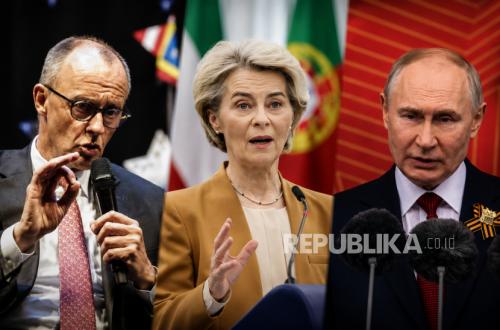
Amid the chilly air of Munich, the glamour of Davos, and the echoes of the military parade on Moscow’s Red Square, the world appears to be moving towards one common conclusion: the old era has ended.
When Russian President Vladimir Putin spoke of the “NATO threat” and “the fight for Russia”, German Chancellor Friedrich Merz warned that Europe has “returned from a long holiday from world history”, while European Commission President Ursula von der Leyen stated that “the world has changed permanently”.
These three speeches emerged from different stages, with clashing interests, but they reveal a shared anxiety: the world is entering a new, harsh era, full of rivalry, and reshaped by the politics of great powers.
Putin delivered his speech in a defensive yet confrontational tone. During Russia’s Victory Day celebrations, he did not merely commemorate the Soviet Union’s victory over Nazi Germany, but also framed the Ukraine war as a continuation of Russia’s historical struggle against external threats. “Russia launched a pre-emptive strike in response to that aggression,” said Putin, while accusing NATO of building a direct threat on Russia’s borders.
For Putin, the war in Ukraine is not merely a territorial conflict, but an existential struggle between Russia and the West. He portrayed the United States as a power that “claims its exceptionalism” after the collapse of the Soviet Union and accused the West of attempting to erase Russia’s traditional values. In the Kremlin’s geopolitical construct, the Ukraine conflict becomes a symbol of resistance against Western dominance as well as an effort to preserve Russia’s identity as a great world power.
However, if Putin spoke with a spirit of historical resistance, Friedrich Merz spoke with a tone of strategic anxiety. At the Munich Security Conference, the German Chancellor openly acknowledged that the rules-based international order built after World War II “no longer exists”. He sees the world now determined by great power competition, where Russia acts aggressively, China builds global influence, and the United States begins to shift its leadership orientation.
Merz did not hide Europe’s concerns about this change. He stated that Europe has lived too long in false security under the American umbrella. “Our freedom is no longer a given. Our freedom is under threat,” he said. Therefore, Merz emphasised that Germany must strengthen its military, build a defence industry, and make the Bundeswehr the “strongest conventional army in Europe”.
Nevertheless, unlike Putin who positions the West as an enemy, Merz sought to maintain transatlantic relations with Washington. He acknowledged a “deep rift” between Europe and the United States, but considered NATO to remain the main foundation of Western security. In a highly political sentence, Merz said, “We assert our freedom together with our neighbours, and only together with our neighbours, our allies, and our partners.”