
Power Grid Across Aceh to Jambi Goes Out, PLN Apologises
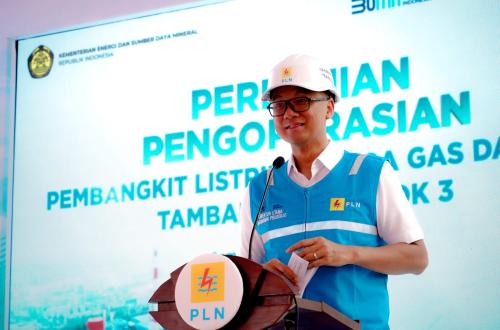
The management of PT PLN (Persero) apologises to the public for the disruption to the electricity system that caused power outages in several regions of Sumatra, affecting Jambi, West Sumatra, Riau, North Sumatra and Aceh since Friday night WIB (22 May 2026).
PLN chief executive officer Darmawan Prasodjo explained that the disruption began on Friday (22 May 2026) at 18:44 WIB. Based on initial investigations, the outage was triggered by an issue in the 275 kV Muara Bungo–Sungai Rumbai transmission line in Muara Bungo district, Jambi Province, which is believed to have been influenced by severe weather. The disruption subsequently triggered a domino effect on the Sumatra electricity interconnection system.
“Firstly, on behalf of PT PLN (Persero) we would like to apologise most sincerely to all communities across Sumatra, particularly in Jambi, West Sumatra, Riau, North Sumatra and Aceh, for the disruption to the electricity system since last night,” Darmawan said at a virtual press conference in Jakarta on Saturday (23 May 2026).
He explained that the transmission disturbance caused the Sumatra electricity system to fall out of load balance. In some areas there was surplus generation due to a sudden drop in load, causing the frequency and voltage to rise. The condition caused some plants to trip offline automatically and shut down.
In other areas, the system faced a deficit of supply as plants disconnected from the network. Frequency and voltage fell, causing other plants to be affected and disconnect from the system. This condition caused the disturbance to spread from Jambi to Aceh.
“And we note that this condition proved to be a domino effect. As a result, the electrical system disturbance spread from Jambi, Riau, North Sumatra to Aceh,” he said.
PLN subsequently deployed all teams to assess the primary substations and the transmission network. Within around two hours, he added, PLN confirmed that the main substations and the transmission system could be restored without any physical damage, such as the collapse of transmission towers.
After the transmission network had recovered, PLN began a phased normalisation of generation. According to Darmawan, the process started with bringing generation online, connecting plants to the transmission system via substations, and then synchronising with the Sumatra interconnection system.
Darmawan said that hydro and gas-fired plants would be the initial priority for recovery because they can be brought online more quickly than coal-fired plants (PLTU). He said the synchronisation of hydro and gas plants could take about five to fifteen hours.
“For that reason, all our teams have been mobilised. The plants we can bring online quickly, especially hydro and gas plants, have been brought online one by one since last night in a systematic manner,” he said.
Darmawan explained that recovering PLTU takes longer because it requires warming water into steam and operating auxiliaries gradually. Several PLTU plants had begun generating since 03:00 WIB, but some units were still in the preparation stage.”