
Potential State Losses from the MBG Programme Could Reach IDR 1.27 Trillion Per Week, Says CELIOS
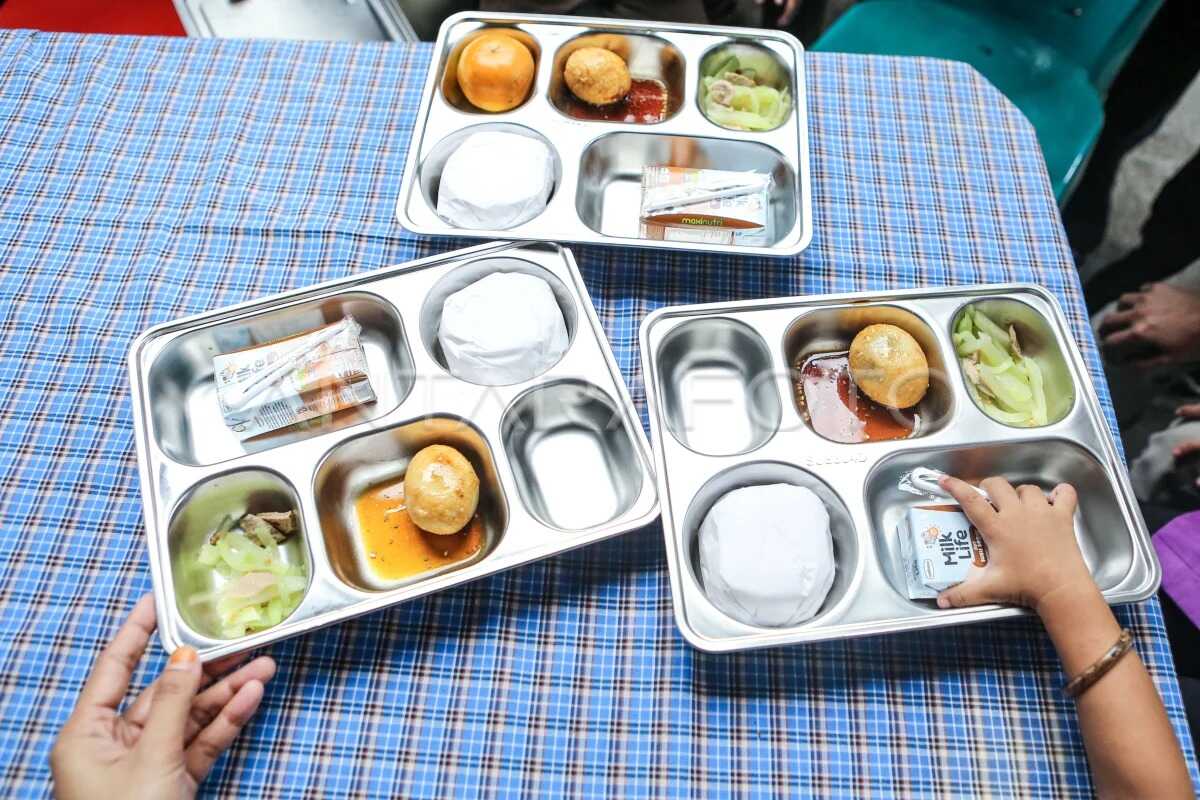
INDOPOLITIKA – An internal study conducted by the Center of Economic and Law Studies (CELIOS) reveals that potential state losses from food waste in the Free Nutritious Meal (MBG) programme could reach IDR 1.27 trillion each week. This finding has prompted calls for the government to implement a temporary moratorium on the programme to allow for a comprehensive reform of its governance.
CELIOS researcher, Isnawati Hidayah, stated that the MBG issue continues to raise concerns, especially among parents.
“When we talk about MBG, there’s no end to the discussion. There are many concerns, especially from parents. A lot of the food is thrown away, and no one has been able to accurately measure the extent of the loss,” said CELIOS researcher Isnawati Hidayah during a press conference on Monday (23/2).
Calculation of Two Loss Scenarios
CELIOS conducted calculations using two scenario approaches, namely minimal and maximal, to estimate the potential state funds wasted due to food that is rejected or not consumed by children.
Isnawati explained that food rejection is influenced by several factors, including:
The taste of the food not being to children’s liking
The perceived lack of hygiene
The perceived inadequacy of the nutritional quality
In the minimal scenario, it is estimated that 62 million portions of food are wasted each week. The estimated state loss in this condition reaches IDR 622 billion per week.
Meanwhile, in the maximal scenario, the potential loss could increase to IDR 1.27 trillion per week if the level of food rejection is higher.
“If we use the maximum rejection assumption, it could reach IDR 1.27 trillion each week,” said Isnawati.
Compared to the State Budget and BPJS Contributions
In the first quarter of this year, the government plans to spend IDR 62 trillion on the MBG programme. Last year, the total expenditure for the year was recorded at IDR 51.5 trillion.
According to CELIOS’ calculations, in the minimal scenario, the funds wasted each month are equivalent to the BPJS Kesehatan (Indonesia’s national health insurance) contributions for approximately 15.5 million people for one full month.
Meanwhile, in the maximal scenario, this value is equivalent to the BPJS Kesehatan contributions for approximately 31.6 million people for one month.
“So, the amount of money wasted is quite significant. If we assume just one month, it could be used to pay for BPJS for the community for free,” she said.
Recommendations for a Moratorium and Total Reform
Based on these findings, CELIOS recommends a temporary moratorium on the MBG programme. This step is considered important to create space for a comprehensive evaluation of the programme’s distribution system, supervision, and governance.
In addition to the moratorium, CELIOS also encourages:
A total reform of the MBG’s governance and distribution
A transparent audit of the use of funds
A comprehensive evaluation to prevent greater waste of funds
“Our recommendation is consistent, namely a moratorium, a total reform of MBG, and a transparent audit and evaluation, so as to prevent greater waste of public funds,” said Isnawati.
These findings have reignited public debate about the effectiveness of national-scale food assistance programmes and the urgency of strict oversight of the use of state funds.