
Potential for Car Prices in Indonesia to Rise, Signs Already Visible
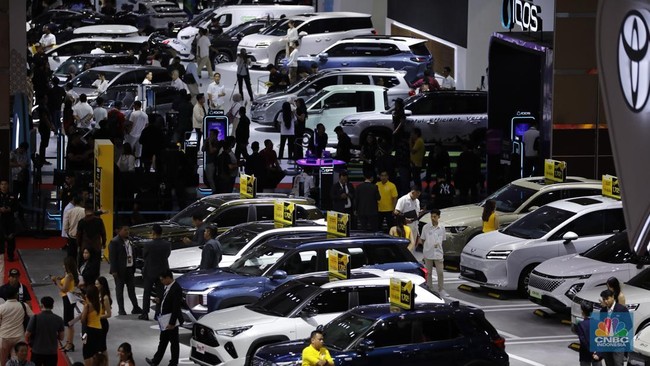
The national automotive industry is facing heavy pressure amid weakening consumer purchasing power. This situation is exacerbated by relatively high interest rates and vehicle financing tightening policies from financial institutions.
At the same time, external fluctuations are also adding risks for industry players. The rupiah’s exchange rate volatility against the US dollar, which recently breached Rp17,000 per dollar, has the potential to increase domestic vehicle production costs.
This is because some automotive components used in the production process are still imported. If the rupiah’s weakening persists, producers may adjust vehicle selling prices.
“If component prices rise due to exchange rate weakening, producers may raise vehicle prices. Price increases amid declining consumer purchasing power are seen as a serious challenge for the national automotive industry,” said Marketing and Customer Relation Division Head of PT Astra International Tbk - Daihatsu Sales Operation (AI DSO) Tri Mulyono, quoted on Sunday (22/3/2026).
This pressure is reflected in recent car sales performance. Data from the Indonesian Automotive Industry Association shows that wholesale car sales throughout 2025 reached only 803,687 units. This figure is down 7.2% from the previous year, which recorded 865,723 units.
Entering 2026, market recovery has not yet been significantly visible. In the first two months of this year, total new car sales are still at 145,228 units. The most felt pressure is in the vehicle segment targeting middle-class consumers, especially those relying on credit financing schemes.
“That condition is particularly felt in the vehicle segment targeting middle-class consumers who rely on credit financing schemes,” said Tri.
He also highlighted the stance of financial institutions that are now more cautious in disbursing vehicle credit. This condition makes some consumers struggle to obtain financing for buying new cars.
“Financial institutions are now more selective in disbursing credit, thus affecting new vehicle sales,” said Tri.
This pressure is also reflected in Daihatsu’s sales performance throughout last year. Throughout 2025, Daihatsu recorded sales of 130,677 units, down 19.8% from the previous year which reached 163,032 units.
Nevertheless, in early 2026, signs of improvement are visible. In the January to February period this year, Daihatsu’s sales reached 25,965 units. This figure is an increase compared to the same period last year, which was at 21,942 units.